Start with the Sensors, Then Design the Rest: How Zoox Built Its Robotaxi
Companies Mentioned
Why It Matters
Zoox’s hardware‑first, purpose‑built approach could set a new performance and safety benchmark for autonomous ride‑hailing, pressuring competitors that rely on retrofitted platforms. Its Amazon backing accelerates scaling into additional U.S. cities, reshaping the urban transportation landscape.
Key Takeaways
- •Sensors on four corners provide 360° forward visibility
- •Bidirectional, symmetrical chassis removes need for three‑point turns
- •Redundant hardware mirrors across both vehicle ends
- •Crab‑walk steering offers agility beyond conventional EVs
- •Amazon ownership fast‑tracks city‑wide deployment
Pulse Analysis
The robotaxi market has evolved from experimental prototypes to commercial services, yet most players still retrofit existing models with cameras and lidar. Zoox diverges by engineering a vehicle from the ground up, treating autonomy as the primary function rather than an add‑on. This philosophy mirrors early automotive innovators who designed chassis around powertrains, allowing Zoox to integrate sensor suites, computing hardware and power systems without the compromises of a traditional hood or dashboard.
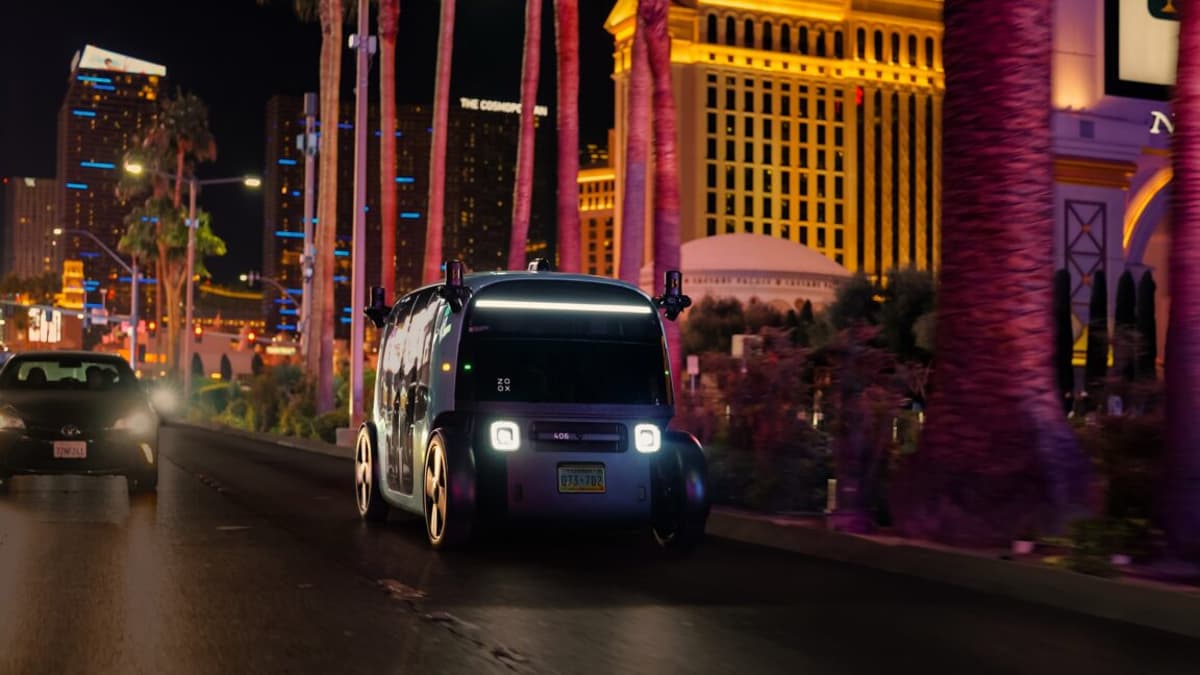
At the heart of Zoox’s design is a sensor array perched on each of the four vehicle corners, delivering an unobstructed line of sight that maximizes situational awareness in dense city streets. The vehicle’s bidirectional, symmetrical layout means it can travel forward or reverse with equal ease, eliminating costly maneuvers like three‑point turns. Both front and rear axles feature independent steering, enabling a crab‑walk capability that outperforms even the most agile electric trucks. Redundancy is baked into every critical subsystem—identical racks, split battery packs and dual HVAC units—ensuring continuous operation even if one side fails.
Strategically, Zoox benefits from Amazon’s deep pockets and logistics expertise, accelerating rollout in high‑traffic markets such as Las Vegas, San Francisco and Austin, with Miami slated next. By delivering a purpose‑built, user‑centric experience—minimalist interiors, wireless charging and a calm cabin—Zoox aims to differentiate itself from traditional taxis and competing autonomous services. If the platform scales successfully, it could redefine urban mobility standards, prompting regulators and rivals to prioritize vehicle‑level design over software‑only solutions.
Start with the sensors, then design the rest: How Zoox built its robotaxi
Comments
Want to join the conversation?
Loading comments...