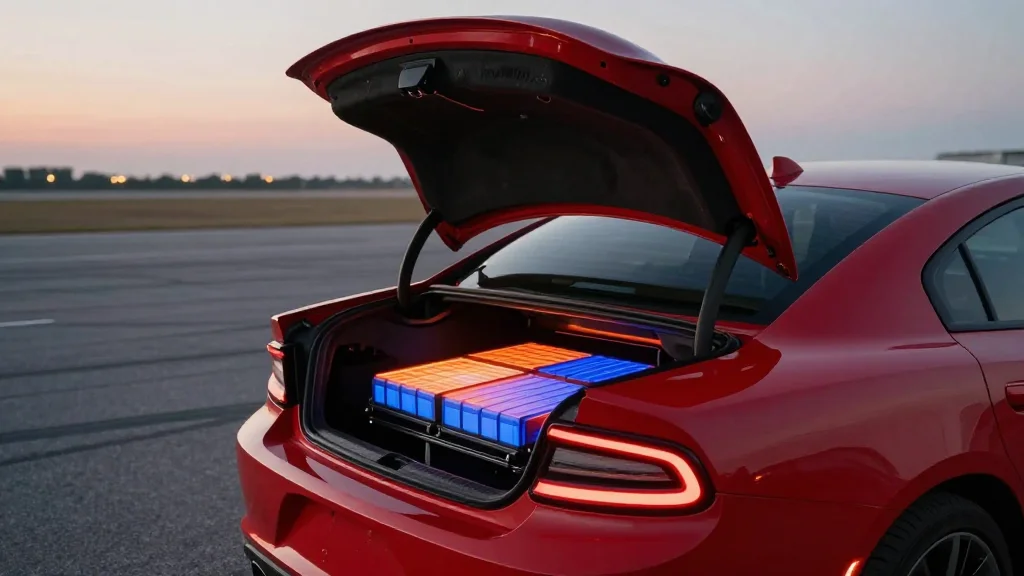
This Dodge Charger EV Prototype Packs An Experimental Semi-Solid-State Battery
Companies Mentioned
Why It Matters
The demonstration could accelerate adoption of higher‑energy, faster‑charging batteries, giving Stellantis a competitive edge as the EV market tightens. It also validates Factorial’s semi‑solid chemistry, a stepping stone toward fully solid‑state packs that could reshape cost structures industry‑wide.
Key Takeaways
- •375 Wh/kg energy density exceeds typical lithium‑ion range
- •Charges 15‑90% in 18 minutes, faster than current pack
- •Operates from –22°F to 113°F, broad temperature tolerance
- •Stellantis integrates Factorial cells via patented mechanical architecture
- •Real‑world testing informs both Stellantis EV line and Factorial’s solid‑state roadmap
Pulse Analysis
Solid‑state batteries have long been hailed as the next leap for electric vehicles, but scaling a fully solid electrolyte has proved elusive. Semi‑solid‑state chemistry, which replaces the liquid electrolyte with a gel‑like medium, offers many of the same safety and energy‑density benefits while leveraging existing manufacturing processes. Stellantis’ partnership with Massachusetts‑based Factorial Energy brings this approach to a production‑ready platform: a Dodge Charger Daytona EV that serves as a rolling laboratory. The collaboration illustrates how legacy automakers are turning to startups to bridge the gap between lab breakthroughs and market‑ready power packs.
The FEST cell at the heart of the test delivers 375 Wh/kg, a notable jump from the 200‑300 Wh/kg typical of lithium‑ion packs. That higher specific energy translates into longer driving range without enlarging the battery envelope. Equally striking is the 18‑minute charge from 15 % to 90 %, roughly 40 % faster than the current Charger’s 30‑minute window. The pack also tolerates extreme temperatures, from –22 °F to 113 °F, reducing the need for elaborate thermal‑management systems and potentially lowering vehicle cost.
Stellantis’ real‑world validation adds credibility to semi‑solid technology and could accelerate its rollout across its multi‑brand portfolio, from Jeep SUVs to Ram trucks. Factorial, meanwhile, will feed data from the Charger into its next‑generation all‑solid‑state Solstice battery, positioning the startup as a key supplier for the industry. Competitors such as Mercedes, BMW, Toyota and several Chinese makers are already field‑testing solid‑state cells, suggesting a near‑term convergence toward higher‑energy, faster‑charging EVs. If cost and durability targets are met, semi‑solid packs may become the bridge that finally brings solid‑state power to mass‑market vehicles.
This Dodge Charger EV Prototype Packs An Experimental Semi-Solid-State Battery
Comments
Want to join the conversation?
Loading comments...