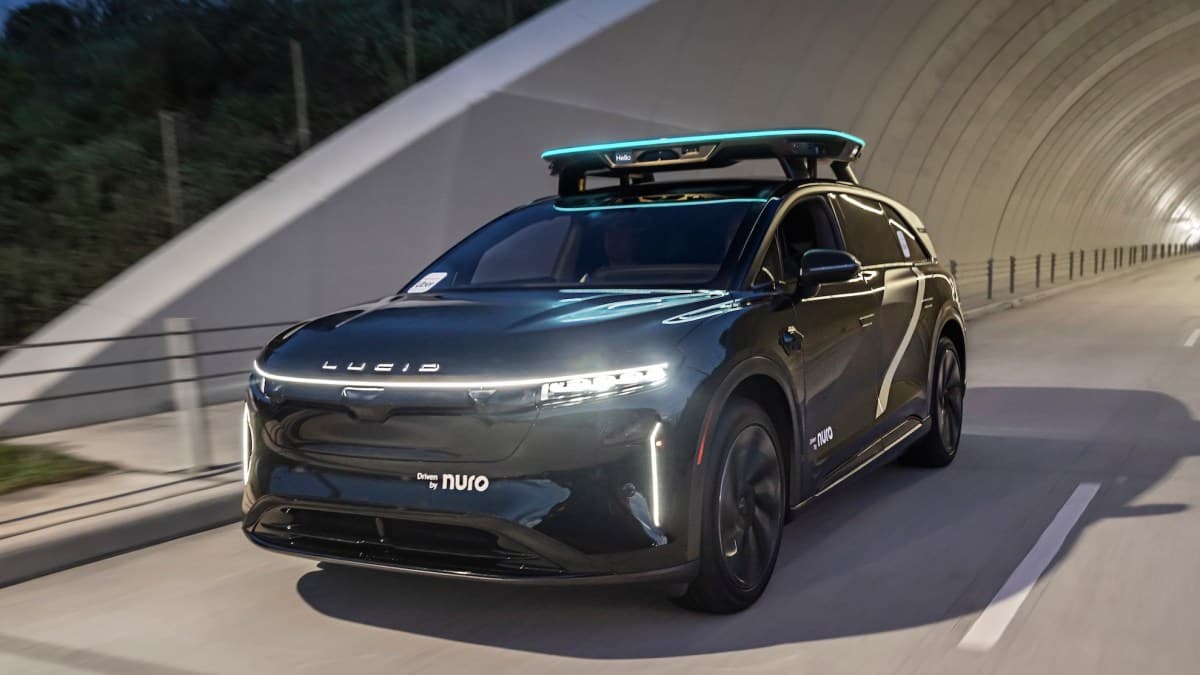
Uber Will Bring Its Premium Robotaxi Service to Houston in 2027
Why It Matters
The launch positions Uber as a serious contender in the autonomous ride‑hailing space, accelerating competition with Waymo and validating large‑scale investment in self‑driving technology. It also provides a growth avenue for Lucid and Nuro, helping them scale production and technology adoption beyond pilot phases.
Key Takeaways
- •Uber targets Houston robotaxi launch by mid‑2027.
- •Partnership uses Lucid Gravity SUVs with Nuro’s autonomous tech.
- •Uber invested $500 M in Nuro and Lucid, ordering 35k vehicles.
- •Testing fleet with safety drivers on Houston public roads.
Pulse Analysis
The autonomous mobility market is reaching a tipping point as legacy ride‑hailing firms double down on robotaxi offerings. Uber’s decision to debut a premium service in Houston reflects a strategic push to capture high‑value urban travel while directly challenging Waymo’s early lead. Houston’s sprawling layout and growing tech ecosystem make it an ideal proving ground for scaling autonomous fleets, and the mid‑2027 timeline gives Uber a window to refine its service before broader rollout.
Central to Uber’s plan is a three‑way partnership with Lucid Motors and Nuro. Lucid’s Gravity SUV provides a luxury cabin and a robust electric platform, while Nuro supplies the perception stack—high‑resolution cameras, solid‑state lidar, and radar—that enables Level 3 autonomy. Uber has poured $500 million into each partner, securing a minimum of 35,000 vehicles and establishing a 50,000‑square‑foot depot with dedicated charging infrastructure. The current test fleet operates with safety drivers, allowing real‑world data collection and iterative improvements before the vehicles go driverless.
If successful, the Houston launch could accelerate industry‑wide adoption of autonomous ride‑hailing. It demonstrates a viable business model that blends premium user experience with scalable electric vehicle production. Regulators will watch closely as Uber seeks to transition from safety‑driver‑assisted runs to fully driverless operations, potentially shaping policy frameworks for other cities. For investors and competitors alike, Uber’s commitment signals confidence that autonomous mobility can move from niche pilots to mainstream revenue streams within the next few years.
Uber will bring its premium robotaxi service to Houston in 2027
Comments
Want to join the conversation?
Loading comments...