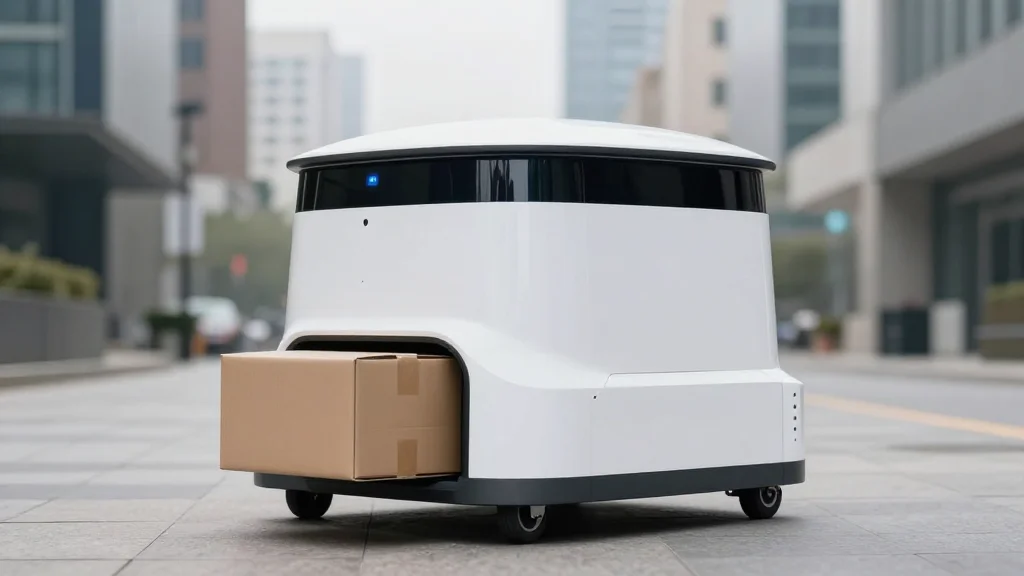
Chinese Firms Deploy over 1,600 Autonomous Delivery Vehicles, Handling 1 M+ Orders Monthly

Why It Matters
The expansion of autonomous delivery vehicles in China signals a fundamental shift in last‑mile logistics, a segment that traditionally consumes 30‑40% of total shipping costs. By halving operating expenses, firms like Neolix can offer lower prices to consumers while maintaining profitability, potentially reshaping e‑commerce pricing models across Asia. Moreover, the deployment provides a real‑world testbed for AI‑driven navigation and fleet management, accelerating the maturity of autonomous technology that could later be applied to larger freight or passenger transport. Regulatory frameworks will be a make‑or‑break factor. Clear standards could enable nationwide scaling, while fragmented or overly restrictive rules might fragment the market, favoring regional incumbents. Internationally, China’s head start in driverless delivery could set a benchmark for other economies, influencing global supply‑chain strategies and prompting foreign firms to seek partnerships or develop competing solutions.
Key Takeaways
- •Neolix operates 1,150 autonomous vans in Qingdao and 432 in Shenzhen, part of a >1,600‑vehicle fleet across China.
- •Shenzhen fleet completed 1.02 million deliveries in September, earning 8.7 million yuan ($1.2 M).
- •Delivery cost in Qingdao is 9.9 yuan per trip (≈$1.44), roughly half the price of traditional courier services.
- •More than 100 Chinese cities have launched pilot programs for driverless delivery vehicles.
- •Ministry of Commerce issued guidelines to accelerate operational and regulatory standards for unmanned delivery.
Pulse Analysis
China’s autonomous delivery boom is less a flash‑in‑the‑pan experiment and more a strategic response to structural pressures in logistics. Labor scarcity, rising wages and the sheer scale of e‑commerce demand have forced operators to look for efficiency gains that AI‑driven vans can deliver. The cost advantage—Yao Lei’s claim of a 50% reduction—translates directly into competitive pricing for retailers and faster service for consumers, creating a virtuous cycle that fuels further adoption.
Historically, autonomous vehicle pilots have stumbled on regulatory inertia; Beijing’s proactive issuance of guidelines marks a departure from the cautious approach seen in Europe and the United States. By codifying safety, data, and road‑sharing rules early, the government is effectively de‑risking investment for firms like Neolix and their logistics partners. This regulatory clarity could also attract foreign capital and technology, accelerating the ecosystem’s growth.
Looking forward, the next inflection point will be the transition from pilot to mass deployment. Scaling battery capacity, increasing payloads and integrating with existing courier networks will be essential to capture the high‑margin, high‑volume urban market while also unlocking the rural segment that remains underserved. Competitors—both domestic startups and global players such as Amazon’s Scout—will vie for city permits and partnership contracts, potentially sparking a consolidation wave. The firms that can marry robust AI perception with reliable hardware and navigate the evolving regulatory landscape will likely dominate the autonomous logistics arena, not just in China but globally.
In sum, the rapid rollout of driverless delivery vans is reshaping cost structures, prompting regulatory evolution, and setting the stage for a new logistics paradigm that could redefine how goods move in the most populous nation on Earth.
Chinese firms deploy over 1,600 autonomous delivery vehicles, handling 1 M+ orders monthly
Comments
Want to join the conversation?
Loading comments...