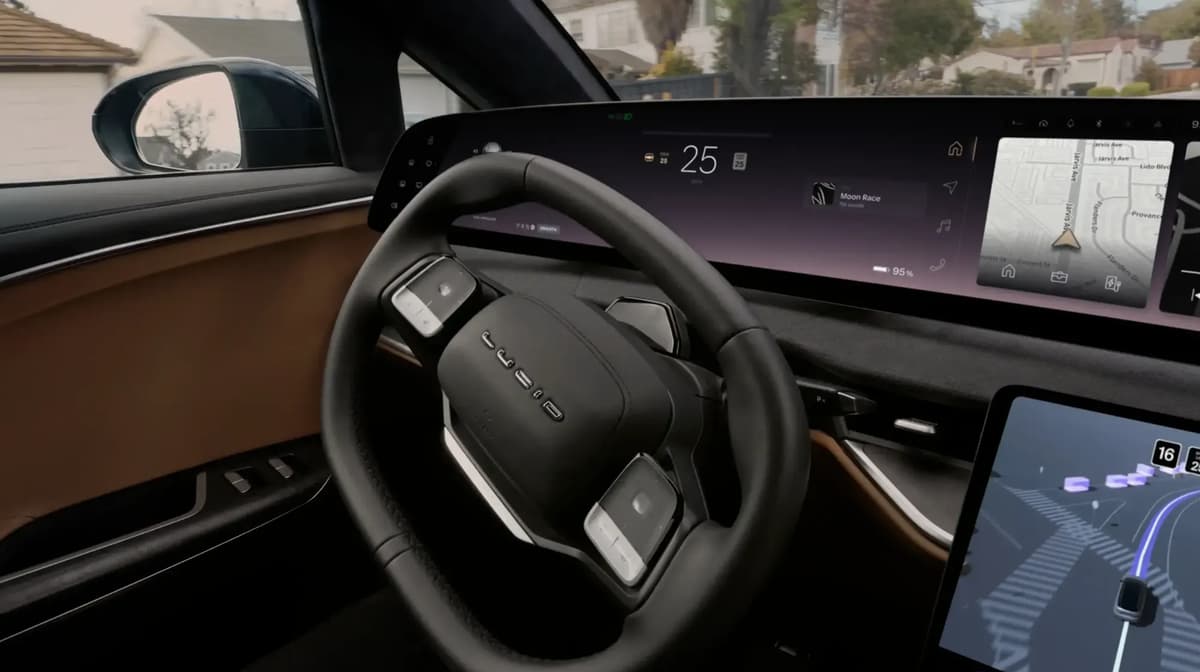
Inside Lucid’s Autonomy-Ready Architecture for Next-Gen Robotaxi Operations
Companies Mentioned
Why It Matters
Building autonomy first cuts integration complexity and positions Lucid to compete aggressively in the fast‑growing robotaxi market, accelerating safe, large‑scale deployment of self‑driving services.
Key Takeaways
- •Autonomy‑first design eliminates retrofitting costs
- •Redundant steering provides micro‑adjustments for smooth handling
- •Hybrid braking blends regenerative and hydraulic systems
- •Fail‑operational brakes maintain safety despite component failures
- •Validation includes extreme temperature and scenario testing
Pulse Analysis
The robotaxi sector is heating up as legacy automakers and tech firms race to field commercially viable fleets. Lucid Motors’ partnership with Uber and autonomous‑technology specialist Nuro signals a strategic push to capture a share of this emerging market. By committing to an autonomy‑first architecture, Lucid sidesteps the costly retrofitting that plagues many OEMs, allowing the company to offer a vehicle that is inherently compatible with advanced driver‑assist stacks and future full‑self‑driving software. This approach also aligns with investors’ appetite for scalable, safety‑centric solutions that can be rolled out across dense urban corridors.
At the heart of Lucid’s Gravity platform are redundant steering and braking subsystems designed for precision and resilience. High‑resolution angle and torque sensors feed continuous feedback to the autonomy stack, enabling micro‑adjustments that keep lane‑keeping and cornering fluid rather than robotic. The braking system merges regenerative and hydraulic actuation, delivering a deceleration profile that feels natural while preserving energy efficiency. Redundant pressure and position sensing give the software an uninterrupted view of braking capability, and a fail‑operational architecture ensures stopping power even if a component fails, simplifying integration for partners who can request specific deceleration rates without managing low‑level hardware.
For the broader industry, Lucid’s methodology illustrates a blueprint for next‑generation mobility: design vehicles around autonomy, embed redundancy, and validate through rigorous, real‑world testing. As cities tighten emissions standards and consumers seek on‑demand, hands‑free travel, such platforms could become the default for robotaxi operators. Lucid’s emphasis on a seamless rider experience—where confidence in the vehicle translates to confidence in the service—may set a new benchmark for safety, comfort, and operational efficiency, pressuring competitors to adopt similar autonomy‑first philosophies to stay relevant.
Inside Lucid’s autonomy-ready architecture for next-gen robotaxi operations
Comments
Want to join the conversation?
Loading comments...