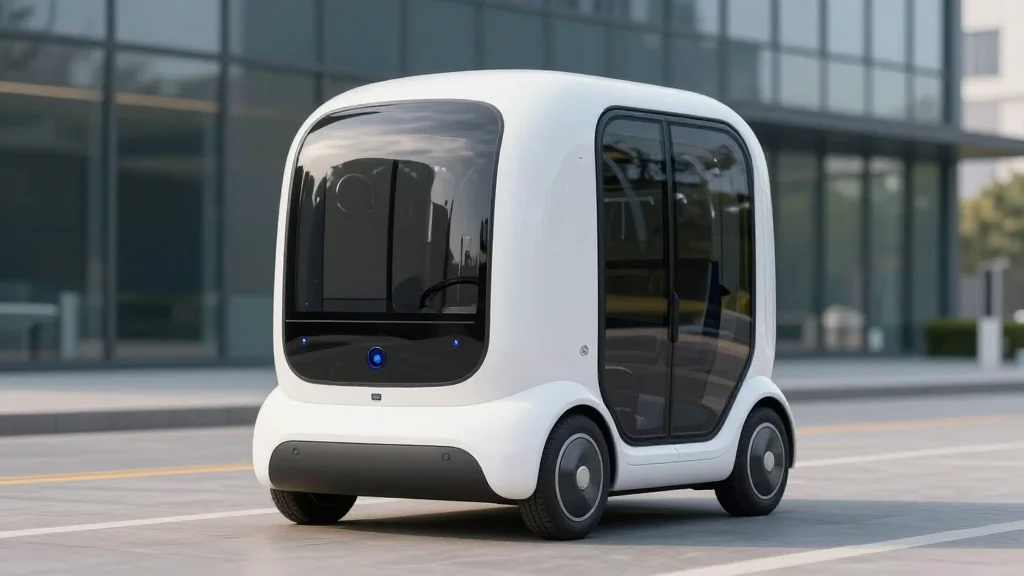
Nuro Leverages Uber Investment to Play Second‑Mover in Robotaxi Race

Why It Matters
Nuro’s partnership with Uber and Lucid illustrates how capital and strategic alliances can accelerate a late entrant’s market penetration in autonomous transportation. By positioning itself as a second‑mover, Nuro aims to reduce development risk, shorten the regulatory learning curve, and potentially capture a sizable share of a market projected to reach $30 billion within the next few years. The move also pressures incumbents like Waymo to maintain operational excellence, as any misstep could be quickly leveraged by newer players. The deal signals a broader industry trend where technology firms, automakers, and ride‑hailing platforms converge to build integrated autonomous services. If Nuro’s model proves successful, it could encourage other startups to adopt a similar strategy—waiting for early leaders to blaze the trail before entering with refined technology and deep-pocketed backing.
Key Takeaways
- •Nuro secured a multi‑year partnership with Uber and Lucid, bringing in hundreds of millions of dollars to fund robotaxi deployment.
- •The company plans to launch a passenger service in San Francisco by the end of 2026 after receiving its first operating permit.
- •Waymo currently operates over 3,000 driverless cars in at least ten U.S. cities, setting the benchmark for autonomous ride‑hailing.
- •Nuro aims to deploy tens of thousands of robotaxis nationwide, targeting a market projected at $30 billion by 2030.
- •The second‑mover approach allows Nuro to learn from Waymo’s regulatory and operational challenges, potentially shortening its path to profitability.
Pulse Analysis
Nuro’s entry as a second‑mover reflects a maturation of the autonomous‑vehicle ecosystem. Early pioneers like Waymo have shouldered the bulk of R&D risk, establishing safety standards, city‑level permitting frameworks, and public acceptance baselines. By waiting, Nuro can allocate capital more efficiently, focusing on incremental improvements rather than foundational breakthroughs. The Uber investment not only supplies the cash needed for large‑scale fleet production but also grants immediate market access through Uber’s ride‑hailing platform, a critical distribution advantage that early entrants lacked.
Historically, technology markets have rewarded second‑movers who refine and commercialize innovations introduced by first‑movers—think of Apple’s iPhone versus earlier smartphones. In autonomous mobility, the stakes are higher due to safety concerns and regulatory scrutiny. Nuro’s strategy hinges on its ability to translate Waymo’s lessons into a cost‑effective, scalable solution. If it can achieve comparable safety metrics with lower operational costs, the company could undercut Waymo’s pricing and capture price‑sensitive riders.
Looking ahead, the success of Nuro’s San Francisco pilot will be a bellwether for the broader rollout. A smooth launch could attract additional municipal partnerships and accelerate the issuance of permits in other cities. Conversely, any safety incident could reinforce the narrative that early entrants should retain a lead. Investors will be watching the capital efficiency of Nuro’s deployment—whether the “tens of thousands” of vehicles can be produced and maintained at a unit cost that supports profitable operations. The partnership model, blending automotive expertise (Lucid), ride‑hailing distribution (Uber), and autonomous technology (Nuro), may become the template for future entrants seeking to navigate the complex regulatory and market landscape of robotaxis.
Nuro Leverages Uber Investment to Play Second‑Mover in Robotaxi Race
Comments
Want to join the conversation?
Loading comments...