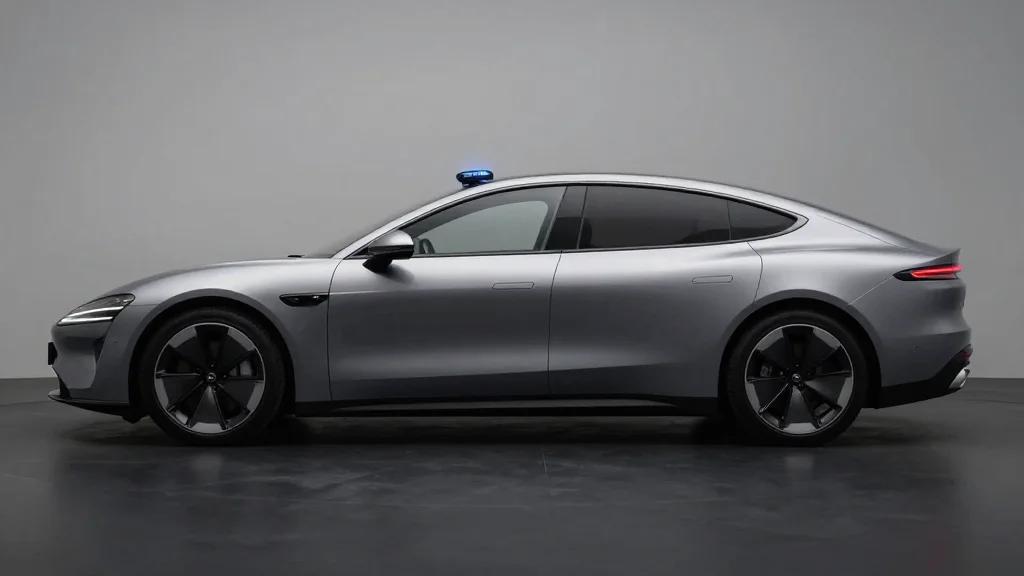
Nuro Secures California Driverless Permit for Uber‑Backed Lucid Robotaxi Service

Companies Mentioned
Why It Matters
The permit represents a tangible step toward large‑scale, driverless robotaxi operations in the United States, a market that has struggled to move beyond pilot programs. By combining Uber’s ride‑hailing network, Lucid’s premium EV platform, and Nuro’s autonomous software, the trio aims to deliver a differentiated service that can attract higher‑margin riders and justify the substantial capital outlay required for fleet deployment. Successful driverless testing in California would also set a regulatory precedent, potentially easing the path for similar approvals in other high‑traffic jurisdictions. Beyond the immediate commercial implications, the development signals a maturation of the autonomous‑mobility ecosystem. It validates Nvidia’s Drive AGX Thor hardware, showcases the viability of multi‑row robotaxis for broader consumer use, and underscores the importance of public‑private partnerships in navigating complex safety regulations. The outcome will likely influence investor sentiment across the autonomous vehicle sector, shaping funding flows and strategic alliances for years to come.
Key Takeaways
- •Nuro received a California DMV driverless testing permit for Lucid Gravity robotaxis on May 5, 2026.
- •The permit allows autonomous operation without a safety driver at speeds up to 45 mph in Santa Clara and San Mateo counties.
- •Uber’s investment in Lucid rose to $500 million, increasing its vehicle order to a minimum of 35,000 robotaxis.
- •Nuro must still obtain a driverless ride‑hailing permit and a deployment permit before commercial service.
- •Full driverless testing is slated to begin later in 2026, with a commercial launch targeted for Q4 2026.
Pulse Analysis
Uber’s robotaxi ambition has long been hamstrung by regulatory friction and the technical challenge of scaling a multi‑row autonomous vehicle. The Nuro permit changes that calculus by delivering a clear, state‑backed endorsement of the technology stack. Historically, California’s autonomous‑vehicle program has acted as a bellwether; Waymo’s early driverless rides and Cruise’s recent safety‑driver‑free tests were all predicated on similar DMV approvals. Nuro’s advantage lies in its lean software architecture, powered by Nvidia’s Drive AGX Thor, which promises lower per‑mile compute costs than the more heavyweight systems used by Waymo and Cruise. If Nuro can demonstrate reliable operation at the permitted 45 mph envelope, it will bolster the case for broader, higher‑speed deployments.
From a market perspective, Uber’s $500 million infusion into Lucid and the expanded vehicle order reflect a strategic pivot toward premium, family‑size robotaxis. This contrasts with Waymo’s focus on purpose‑built, single‑passenger pods and Cruise’s emphasis on dense‑urban, lower‑cost models. By targeting a higher‑margin segment, Uber hopes to offset the massive capital expenditures required for fleet acquisition and insurance. The partnership also leverages Lucid’s brand equity in the luxury EV space, potentially attracting early adopters willing to pay a premium for comfort and space.
Looking ahead, the critical risk remains regulatory: any safety incident during driverless testing could trigger a rollback of permissions, as seen with Cruise’s temporary suspension in 2023. Moreover, the need for a separate ride‑hailing permit adds another layer of uncertainty. However, if Nuro and Uber navigate these hurdles smoothly, they could set a new benchmark for robotaxi scalability, forcing competitors to accelerate their own driverless roadmaps and prompting state regulators nationwide to refine their approval processes. The coming months will be a litmus test for whether autonomous mobility can transition from isolated pilots to a mass‑market transportation option.
Nuro Secures California Driverless Permit for Uber‑Backed Lucid Robotaxi Service
Comments
Want to join the conversation?
Loading comments...