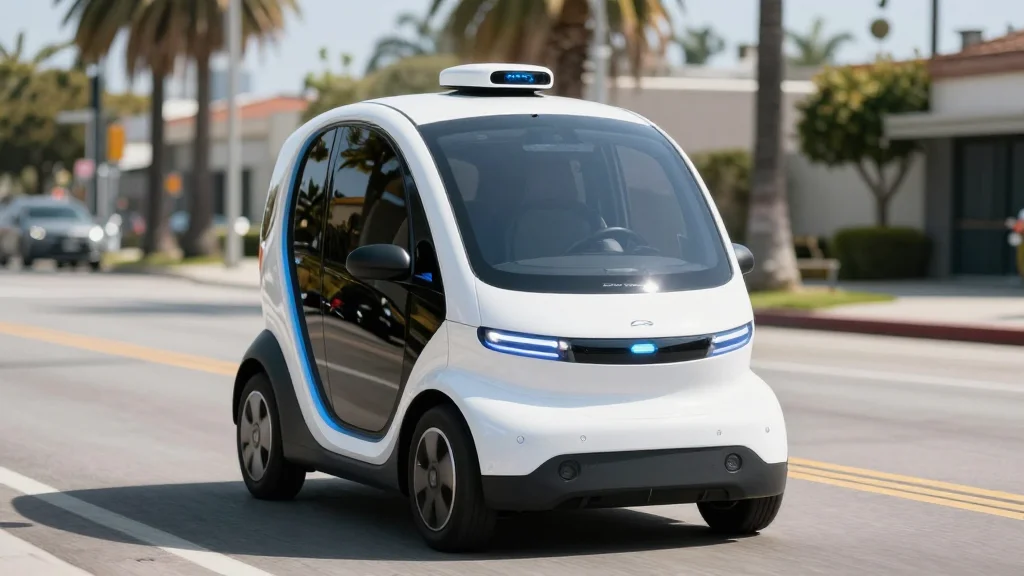
Nuro Secures California Permit to Test Driverless Uber‑Backed Lucid Gravity Robotaxis

Companies Mentioned
Why It Matters
The California permit signals that regulators are increasingly comfortable with higher‑speed, fully driverless testing, a prerequisite for commercial robotaxi services. By clearing this hurdle, Nuro and Uber move closer to demonstrating that autonomous technology can operate safely at speeds comparable to conventional ride‑hailing, which could unlock broader public acceptance and policy support. If Uber successfully launches a fleet of Nuro‑powered robotaxis, it would validate a business model that relies on licensing autonomous software rather than building vehicles in‑house. That approach could lower entry costs for other mobility providers and accelerate the overall rollout of driverless services nationwide, reshaping urban transportation and reducing reliance on human drivers.
Key Takeaways
- •Nuro received a California DMV permit to test driverless Lucid Gravity SUVs without a safety driver
- •Testing allowed up to 45 mph, day and night, in Santa Clara and San Mateo counties
- •Uber increased its investment in Nuro to $500 million and raised the vehicle order to 35,000 units
- •Uber plans to field up to 100,000 driverless vehicles in the U.S., with 35,000 using Nuro’s tech
- •Additional permits from the CPUC and DMV are still required before commercial launch
Pulse Analysis
Nuro’s California approval is more than a regulatory checkbox; it reflects a strategic alignment between a software‑centric autonomous provider and a ride‑hailing heavyweight. Uber’s decision to double‑down on Nuro with a $500 million infusion underscores a shift away from building proprietary hardware toward leveraging specialized AV stacks. This partnership could compress development timelines, allowing Uber to field a differentiated premium service faster than competitors that are still integrating hardware and software in‑house.
The permit also highlights a broader trend: state regulators are moving from low‑speed, safety‑driver‑required trials toward higher‑speed, fully driverless operations. California’s willingness to grant such testing rights suggests that safety data from earlier delivery‑vehicle programs has built sufficient confidence. However, the path to a commercial rollout remains steep. Uber must still secure a ride‑hailing permit, prove reliability at scale, and address public concerns about safety and job displacement. Competitors like Waymo, which already operate driverless taxis in limited markets, will pressure Uber to demonstrate comparable uptime and cost efficiency.
Looking ahead, the success of Nuro’s driverless tests could set a template for other software‑first AV firms seeking to partner with legacy automakers and mobility platforms. If Uber launches its premium robotaxi service on schedule, it may trigger a wave of similar collaborations, accelerating the transition from pilot projects to city‑wide autonomous fleets. The industry’s next inflection point will likely hinge on how quickly these partnerships can translate regulatory approvals into reliable, revenue‑generating services.
Nuro Secures California Permit to Test Driverless Uber‑Backed Lucid Gravity Robotaxis
Comments
Want to join the conversation?
Loading comments...