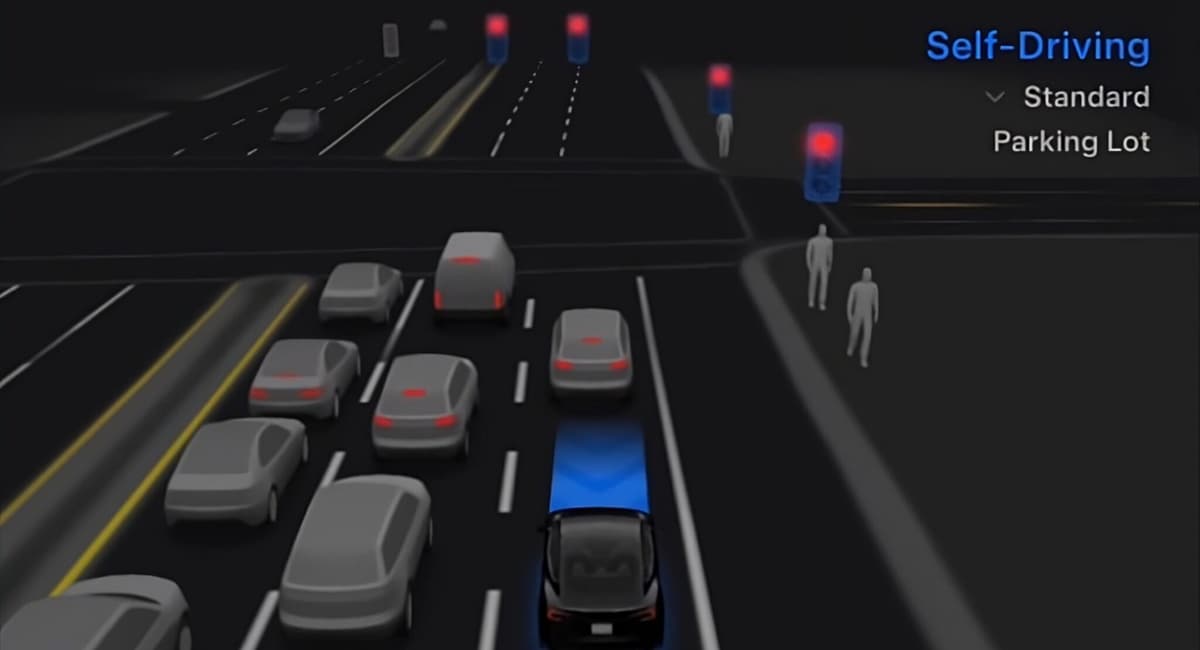
Tesla Continues to Promise FSD China Approval, Despite Delays
Companies Mentioned
Why It Matters
Full FSD approval would unlock a high‑margin software revenue stream and help Tesla regain market share in its largest overseas market. Its absence threatens the company’s competitive edge as rivals roll out cheaper driver‑assistance suites.
Key Takeaways
- •Tesla's FSD still unapproved in China despite infrastructure investments
- •Chinese regulators require “assisted” branding, limiting full autonomy claims
- •FSD priced at $9,000 in China, higher than local rivals
- •Shanghai plant produced 85,600 vehicles in March, 60% of global deliveries
- •Tesla's China sales fell 16% YoY, intensifying competitive pressure
Pulse Analysis
China’s autonomous‑driving regulatory framework is uniquely stringent, demanding that any SAE Level‑2 system carry the word “assisted” in its branding. Tesla has responded by rebranding its Full Self‑Driving suite as Intelligent Assisted Driving and by localising critical data pipelines—opening a Shanghai data centre in 2021, passing the country’s auto‑industry security audit in 2024, and launching an AI training centre in early 2026. These moves satisfy data‑sovereignty rules but do not guarantee functional approval, leaving the software confined to a limited feature set that falls short of the full autonomy promised elsewhere.
The pricing gap further erodes Tesla’s advantage. At roughly $9,000 for the Chinese FSD package, the cost dwarfs the free or low‑cost driver‑assistance features bundled by domestic rivals such as BYD, Xpeng and Xiaomi. Coupled with a 16% year‑on‑year sales decline in Q1, the premium price intensifies pressure on Tesla’s market share, especially as Chinese consumers gravitate toward locally‑tailored, cost‑effective solutions. Meanwhile, the Shanghai Gigafactory’s output—85,600 vehicles in March, representing about 60% of global deliveries—highlights the plant’s operational importance but also underscores that volume alone cannot offset a software deficit.
Globally, Tesla’s FSD roadmap remains fragmented. Europe saw its first supervised‑driving clearance in the Netherlands in April, yet EU‑wide approval will still take months. In China, two promised timelines have already passed, and Musk’s earlier suggestion that delays serve as a bargaining chip in U.S.–China trade talks has not materialised into progress. Without regulatory green lights, Tesla risks losing the high‑margin recurring revenue that could sustain its premium positioning, while competitors continue to close the functional gap with cheaper, locally‑optimised solutions.
Tesla continues to promise FSD China approval, despite delays
Comments
Want to join the conversation?
Loading comments...