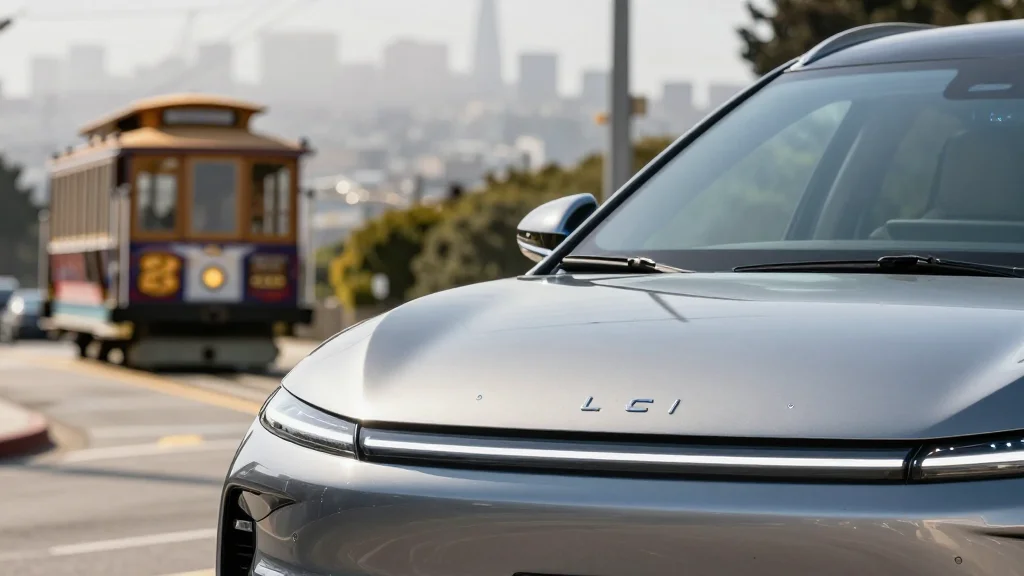
Uber and Nuro Start Premium Robotaxi Trials in San Francisco with Lucid Gravity SUVs

Companies Mentioned
Why It Matters
The Uber‑Nuro‑Lucid trial signals a shift from experimental autonomous vehicles to commercially viable robotaxi services that target higher‑margin segments. By leveraging a luxury EV platform, Uber can command premium fares while gathering real‑world data to refine its autonomy stack, potentially shortening the timeline for driverless operations. The partnership also illustrates how ride‑hailing giants are vertically integrating hardware, software and financing to control costs and differentiate offerings in a crowded market. If the pilot demonstrates reliable autonomous pickups and drop‑offs, it could accelerate regulatory approvals and encourage other cities to permit driverless fleets, expanding the overall market size for autonomous mobility. Conversely, any safety incident or operational hiccup could reinforce skepticism among regulators and the public, slowing industry momentum.
Key Takeaways
- •Uber launched a limited robotaxi trial in San Francisco using Lucid Gravity SUVs with Nuro's self‑driving system.
- •Uber invested $300 million in Lucid and committed to buying at least 20,000 Gravity SUVs over six years.
- •Nuro’s undisclosed multi‑hundred‑million‑dollar investment secures its autonomy stack for Uber’s service.
- •100 Gravity SUVs are already in Nuro’s engineering fleet for data collection across U.S. cities.
- •Production of the modified Lucid Gravity vehicles is expected to start in late 2026.
Pulse Analysis
Uber’s decision to pair a premium EV with an in‑house autonomous stack reflects a strategic bet that luxury robotaxi rides can generate higher per‑trip revenue than mass‑market services. The $300 million equity stake in Lucid not only guarantees vehicle supply but also aligns the two companies on a shared product roadmap, reducing the risk of supply chain disruptions that have plagued other autonomous pilots. By embedding Nuro’s stack—backed by Nvidia’s high‑performance hardware—Uber sidesteps the need to develop its own self‑driving software, accelerating time‑to‑market.
Historically, autonomous ride‑hailing has struggled with the economics of low‑margin trips, where the cost of sensors, compute and safety drivers outweighs fare revenue. Uber’s premium approach could prove more sustainable if it can attract corporate clients and affluent riders willing to pay a surcharge for a driverless, high‑end experience. However, the model also raises questions about scalability: luxury vehicles are more expensive to produce and maintain, and the market for premium robotaxi rides may be limited to a few dense urban corridors.
Competitive dynamics will intensify as Waymo expands its One Way service, Cruise targets mass‑market deployment, and Zoox continues to refine its purpose‑built robotaxi. Uber’s advantage lies in its massive rider base and brand recognition, but it must demonstrate that its autonomous system can match or exceed the safety and reliability records of its rivals. The upcoming public launch later this year will be a litmus test: a smooth transition to driverless operation could cement Uber’s position as a leader in premium autonomous mobility; any setbacks could cede ground to competitors who are already operating fully driverless fleets in select cities.
Uber and Nuro start premium robotaxi trials in San Francisco with Lucid Gravity SUVs
Comments
Want to join the conversation?
Loading comments...