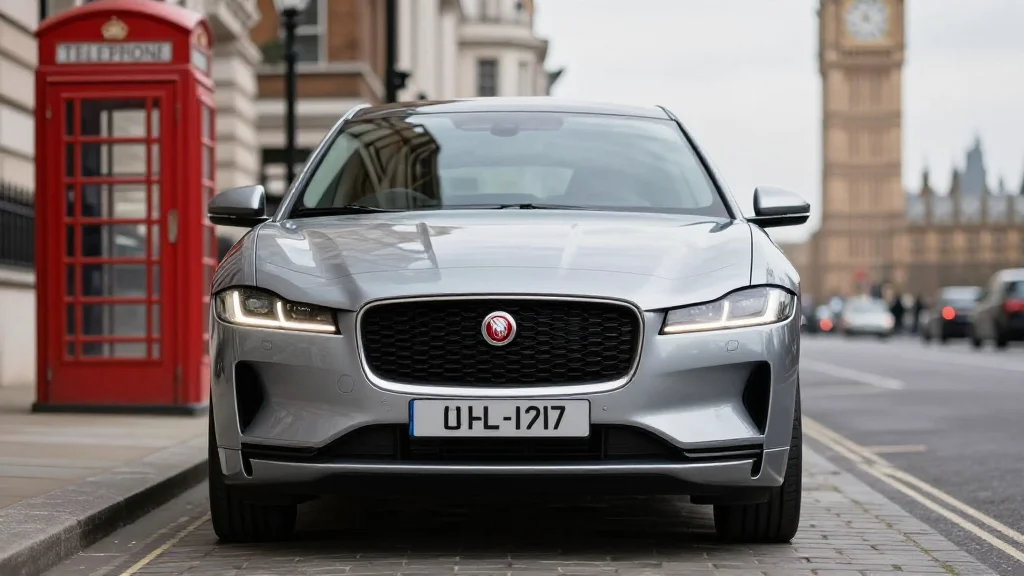
Waymo Launches Autonomous Ride‑hailing Trials in London with Safety Drivers

Companies Mentioned
Why It Matters
Waymo’s London trial is a litmus test for the viability of fully autonomous ride‑hailing in densely populated, regulatory‑heavy markets. Demonstrating a 92 % safety advantage over human drivers could accelerate policy reforms, encouraging other cities to adopt similar frameworks and attracting investment in autonomous‑vehicle ecosystems. The rollout also intensifies competition with firms like Uber, which is committing over $10 billion to build its own robotaxi fleet. If Waymo succeeds, it could set the benchmark for safety and operational standards, forcing rivals to match its performance or risk falling behind in the race for urban mobility dominance.
Key Takeaways
- •Waymo began London trials with ~100 Jaguar I‑PACE robotaxis and human safety drivers
- •Testing covers a 100‑square‑mile area and follows 170 million autonomous miles driven in the U.S.
- •Waymo claims a 92 % reduction in serious‑injury crashes versus human drivers
- •UK government support is pending; full rider‑only service expected later this year
- •Uber announced a $10 billion (≈£8 bn) investment in robotaxis, heightening competitive pressure
Pulse Analysis
Waymo’s entry into London marks the first major European deployment of its proprietary driver‑less platform, a move that could redefine the continent’s approach to autonomous mobility. The company’s incremental strategy—starting with safety drivers, gathering localized data, and then scaling—mirrors the playbook that helped it dominate U.S. markets such as Phoenix and San Francisco. By leveraging a fleet of Jaguar I‑PACE vehicles, Waymo also aligns with local automotive interests, potentially smoothing regulatory negotiations.
However, the trial unfolds against a backdrop of rising public skepticism and a competitive surge from Uber, which is pouring $10 billion into its own robotaxi ambitions. Uber’s aggressive capital deployment signals that the market is no longer a niche playground for a handful of tech giants; it is becoming a battleground for legacy mobility firms and new entrants alike. Waymo’s safety record, quantified by a 92 % crash reduction, will be its strongest bargaining chip with regulators and the public. If the company can translate U.S. safety metrics to the complex, multimodal environment of London, it will set a de‑facto standard that could accelerate the Automated Vehicles Act’s implementation.
Looking ahead, the key risk for Waymo is the transition from safety‑driver trials to fully autonomous operations. The removal of human oversight will test the robustness of its AI in real‑time, especially under unpredictable conditions such as heavy rain or congested city centers. Success could unlock a cascade of European rollouts, positioning Waymo as the default partner for city governments seeking to modernize public transport. Failure, however, would not only cede ground to Uber and local startups like Wayve but also embolden regulatory caution, potentially stalling the broader adoption of autonomous ride‑hailing across the region.
Waymo launches autonomous ride‑hailing trials in London with safety drivers
Comments
Want to join the conversation?
Loading comments...