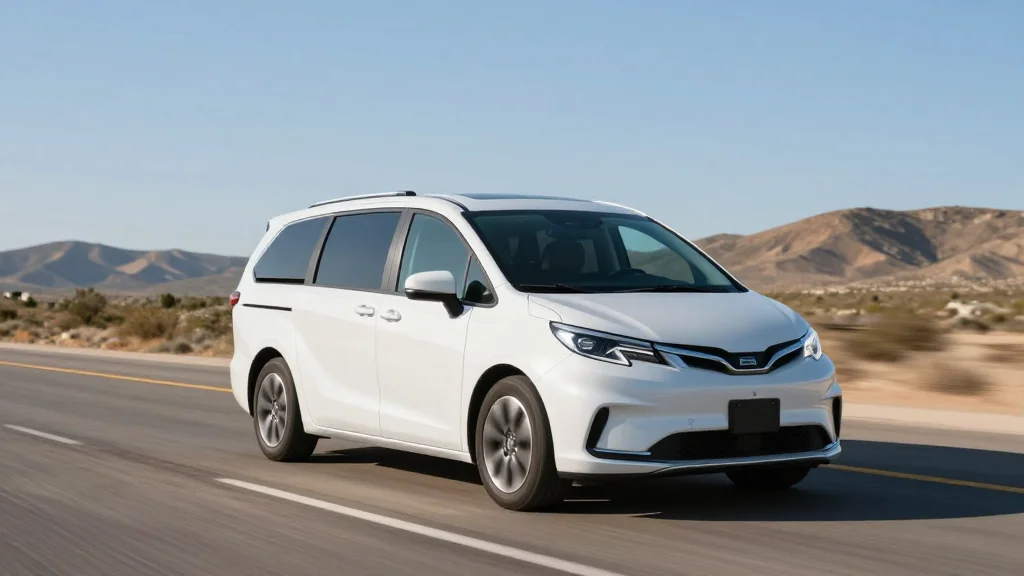
Waymo’s Texas Fleet Swells to 577 Vehicles, Leaving Tesla’s 42 Far Behind

Companies Mentioned
Why It Matters
The Texas registration gap provides a concrete metric of market traction in a state that has become a proving ground for autonomous mobility. Waymo’s ability to field hundreds of driverless taxis demonstrates that large‑scale deployment is feasible under existing safety and insurance frameworks, potentially lowering barriers for other cities to grant similar permits. For Tesla, the modest fleet size raises questions about the scalability of its Full Self‑Driving (FSD) approach, which relies heavily on camera‑only perception and extensive data labeling. The contrast may influence investor sentiment, regulatory attitudes, and the strategic choices of fleet operators weighing partnerships with either company. Beyond Texas, the data hints at a broader shift in the autonomy ecosystem. Companies that can secure state‑level approvals, demonstrate consistent safety performance, and produce cost‑effective hardware—like Waymo’s Ojai—are likely to capture the lion’s share of future robotaxi revenue. Tesla’s path, predicated on rapid software updates and vertical integration, will need to overcome both technical and regulatory hurdles before it can match Waymo’s operational footprint.
Key Takeaways
- •Waymo has registered 577 autonomous vehicles in Texas, 13.7× Tesla’s 42.
- •Texas DMV’s new tracker, effective May 28, provides the first public fleet counts for AV operators.
- •Waymo’s Ojai robotaxi, built by Zeekr, costs under $20,000 per unit and uses a sixth‑gen driver system.
- •Tesla’s robotaxi service remains limited to Austin, Dallas and Houston, with safety drivers still required.
- •Waymo’s $16 billion cash infusion values its robotaxi unit at $126 billion, far exceeding Tesla’s robotaxi market valuation.
Pulse Analysis
Waymo’s Texas registration lead is more than a numerical advantage; it signals a strategic mastery of the regulatory and operational playbook required for mass‑scale autonomy. By securing permits across four major Texas metros, Waymo has built a data moat that fuels continuous improvement of its Waymo Driver, while also creating a tangible revenue stream from commercial rides. The Ojai rollout further cements Waymo’s cost‑competitiveness, shrinking the price gap that once favored Tesla’s vertically integrated model. In contrast, Tesla’s reliance on a software‑first narrative has not translated into a comparable on‑ground presence. The company’s incremental approach—adding unsupervised vehicles one by one—may protect it from high‑profile safety incidents, but it also delays the network effects that make robotaxis economically viable.
Investors are likely to recalibrate expectations. Waymo’s ability to demonstrate a large, operational fleet under a single state’s oversight reduces perceived risk, making its $126 billion valuation appear justified. Tesla, meanwhile, must confront the widening disparity between its public promises of a 500‑vehicle Austin fleet by the end of 2025 and the reality of a 42‑vehicle count. The gap could pressure Musk’s narrative of “hyperexponential” growth and may prompt a strategic pivot toward partnerships or hardware upgrades to accelerate deployment.
Looking ahead, the Texas data set will become a benchmark for other jurisdictions. Cities evaluating autonomous‑vehicle pilots will likely reference Waymo’s registration and safety record as a template, potentially marginalizing competitors that cannot match its scale. For the autonomy industry, the lesson is clear: regulatory alignment, fleet size, and cost‑effective hardware are the three pillars that will determine which company ultimately dominates the robotaxi market.
Waymo’s Texas Fleet Swells to 577 Vehicles, Leaving Tesla’s 42 Far Behind
Comments
Want to join the conversation?
Loading comments...