XPENG Unveils Full‑Stack Physical AI Ecosystem at Auto China 2026

Companies Mentioned
Why It Matters
XPENG’s announcement marks a pivotal moment for autonomous mobility in China, where the convergence of vehicle, robotics and aerial platforms under a single AI umbrella could reshape transportation ecosystems. By delivering a hardware‑rich, software‑driven stack that directly addresses edge‑case scenarios, XPENG aims to shorten the path to Level‑4 deployment, a milestone that promises driver‑less operation in complex urban environments. If XPENG can translate its test‑drive enthusiasm into sustained sales and reliable L4 performance, it could pressure rivals to adopt similarly integrated approaches, potentially accelerating industry‑wide standards for physical AI. The move also underscores China’s ambition to lead in next‑generation mobility, challenging the dominance of Western players such as Tesla and Waymo.
Key Takeaways
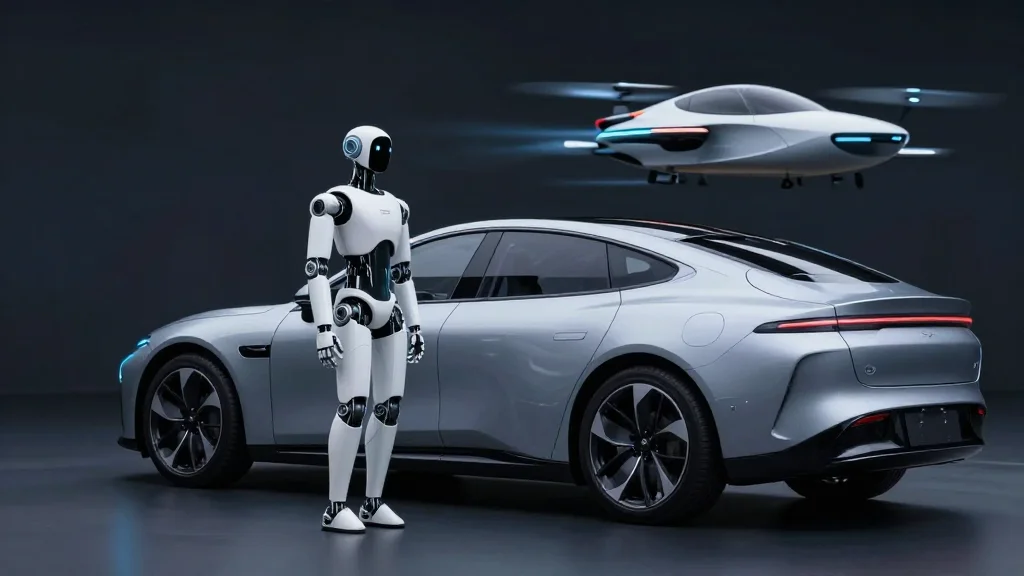
- •XPENG unveiled GX robotaxi, MONA M03, next‑gen P7, X9, humanoid robot IRON and flying car “Land Aircraft Carrier” at Auto China 2026.
- •VLA 2.0 report showed Ultra‑series orders up 118% month‑over‑month and 100,000 test‑drive participants with 98% satisfaction.
- •New Campus and Underground Parking Safari features target low‑light, adverse‑weather and unmarked‑road conditions.
- •GX robotaxi prototype integrates up to four Turing AI chips delivering 3,000 TOPS for Level‑4 autonomy.
- •Average time from test drive to order fell 44.7%, and 98.52% of new owners activated intelligent‑driving features daily.
Pulse Analysis
XPENG’s strategy reflects a shift from incremental ADAS upgrades to a holistic physical‑AI platform that binds together perception hardware, large‑model AI, and diversified mobility assets. By controlling the stack—from Turing chips to the VLA 2.0 software layer—the company can iterate faster, collect richer data, and fine‑tune algorithms across vehicle, robot and aerial domains. This vertical integration mirrors the approach taken by Tesla in the West, but XPENG adds a broader mobility canvas that includes robotaxis and flying cars, potentially creating network effects that amplify data volume and model robustness.
The market reaction to the 118% order surge suggests that Chinese consumers are beginning to treat autonomous capability as a core value proposition rather than a luxury add‑on. However, scaling L4 autonomy will still hinge on regulatory approvals, high‑definition mapping coverage, and the ability to handle rare edge cases at scale. XPENG’s upcoming Campus and Underground Parking Safari functions are early attempts to address these gaps, but real‑world fleet trials will be the ultimate test.
If XPENG can deliver reliable L4 performance in its GX robotaxi and translate the hype into sustained sales, it could force legacy automakers and tech entrants to accelerate their own full‑stack AI investments. The next six months—culminating in the rollout of the new features and pilot robotaxi deployments—will be a litmus test for whether China’s autonomous ambitions can move from showcase to everyday reality.
XPENG Unveils Full‑Stack Physical AI Ecosystem at Auto China 2026
Comments
Want to join the conversation?
Loading comments...