
Why It Matters
The approvals highlight a shift toward precision oncology and accelerated pathways, reshaping market opportunities and R&D investment priorities across multiple therapeutic areas.
Key Takeaways
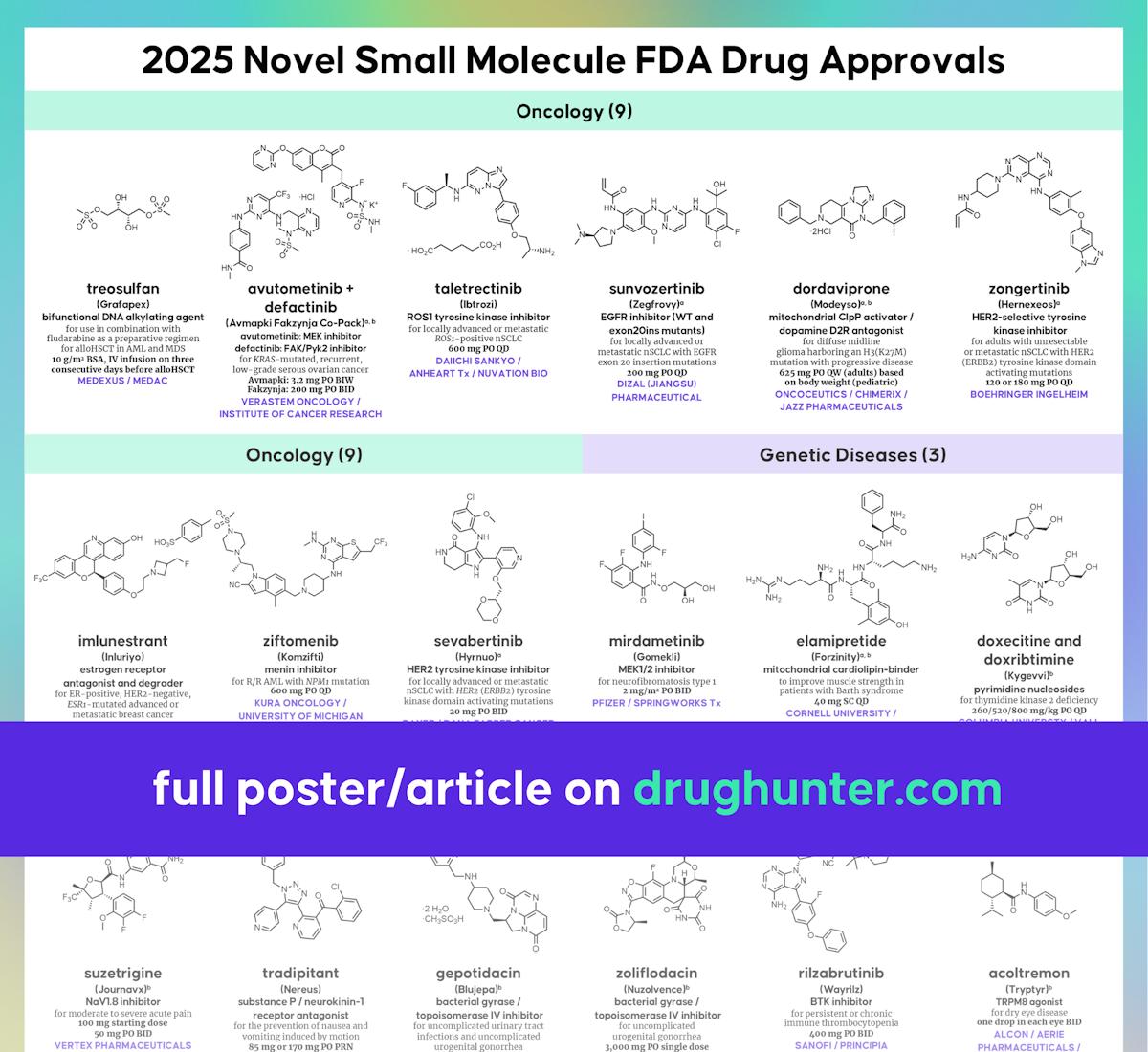
- •Oncology accounted for nine of thirty‑one small‑molecule approvals.
- •First‑in‑class therapies comprised 29% of small‑molecule launches.
- •Accelerated approvals represented 22% of the small‑molecule cohort.
- •Avustometinib/defactinib marked a rare “novel‑novel” combo approval.
- •Non‑oncology approvals expanded into pain, infection, and rare diseases.
Pulse Analysis
The 2025 small‑molecule landscape reflects a maturing pipeline where oncology continues to drive volume, yet the diversification into infectious disease, neurology, and rare genetic disorders signals a strategic pivot for many biotech firms. Compared with 2024’s 50 novel approvals, the modest dip to 46 total approvals underscores tighter regulatory scrutiny and a competitive market for high‑impact indications. Precision oncology, especially in KRAS‑mutated and ROS1‑positive lung cancers, benefitted from biomarker‑driven trials, delivering rapid market entry and premium pricing models that investors closely monitor.
Regulatory mechanisms played a pivotal role in shaping the portfolio. Accelerated approval accounted for over a fifth of small‑molecule entries, enabling faster patient access for drugs like avustometinib/defactinib and several first‑in‑class agents targeting resistant pathogens. The FDA’s decision to treat the co‑pack as a single novel entity illustrates an evolving flexibility that could streamline combination‑therapy development. Simultaneously, first‑in‑class designations, representing 29% of launches, highlight a robust pipeline of innovative mechanisms, from reversible covalent kinase inhibitors to mitochondrial CLPP activators, expanding therapeutic options and creating new patent lifecycles.
Looking ahead to 2026, the pipeline suggests heightened activity in next‑generation modalities such as PROTACs, oral PCSK9 inhibitors, and multi‑target kinase agents. Early PDUFA dates for candidates like vepdegestrant and orforglipron indicate that the momentum from 2025 will likely translate into a surge of high‑value approvals. Companies that can align their R&D with accelerated pathways and demonstrate clear biomarker strategies are poised to capture market share, while investors should watch for valuation shifts as these novel therapies transition from regulatory success to commercial performance.
2025 Novel Small Molecule FDA Drug Approvals
0
Comments
Want to join the conversation?
Loading comments...