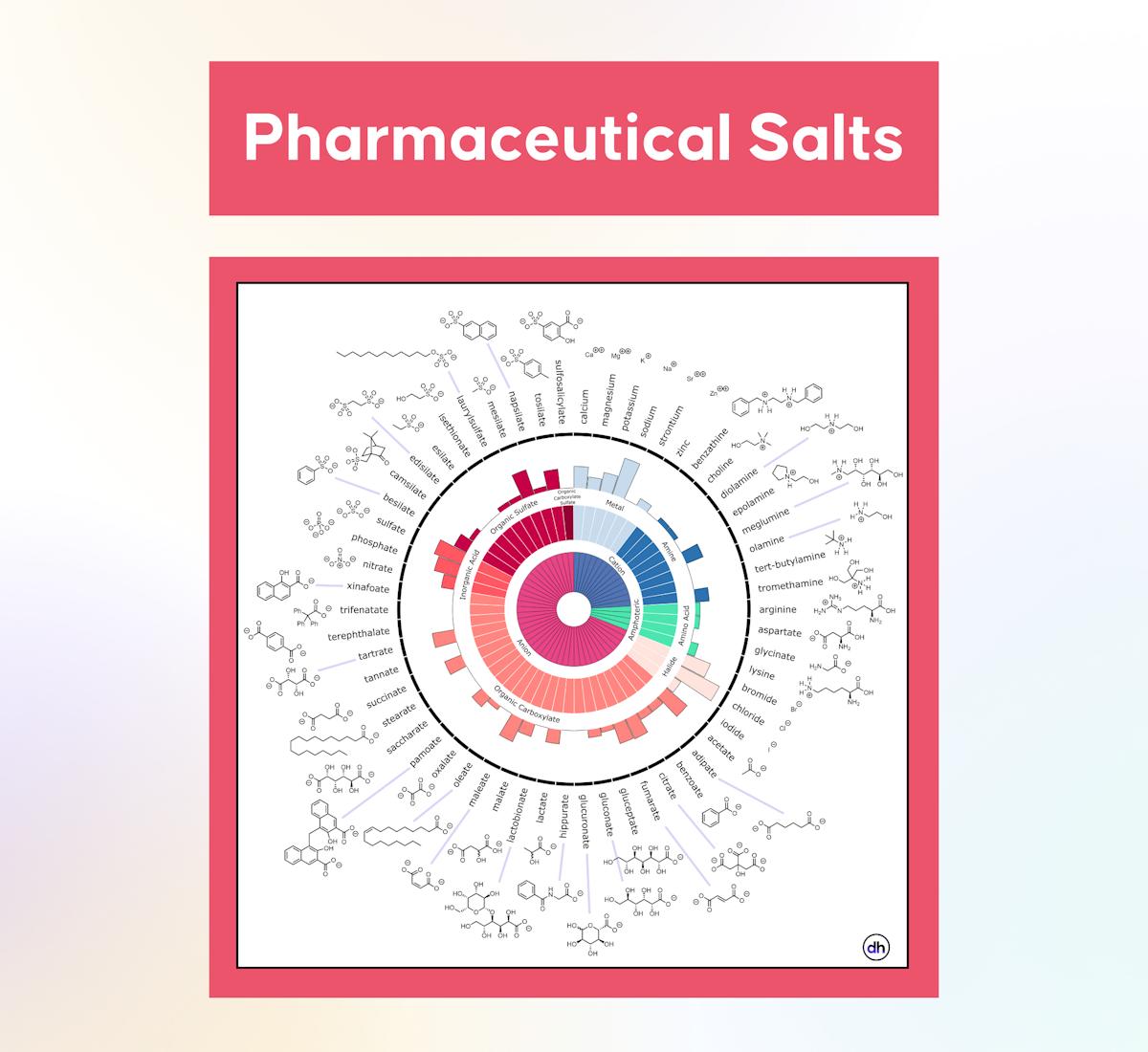
A Compendium of Pharmaceutical Salts to Help Flavor Your Drug Formulation
•December 12, 2025
0

Why It Matters
Effective salt selection directly impacts drug palatability, bioavailability, and time‑to‑market, giving formulators a competitive edge in a crowded market. It also helps manufacturers meet stringent regulatory expectations while reducing development costs.
Key Takeaways
- •Salts improve solubility and palatability of oral drugs
- •Choice depends on pKa, hygroscopicity, and regulatory status
- •Counterions affect stability, bioavailability, and manufacturing cost
- •Novel organic salts enable taste masking for pediatric formulations
- •Regulatory guidance outlines acceptable pharmaceutical salt excipients
Pulse Analysis
Pharmaceutical salts have become a cornerstone of modern oral formulation strategy, offering a versatile toolkit for addressing the twin challenges of solubility and taste. By pairing an active pharmaceutical ingredient (API) with a counter‑ion that optimizes its pKa, formulators can dramatically increase dissolution rates, which in turn enhances bioavailability. This approach is especially valuable for weakly acidic or basic APIs that struggle to reach therapeutic concentrations in the gastrointestinal tract. Moreover, the choice of salt influences the hygroscopic profile of the final product, affecting shelf‑life and packaging requirements.
Beyond the classic inorganic salts such as sodium, potassium, and calcium, a new generation of organic counter‑ions—like mesylate, tosylate, and acetate derivatives—are gaining traction for their superior taste‑masking capabilities. These salts can suppress the inherent bitterness of many APIs, a critical factor for pediatric and geriatric populations who are sensitive to unpleasant flavors. The industry is also seeing increased adoption of multi‑salt systems, where a primary salt improves solubility while a secondary salt addresses organoleptic properties, creating a balanced formulation without compromising stability.
Regulatory considerations remain paramount. Agencies such as the FDA and EMA maintain explicit lists of approved salt excipients, and any novel salt must undergo rigorous toxicological evaluation. Formulators must therefore align salt selection with both scientific performance criteria and compliance pathways to avoid costly delays. As the market pushes toward patient‑centric drug design, the strategic use of pharmaceutical salts will continue to differentiate successful products, streamline development timelines, and ultimately improve therapeutic outcomes.
A Compendium of Pharmaceutical Salts to Help Flavor Your Drug Formulation
0
Comments
Want to join the conversation?
Loading comments...