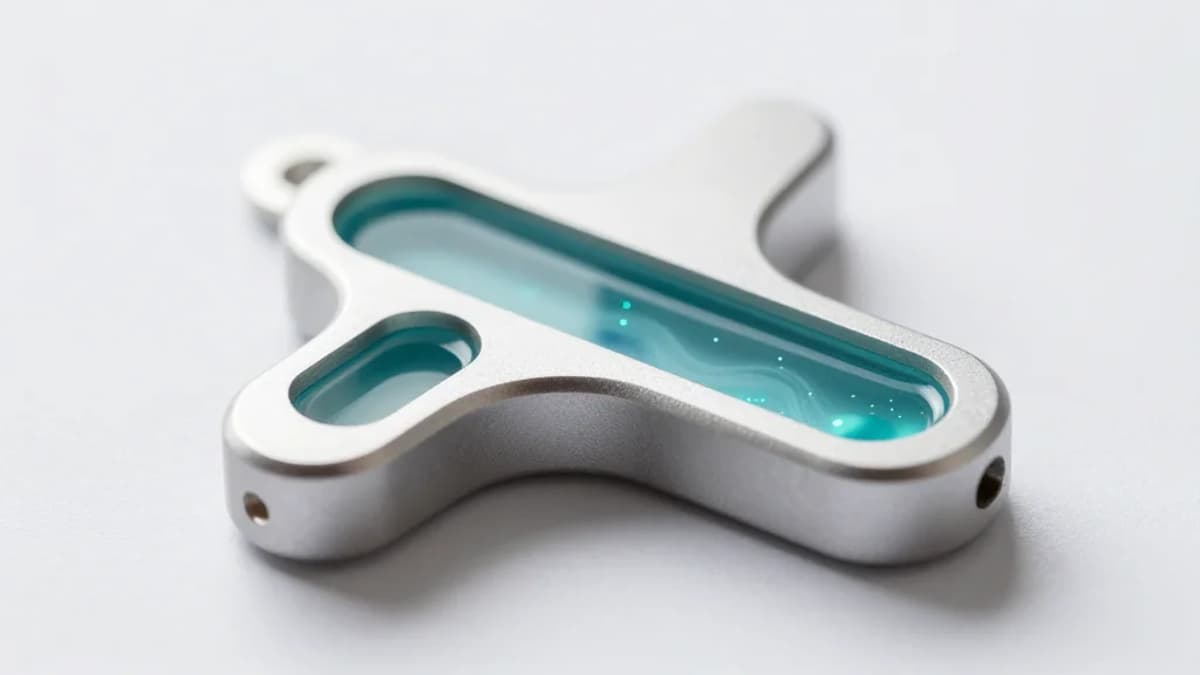
How Aircraft Wing Physics Could Accelerate the Next Generation of RNA Medicines
•February 2, 2026
0
Why It Matters
The ability to seamlessly scale LNP production while preserving quality removes a major bottleneck in RNA‑based therapeutics, accelerating clinical translation and reducing development expenses.
Key Takeaways
- •Aerofoil microchannels enable uniform LNP mixing across scales
- •System reduces reagent cost by ~58% versus commercial platforms
- •Produces 38‑150 nm particles with polydispersity <0.2
- •Handles 0.2‑50 mL/min flow, from screening to liter‑scale
- •Enables up to 25 formulations per hour for rapid optimization
Pulse Analysis
The surge of mRNA vaccines during the COVID‑19 pandemic demonstrated that lipid nanoparticles can safely ferry genetic material into human cells, unlocking a new class of medicines that includes vaccines, gene‑editing tools and cancer immunotherapies. Yet the path from discovery to market remains hampered by the labor‑intensive formulation process, where each change in lipid ratio can dramatically alter particle size, stability and delivery efficiency. Traditional pipette‑based mixing offers low throughput and poor reproducibility, while existing microfluidic devices often trade scalability for uniformity, leaving developers stuck between costly small‑scale screens and expensive pilot‑plant runs.
The University College Dublin team addressed this gap with an aerofoil‑inspired microfluidic architecture that mimics the lift‑generating pressure differential of an aircraft wing. By embedding wing‑cross‑section structures within each channel, the device creates layered flow at low rates and vortex‑enhanced mixing at high rates, delivering consistent shear across a 0.2‑to‑50 mL min⁻¹ window. In practice, the platform produces LNPs ranging from 38 to 150 nm with polydispersity indices below 0.2, and encapsulation efficiencies above 85 % for mRNA, plasmid DNA and siRNA, all while maintaining <18 % error between simulation and experiment.
From a commercial perspective, the dual‑instrument system—MiNANO‑form for parallel screening and MiNANO‑scale for continuous manufacturing—cuts reagent consumption by roughly 58 % and can output up to 25 distinct formulations per hour. This throughput enables rapid data generation for machine‑learning‑driven optimization, shortening the iterative cycle that traditionally spans months. By bridging the gap between bench‑scale discovery and GMP‑grade production, the technology promises to lower entry barriers for biotech firms, accelerate the pipeline for next‑generation RNA therapeutics, and ultimately expand market access to personalized gene‑based medicines.
How aircraft wing physics could accelerate the next generation of RNA medicines
0
Comments
Want to join the conversation?
Loading comments...