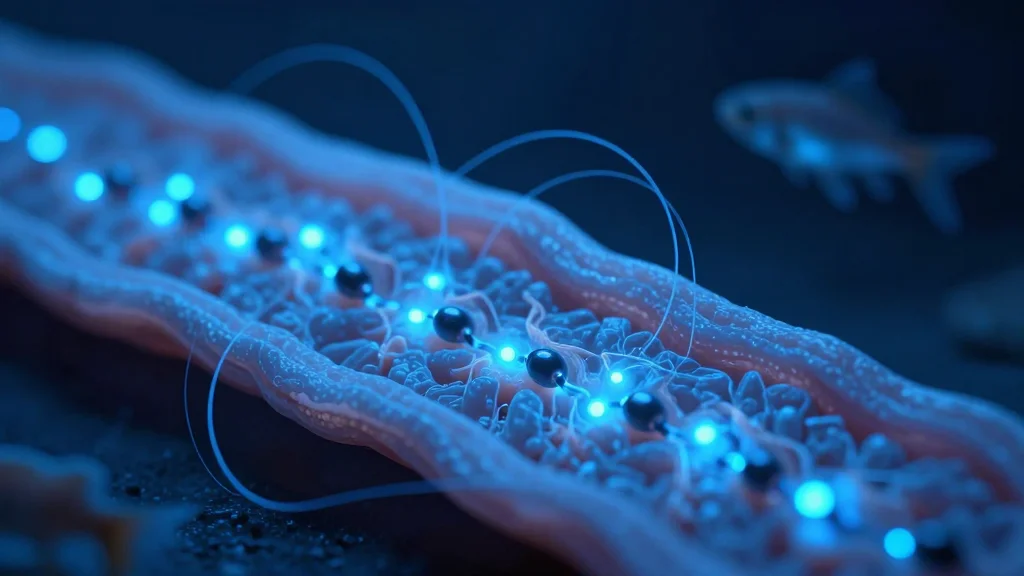
In Animal Study, Nanobots Repair Spinal Cords

Key Takeaways
- •Magnetic nanobots steer stem cells to injury site
- •Electrical stimulation via nanobots enhances neural differentiation
- •Zebrafish recovered swimming within three days
- •Mice showed improved gait without immune rejection
- •Human trials still years away due to scaling challenges
Pulse Analysis
Spinal‑cord injury has long been a therapeutic blind spot, with stem‑cell hype often outpacing real progress. Traditional cell‑delivery methods rely on invasive wires or passive diffusion, leading to poor targeting and limited functional integration. By embedding induced pluripotent stem cells inside magnetic nanobots, researchers created a hybrid platform that can be remotely guided and electrically activated, addressing both placement precision and maturation cues in one package.
The study first validated the concept in zebrafish, a species capable of natural spinal regeneration. Alternating magnetic fields directed the NPC‑bots to the lesion, prompting rapid neuronal and astrocytic differentiation and resulting in near‑complete restoration of swimming behavior within 72 hours. Translating the model to a non‑regenerative mouse demonstrated that the nanobots remained biocompatible for at least four weeks, migrated to the injury site, formed functional connections, and produced measurable improvements in stride length and coordination, all without triggering immune rejection.
While the results are promising, scaling the technology to human patients presents formidable challenges. Human spinal cords are orders of magnitude larger, requiring deeper magnetic penetration and longer migration pathways for the nanobots. Moreover, long‑term safety, nanobot dissolution kinetics, and regulatory approval will demand extensive preclinical data. Nonetheless, the ability to non‑invasively guide and activate stem cells could redefine regenerative neurology, offering a viable route toward functional recovery for the estimated 17,000 new spinal‑cord injuries each year in the United States.
In Animal Study, Nanobots Repair Spinal Cords
Comments
Want to join the conversation?