Organoids and Artificial Intelligence 🫐
•February 13, 2026
0

Why It Matters
Integrating AI with organoids promises faster, more accurate drug development and personalized therapies, potentially reducing reliance on animal testing and improving patient outcomes. As biological computing matures, it could offer energy‑efficient alternatives to traditional silicon chips, making the topic both scientifically groundbreaking and commercially disruptive.
Organoids and Artificial Intelligence 🫐
[
](https://substackcdn.com/image/fetch/$s_!RHYG!,f_auto,q_auto:good,fl_progressive:steep/https%3A%2F%2Fsubstack-post-media.s3.amazonaws.com%2Fpublic%2Fimages%2Fb60f385e-8601-4808-bf36-32e797103960_1024x608.png)
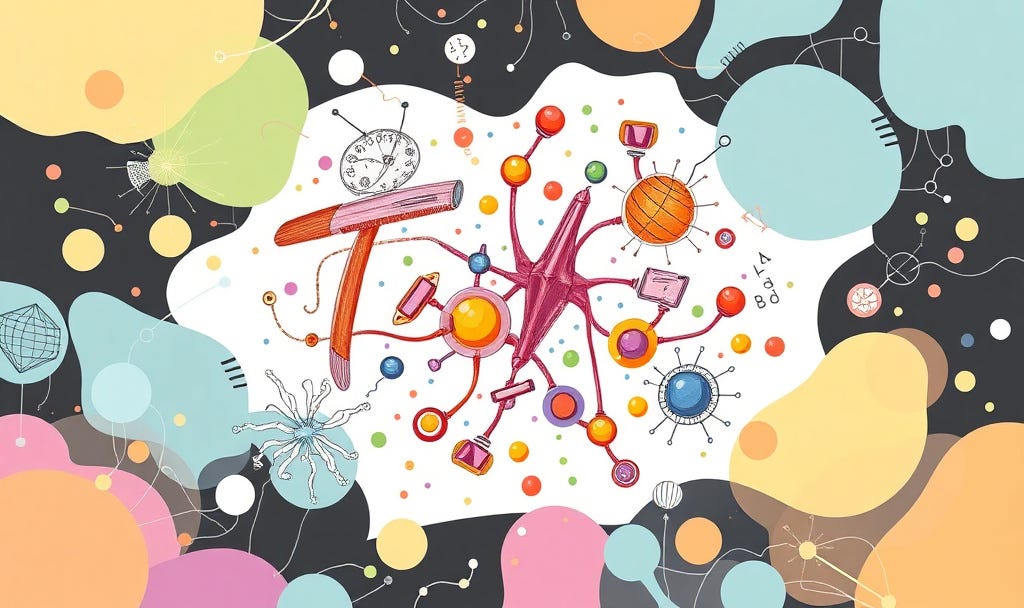
Organoid technology and artificial intelligence 👾
The convergence of organoid technology and artificial intelligence (AI) represents one of the most exciting frontiers in biomedical research, with applications spanning drug discovery, disease modeling, and even novel computing paradigms. Some key areas of integration are: AI-Enhanced Organoid Analysis, Organoid Intelligence (OI) (Organoid Intelligence (OI): A New Frontier), Precision Medicine Applications, and Organ-on-Chip + AI Integration.
For example, Machine Learning (ML) algorithms are transforming how researchers analyze organoids with: ▶️ Automated image analysis (AI tools like MOrgAna, ML based Organoid Analysis, can automatically identify, segment, and quantify organoids in microscopy images without requiring coding expertise). ▶️ Or with Multidimensional assessment (AI processes complex datasets including morphology, omics data, histology, and functional properties to extract insights beyond human capability) and ▶️ High-throughput screening (Deep learning models analyze vast datasets from organoid cultures to identify patterns in cellular behavior and drug responses).
A revolutionary concept emerging at this intersection is “Organoid Intelligence” (Biological Computing)—using brain organoids as biological processors integrated with AI systems, such as: Brain organoids derived from human stem cells that can form neural networks capable of basic learning and memory functions. These biological systems are being interfaced with computational platforms to create hybrid bio-AI systems that may offer energy-efficient alternatives to traditional silicon-based computing.
Furthermore, the AI-organoid partnership is accelerating personalized healthcare through: ▶️ Patient-specific disease modeling: organoids grown from patient-derived cells combined with AI analysis enable prediction of individual drug responses and disease progression; ▶️ Cancer immunotherapy: ML algorithms analyze tumor-immune organoid co-cultures to identify mechanisms of immune evasion and optimize immunotherapy strategies; and ▶️ Drug development: AI enhances organoid-based platforms by automating high-throughput screening and improving prediction of drug efficacy and toxicity before clinical trials.
Beyond the traditional organoids (used for reduced reliance on animal testing through more human-relevant predictive models), the emerging microfluidic “organ-on-chip” systems combined with AI offer: ▶️ Real-time monitoring of organ function with AI-driven interpretation of complex physiological data; and ▶️ Multi-organ chip systems that simulate whole-body responses, with AI modeling systemic drug effects and toxicity. Moreover, the synergy between organoids and AI is expected to transform the Virtual organoids namely 👉 AI-generated “digital twins” that complement physical organoids for simulation and prediction.
However, this rapidly evolving field faces important challenges such as: ▶️ Technical hurdles: Scaling brain organoids for meaningful computation requires advances in vascularization, longevity, and bioelectronic interfaces. ▶️ Ethical questions: As neural organoids become more sophisticated, questions arise about consciousness, sentience, and appropriate use. And ▶️ Data complexity: Integrating multimodal organoid data (imaging, electrophysiology, omics) requires sophisticated AI architectures.
Examples of TechBio Organoid Companies are the following:🔺**28Bio** that is integrating tissue engineering, neural interfacing, and AI to engineer human brain models with neurological functions, including memory, learning, and cognition.🔺Cortical Labs (brain organoids for computing) that created the DishBrain, which combines living brain cells with computing devices to create machines with biological intelligence.🔺**Vivodyne (automated 3D tissues)** that is enabling human testing before clinical trials with AI‑scale testing on lab-grown human organs 🫁🫀.🔺**BrainStorm Therapeutics** that leverages AI to analyze organoid data in real-time, accelerating disease research. These firms use AI to analyze complex 3D tissue behavior, optimizing drug screening, and reducing animal testing.🔺**Curi Bio** that is integrating human iPSC-derived cells, tissue-specific biosystems, and AI-enabled data analytics to accelerate the discovery of new therapeutics (Curi Bio Secures $10M Series B to Scale Human-Relevant iPSC-Based Preclinical Platforms and Advanced Data Analysis for Drug Discovery).🔺**PATH Biotech** that is applying a proprietary AI platform (PATHTM) to integrate multi-omics, single-cell, imaging and clinical data to identify novel druggable targets and predict precision therapeutics. The AI-derived hypotheses are then iteratively validated using patient-derived organoids, translatable animal models, pharmacology and chemistry to optimize small-molecule candidates targeting neurodegeneration, oncology, autoimmune disease and healthy aging toward clinical development.🔺**RUMI Scientific** that is leveraging AI and stem cell-derived organoids to build accurate disease models for drug discovery. Then we have 🔺**OrganAId** that is utilizing a specialized AI, multi-step analysis on patient-derived organoids for personalized drug prediction (toxicity and efficacy) (Creation of OrganAID Holdings, a spin-off led by UBneuro). And🔺**ALP AI** that applies AI and organoid-trained immunology to redesign antibodies and reduce immunogenicity. In particular, its tonsil organoid-trained platform predicts and mitigates anti-drug antibody (ADA) risk early in hit generation, while a protein language–based antibody translation model humanizes variable domains.
Designed to help you reduce stress and anxiety, be creative, and stay focused, with microdosing (Lion’s Mane mushroom 🍄 and L-theanine from green tea leaves).
Clarity by Flowdose ☺️
Reduce your Stress with Micro Coffee ☕ (Delicious blend of ✅ medium roast Arabica coffee, ✅ probiotics, ✅ cacao and ✅ organic mushrooms, designed for enhanced focus, improved mood, gut health, and jitter-free energy) and Belgian Dark Chocolate 🍫 (Made with dark chocolate imported from Belgium: fast acting, clean and precise dosing).
[
](https://substackcdn.com/image/fetch/$s_!hfzs!,f_auto,q_auto:good,fl_progressive:steep/https%3A%2F%2Fsubstack-post-media.s3.amazonaws.com%2Fpublic%2Fimages%2Fd9de786b-1f5a-4fbb-b4a7-eecf45b627e9_1024x608.png)
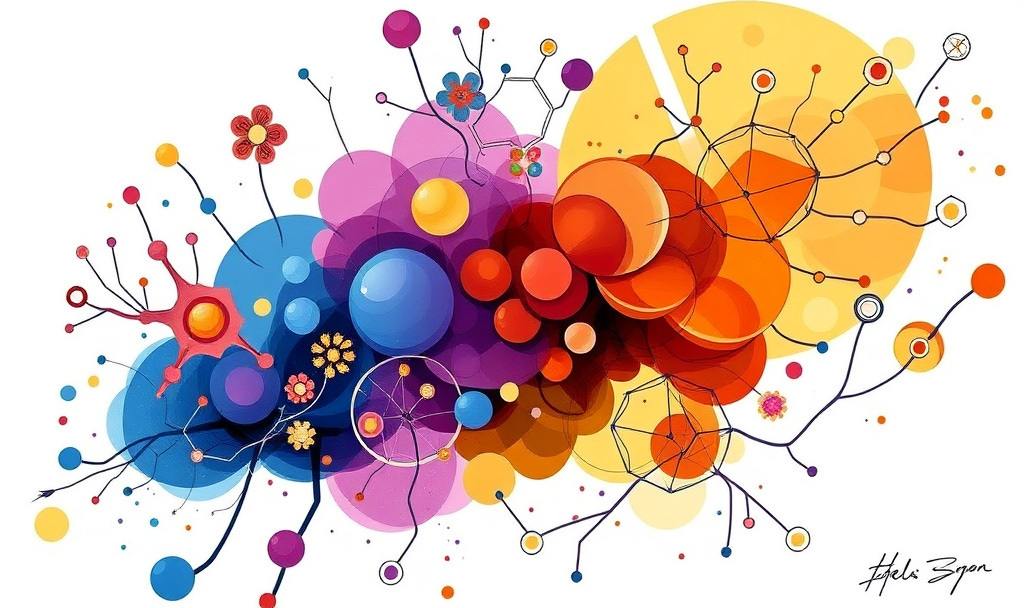
Organoid Intelligence (OI) & Biocomputing Companies 🧫💻
This Substack is reader-supported. To receive new posts and support my work, consider becoming a free or paid subscriber.
0
Comments
Want to join the conversation?
Loading comments...