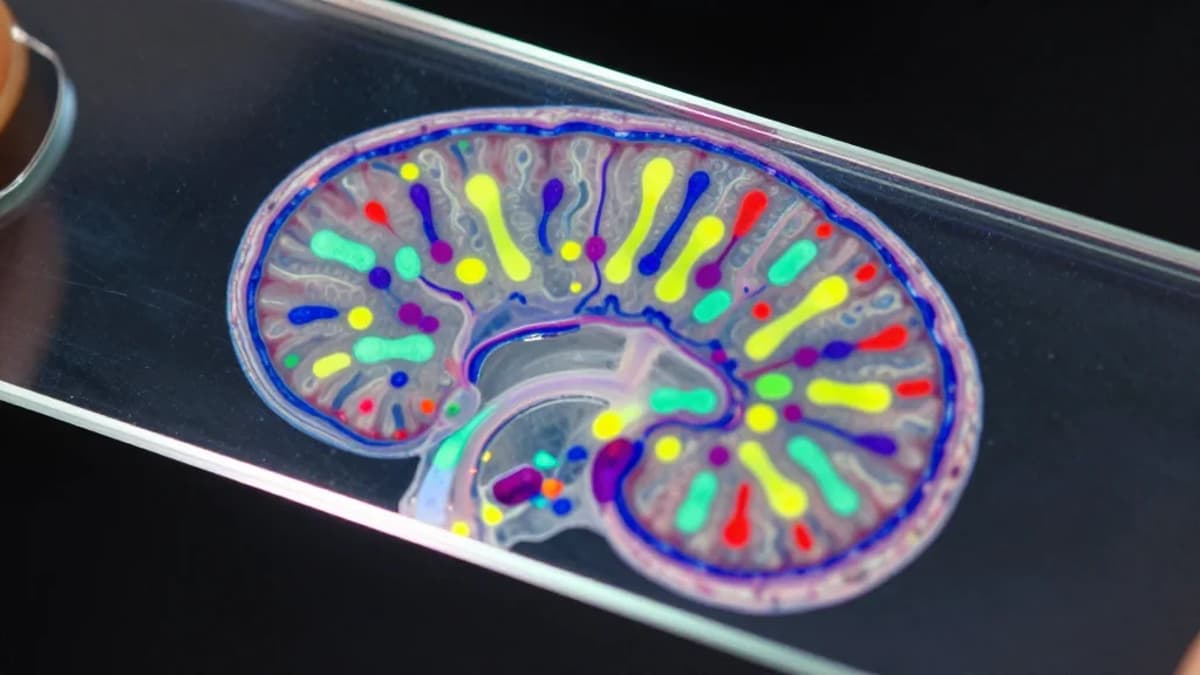
A Transcriptional Program Associated with Neurotransmission in the Living Human Brain
•February 19, 2026
0
Why It Matters
The work provides the first molecular map tying live human neurotransmission to specific gene networks, opening avenues for precision neuromodulation and drug development.
Key Takeaways
- •Living PFC biopsies linked to real-time neurotransmission measurements
- •FSCV, MER, and iEEG signatures converge on 588-gene TPAWN program
- •TPAWN genes show strong evolutionary constraint and disease associations
- •Dopamine-related signatures most robust across cell types
- •Npr3 excitatory neurons may drive PFC-subcortical communication
Pulse Analysis
Understanding how gene activity drives brain signaling has long been hampered by reliance on post‑mortem tissue, where neurotransmission ceases and RNA degrades. The Living Brain Project overcame this limitation by safely extracting prefrontal cortex samples during deep‑brain‑stimulation surgeries and simultaneously recording real‑time neurotransmitter fluctuations with fast‑scan cyclic voltammetry, microelectrode recordings, and intracranial EEG. By coupling high‑resolution single‑nucleus and bulk RNA sequencing with these electrophysiological readouts, the researchers created a unique dataset that captures the transcriptomic state of the brain while it is actively communicating.
The analysis identified differential‑expression signatures for dopamine, serotonin and norepinephrine across six cortical cell classes, with dopamine‑excitory neuron signatures showing the strongest correlation to live recordings. When the FSCV signatures were compared with independent MER and iEEG datasets, more than three‑quarters of the pairwise tests aligned, allowing the authors to distill a core set of 588 genes—TPAWN—that consistently track neurotransmission intensity. Enrichment testing linked TPAWN to classic synaptic pathways such as glutamatergic and GABAergic signaling, and highlighted Npr3‑positive layer‑5 excitatory neurons as a likely conduit between prefrontal cortex and subcortical structures.
Beyond its mechanistic insight, TPAWN proved biologically constrained: its members exhibit lower loss‑of‑function tolerance than other brain‑expressed genes and rare truncating variants were associated with a three‑fold increase in hallucination risk in a large phenome‑wide cohort. This convergence of evolutionary pressure and clinical phenotype suggests that TPAWN could serve as a biomarker panel for neuropsychiatric vulnerability and a target list for therapies that modulate neurotransmission without invasive surgery. Future studies expanding the sample size, incorporating resting‑state recordings, and integrating proteomic data will refine the program’s predictive power and accelerate precision‑medicine approaches for disorders such as Parkinson’s disease, depression, and schizophrenia.
A transcriptional program associated with neurotransmission in the living human brain
0
Comments
Want to join the conversation?
Loading comments...