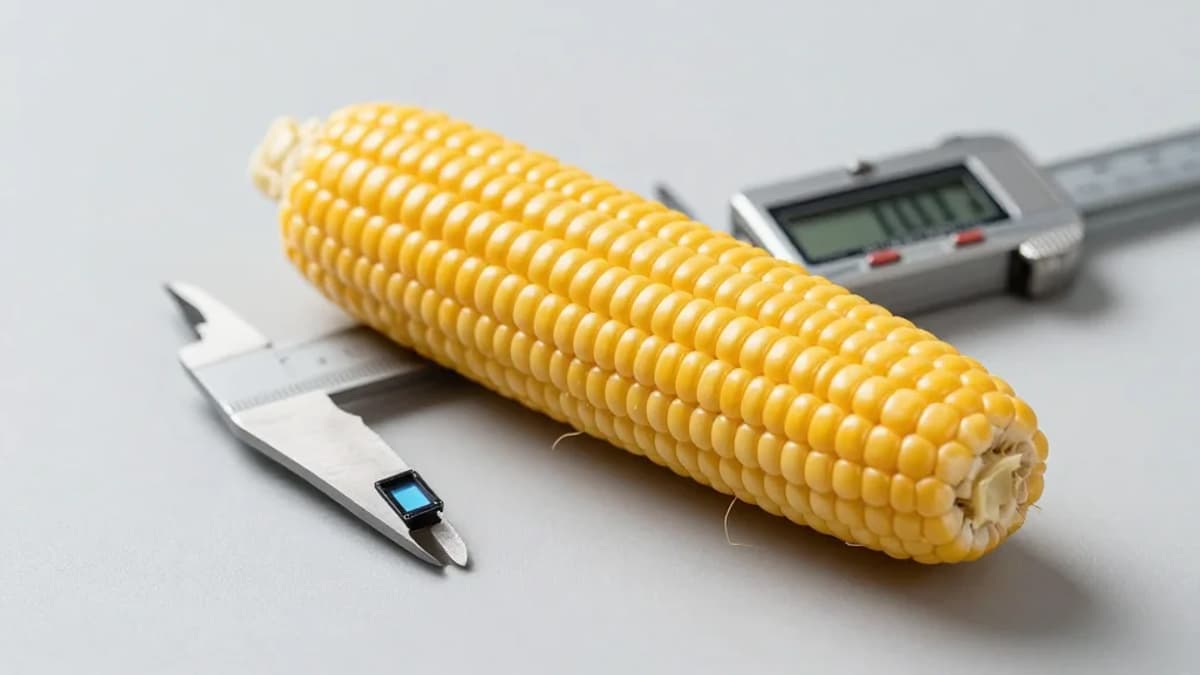
A Zero-Shot Learning Framework for Maize Cob Phenotyping
•January 2, 2026
0
Why It Matters
The breakthrough removes data‑labeling and hardware barriers, enabling rapid, cost‑effective phenotyping for breeders and growers worldwide.
Key Takeaways
- •Zero‑shot model works without retraining across varieties
- •Achieves 98‑100% detection accuracy
- •Works on smartphone images, enabling field use
- •Lightweight design runs on edge devices
- •Trait estimation correlation >0.95, R² up to 0.93
Pulse Analysis
The agricultural sector has long struggled with phenotyping bottlenecks that slow breeding cycles and inflate costs. Traditional manual measurements of maize cob geometry demand skilled labor and controlled environments, while supervised deep‑learning pipelines require extensive labeled datasets and frequent model updates when new varieties appear. These constraints limit adoption among resource‑constrained farms and hinder real‑time decision making. As precision agriculture expands, a method that can instantly interpret visual data without bespoke training is becoming a strategic priority for growers worldwide.
The zero‑shot learning framework introduced by Zhang, Wu and collaborators sidesteps these hurdles by coupling Grounding DINO’s text‑guided object detection with a lightweight segmentation module. Users simply supply natural‑language prompts describing the target trait, allowing the model to generate semantic embeddings that locate and outline cob structures across diverse lighting conditions. Reported results show detection accuracies between 98 % and 100 %, segmentation precision of 99.6 %, and trait‑estimation correlations exceeding 0.95, with yield‑prediction R² values up to 0.93. Crucially, the pipeline runs on smartphones and edge hardware, eliminating the need for high‑performance GPUs.
Beyond maize, the zero‑shot paradigm offers a template for rapid phenotyping of other staple crops, accelerating breeding pipelines and informing precision‑farm management. By removing the data‑labeling bottleneck, agritech firms can deploy analytics services at scale, lowering entry barriers for smallholders and boosting adoption of digital agriculture tools. The ability to predict yields with high fidelity directly from field images also supports more accurate supply‑chain forecasting and risk assessment. As the technology matures, integration with satellite or drone platforms could further extend its reach, reshaping data‑driven decision making across the agri‑food sector.
A zero-shot learning framework for maize cob phenotyping
0
Comments
Want to join the conversation?
Loading comments...