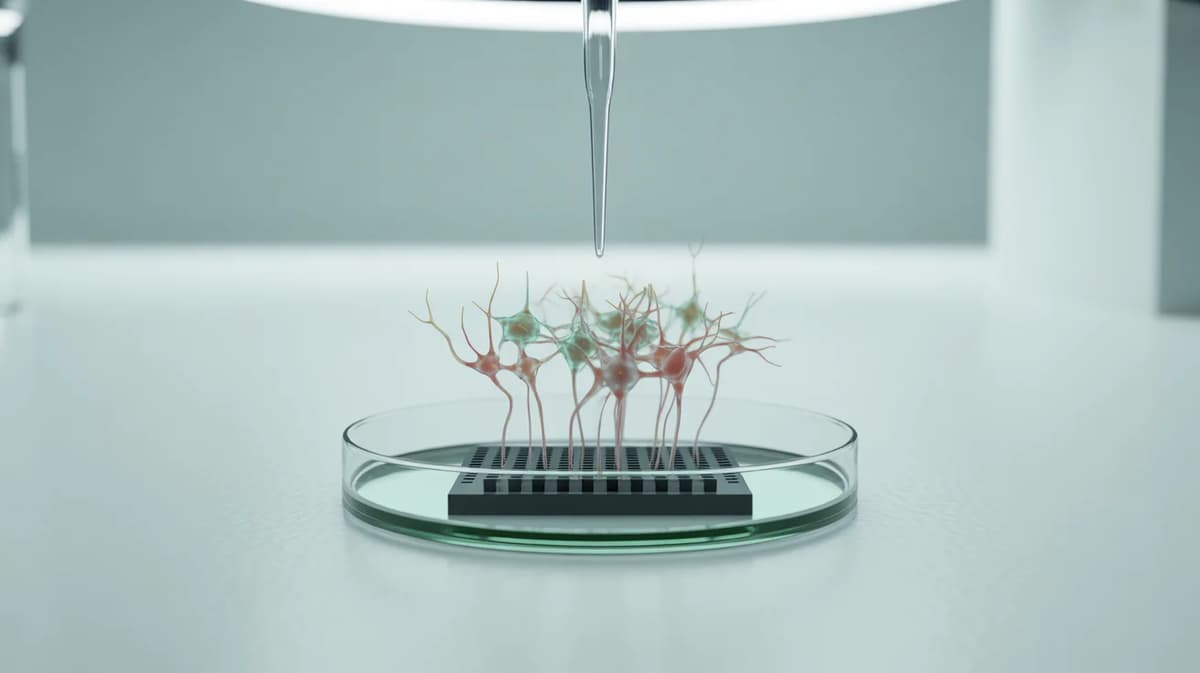
Aberrant Calcium Signaling and Neuronal Activity in the L271H CACNA1D (Cav1.3) iPSC Model of Neurodevelopmental Disease
•January 9, 2026
0
Why It Matters
The findings reveal stage‑specific calcium channel dysfunction as a mechanistic bridge between CACNA1D mutations and complex neuro‑endocrine phenotypes, informing precision‑medicine strategies and drug discovery.
Key Takeaways
- •Ca_v1.3 dominates L-type VGCC expression in NPCs.
- •Patient NPCs show increased spontaneous calcium transients.
- •Midbrain neurons exhibit hypo‑excitability and depolarized resting potential.
- •Cortical organoids fail to form proper ventricle‑like structures.
- •Transcriptomics reveal up‑regulation of neurodevelopmental genes.
Pulse Analysis
Voltage‑gated calcium channels are central to neuronal signaling, and CACNA1D encodes the Ca_v1.3 subunit that modulates excitability, transcription, and development. While mouse models and heterologous expression systems have demonstrated gain‑of‑function effects for pathogenic CACNA1D variants, they lack the human cellular context needed to dissect early brain development. Patient‑derived induced pluripotent stem cells (iPSCs) now provide a platform to study the L271H missense mutation in its native genomic background, bridging the gap between genotype and phenotype for rare neurodevelopmental disorders.
In the new iPSC model, Ca_v1.3 emerges as the principal L‑type channel during the neural progenitor stage, and the L271H mutation triggers a surge in spontaneous calcium waves and spikes. This hyper‑active calcium signaling does not translate into altered electrical firing at the progenitor level, suggesting a non‑excitability‑driven role in early neurogenesis. Upon differentiation into midbrain dopaminergic neurons, the same mutation flips the phenotype: cells become hypo‑excitable, display a markedly depolarized resting membrane potential, and fire action potentials at a fraction of the control rate. Parallel cortical organoid experiments reveal malformed ventricle‑like structures, mislocalized radial glia, and an accelerated yet disordered neuronal differentiation timeline, underscoring Ca_v1.3’s influence on tissue‑level organization.
These insights have immediate translational relevance. The stage‑specific dysregulation uncovered here points to therapeutic windows where calcium channel modulators could restore normal signaling without compromising later neuronal function. Moreover, the iPSC‑derived neurons and organoids constitute a scalable assay for screening small‑molecule correctors of CACNA1D gain‑of‑function. As the field moves toward precision neuromodulation, integrating transcriptomic signatures—such as up‑regulated AUTS2, MEIS2, and POU3F2—will sharpen patient stratification and biomarker development, accelerating the pipeline from bench to bedside.
Aberrant calcium signaling and neuronal activity in the L271H CACNA1D (Cav1.3) iPSC model of neurodevelopmental disease
0
Comments
Want to join the conversation?
Loading comments...