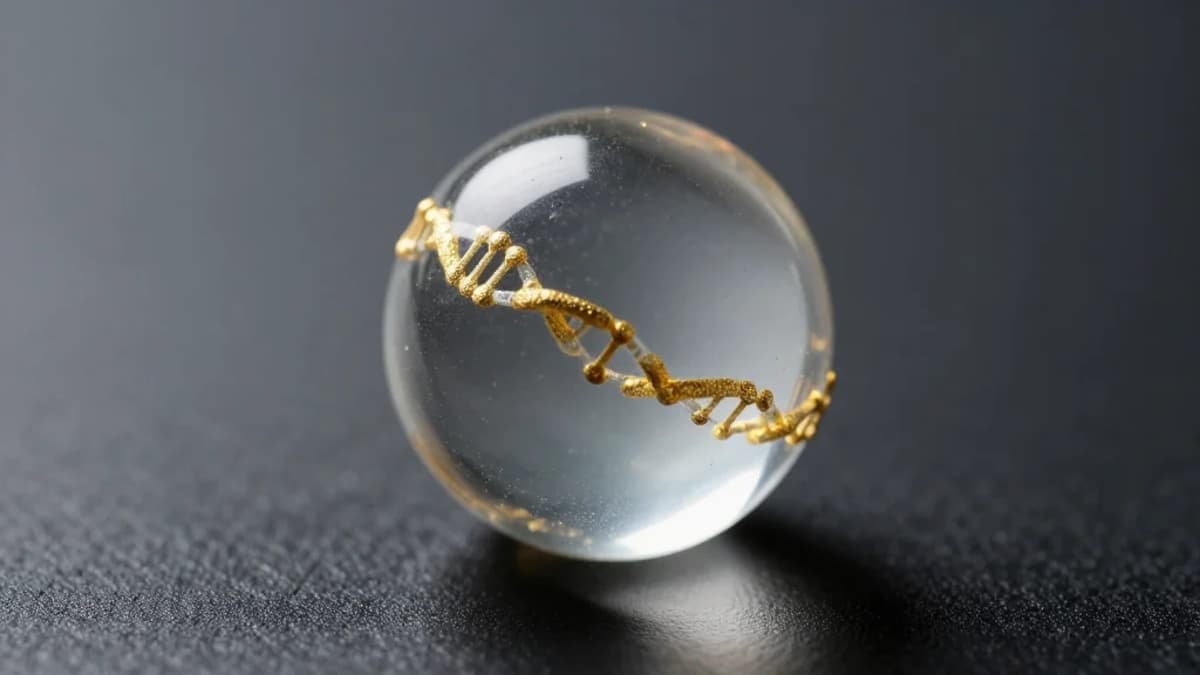
Advanced Encapsulation Technologies for Extracellular Vesicles: From Single Units to Macroscale Packaging
•January 22, 2026
0
Why It Matters
Effective EV encapsulation can unlock reliable drug‑delivery and regenerative‑medicine applications, addressing current limitations of rapid clearance and dosing variability.
Key Takeaways
- •Multiscale encapsulation protects EVs from degradation.
- •Nanoscale carriers enable precise dosing and targeting.
- •Microscale systems offer programmable release profiles.
- •Macroscale scaffolds support tissue integration and sustained delivery.
- •Standardized manufacturing remains a major bottleneck.
Pulse Analysis
Extracellular vesicles have emerged as a versatile platform for diagnostics, targeted therapeutics, and tissue regeneration because they naturally ferry proteins, nucleic acids, and lipids between cells. Yet their clinical translation is hampered by fragile membranes that succumb to enzymatic degradation, a short circulatory half‑life, and an inability to control where and when they release cargo. These biological constraints have driven researchers to explore material‑based encapsulation, borrowing concepts from nanomedicine and tissue engineering to create protective shells that can be tuned for specific clinical scenarios.
The latest review organizes EV encapsulation into three size‑defined categories. Nanoscale carriers such as polymeric nanoparticles or liposomal hybrids wrap individual vesicles, offering precise dosing and the possibility of surface functionalization for active targeting. Microscale platforms—including hydrogel beads and microcapsules—provide a reservoir that can be engineered for programmable, sustained release triggered by pH, temperature, or enzymatic cues. At the macroscale, three‑dimensional scaffolds embed EVs within biocompatible matrices, enabling localized, long‑term delivery that synergizes with tissue‑engineering constructs. Across all tiers, material compatibility and release kinetics are the primary design levers.
Commercializing these technologies demands scalable, reproducible manufacturing processes and clear regulatory pathways, both of which remain underdeveloped. Moreover, understanding the nuanced interactions between encapsulating materials and EV surface proteins is essential to preserve biological activity. Advances in smart polymers, click‑chemistry crosslinking, and real‑time imaging are poised to deliver on‑demand, spatiotemporal release that responds to physiological signals. As the field matures, robust encapsulation could transform EVs from experimental curiosities into mainstream therapeutic vectors.
Advanced Encapsulation Technologies for Extracellular Vesicles: From Single Units to Macroscale Packaging
0
Comments
Want to join the conversation?
Loading comments...