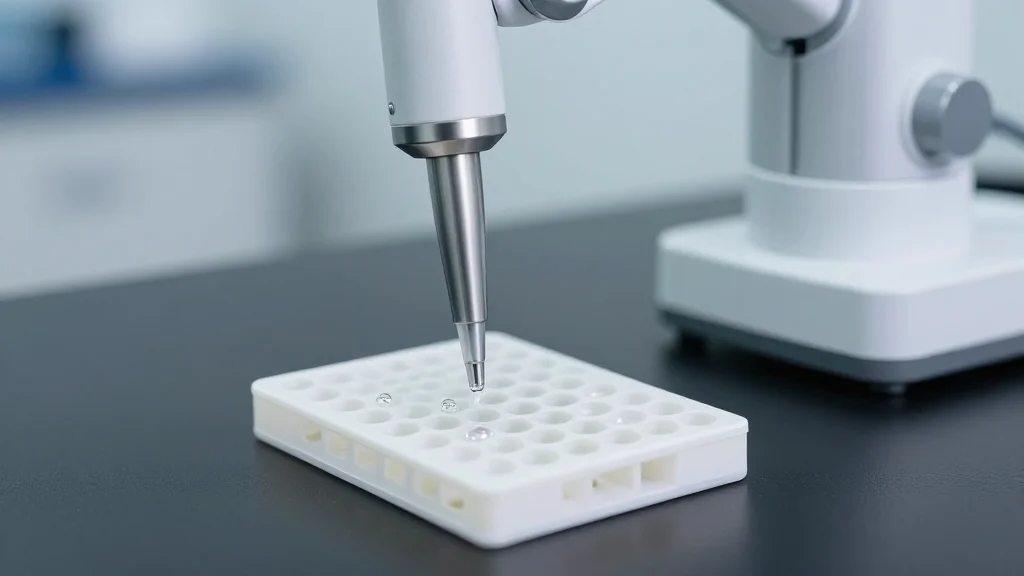
Advancing Fully Walkaway Automation in Genomics Workflows
Why It Matters
Fully walkaway automation removes bottlenecks in next‑generation sequencing, accelerating research and lowering costs for labs handling complex or low‑quantity samples.
Key Takeaways
- •SPT Labtech's firefly+ installed at EMBL GeneCore for automation
- •Platform integrates pipetting, dispensing, incubating, shaking in one instrument
- •Enables fully walkaway NGS workflows for low-input and metagenomics samples
- •Collaboration leverages NEBNext kits to streamline DNA/RNA‑Seq library prep
- •Boosts throughput, cuts turnaround time, and expands protocol development capacity
Pulse Analysis
Automation is reshaping the genomics landscape, and the SPT Labtech‑EMBL GeneCore partnership exemplifies that shift. By deploying the firefly®+ platform—a single instrument that merges liquid handling, incubation and shaking—EMBL GeneCore gains a versatile backbone for end‑to‑end next‑generation sequencing (NGS). The system’s compatibility with New England Biolabs’ NEBNext® kits means laboratories can automate library preparation across a wide range of DNA and RNA inputs, from abundant samples to the ultra‑low quantities typical of rare‑species or environmental studies. This integration reduces manual steps, minimizes error, and frees skilled technicians for higher‑value analysis.
The true value of fully walkaway automation lies in its ability to tackle historically challenging applications. Low‑input and metagenomic workflows often suffer from variability and lengthy hands‑on time, limiting throughput and increasing costs. With firefly®+ handling pipetting, dispensing, incubation and shaking in a coordinated sequence, protocols become reproducible and scalable. Researchers can now generate high‑quality libraries from scarce material without constant supervision, accelerating project timelines and enabling larger study designs. Moreover, the platform’s modular software supports rapid protocol development, allowing EMBL GeneCore to iterate and validate new methods faster than with traditional bench‑top setups.
For the broader biotech and pharmaceutical sectors, this development signals a move toward more efficient, cost‑effective NGS pipelines. Faster turnaround and higher reproducibility translate into quicker biomarker discovery, more reliable clinical genomics, and expanded capabilities in environmental monitoring. Companies that adopt such walkaway solutions can lower per‑sample expenses, increase sample volume, and stay competitive in a market where data speed is increasingly critical. As automation matures, we can expect a cascade of similar collaborations, driving the next wave of high‑throughput, low‑error genomics across research and industry.
Advancing Fully Walkaway Automation in Genomics Workflows
Comments
Want to join the conversation?
Loading comments...