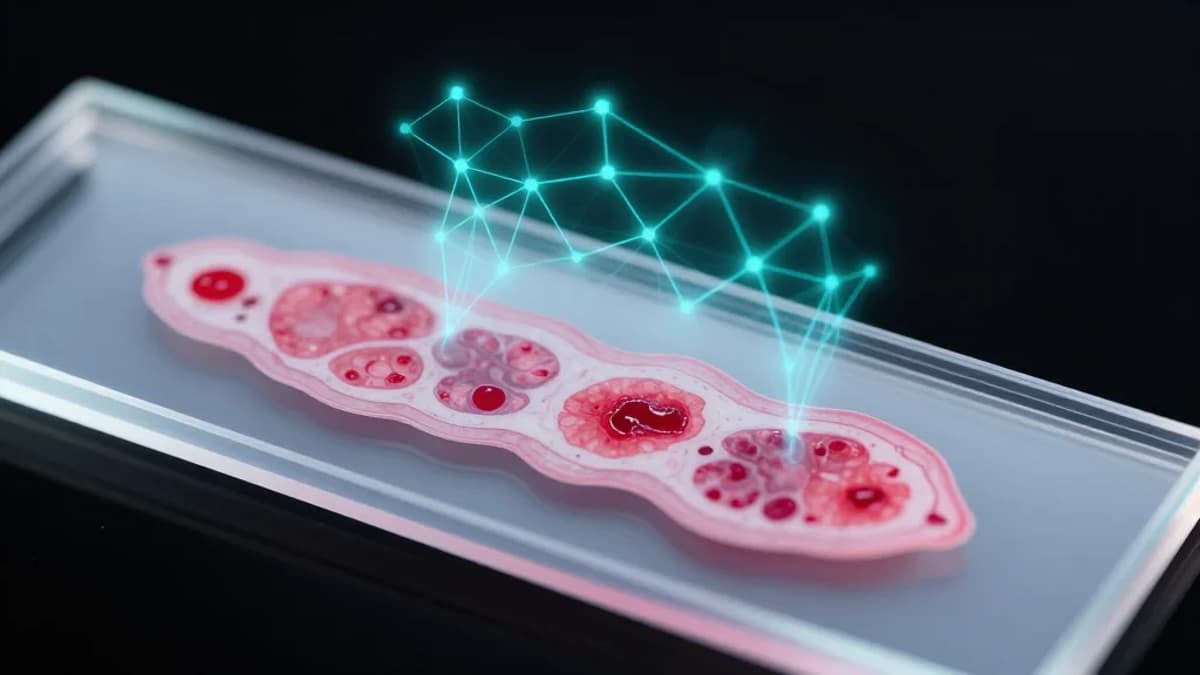
AI Reveals Prognostic Insights in Colorectal Cancer
•January 24, 2026
0
Why It Matters
The AI‑derived TSR provides clinicians a reliable prognostic indicator, enabling tailored therapies and potentially improving survival. Its adoption also streamlines pathology workflows and refines immunotherapy targeting.
Key Takeaways
- •AI quantifies tumor‑stroma ratio with unprecedented precision
- •High TSR correlates with poorer colorectal cancer survival
- •Stromal dominance drives immune suppression, affecting immunotherapy
- •International validation supports global clinical adoption of AI tool
Pulse Analysis
Colorectal cancer remains a leading cause of death, and traditional staging systems often lack the granularity needed for precise risk stratification. Recent advances in digital pathology have opened the door for artificial intelligence to extract quantitative features from routine slides. By training deep‑learning algorithms on thousands of annotated images, researchers can now measure the tumor‑stroma ratio—a metric that reflects the balance between malignant cells and surrounding supportive tissue—with a level of consistency unattainable by manual review. This technological leap addresses a long‑standing gap in oncologic diagnostics, offering a data‑driven lens into tumor biology.
The international validation study revealed a clear link between elevated TSR and adverse clinical outcomes, confirming the ratio’s prognostic power across varied populations. Moreover, the analysis highlighted that a stromal‑rich microenvironment actively suppresses immune infiltration, shedding light on why some patients fail to respond to checkpoint inhibitors. By quantifying both the proportion and spatial arrangement of stromal components, the AI model provides actionable insights that can guide treatment selection, such as intensifying adjuvant therapy for high‑TSR patients or exploring stromal‑targeted agents. These findings underscore the dual role of the stroma as both a structural scaffold and an immunomodulatory player.
Looking ahead, integrating AI‑based TSR assessment into pathology labs could become a standard step in colorectal cancer work‑ups, akin to molecular testing today. The study’s multinational data set demonstrates scalability, while its emphasis on transparency and rigorous validation addresses ethical concerns surrounding algorithmic decision‑making. As healthcare systems adopt these tools, clinicians will benefit from faster turnaround times, reduced inter‑observer variability, and richer prognostic information—all of which support precision medicine initiatives. Ultimately, the convergence of AI, histopathology, and tumor‑microenvironment research promises to reshape therapeutic strategies not only for colorectal cancer but for a broad spectrum of solid tumors.
AI Reveals Prognostic Insights in Colorectal Cancer
0
Comments
Want to join the conversation?
Loading comments...