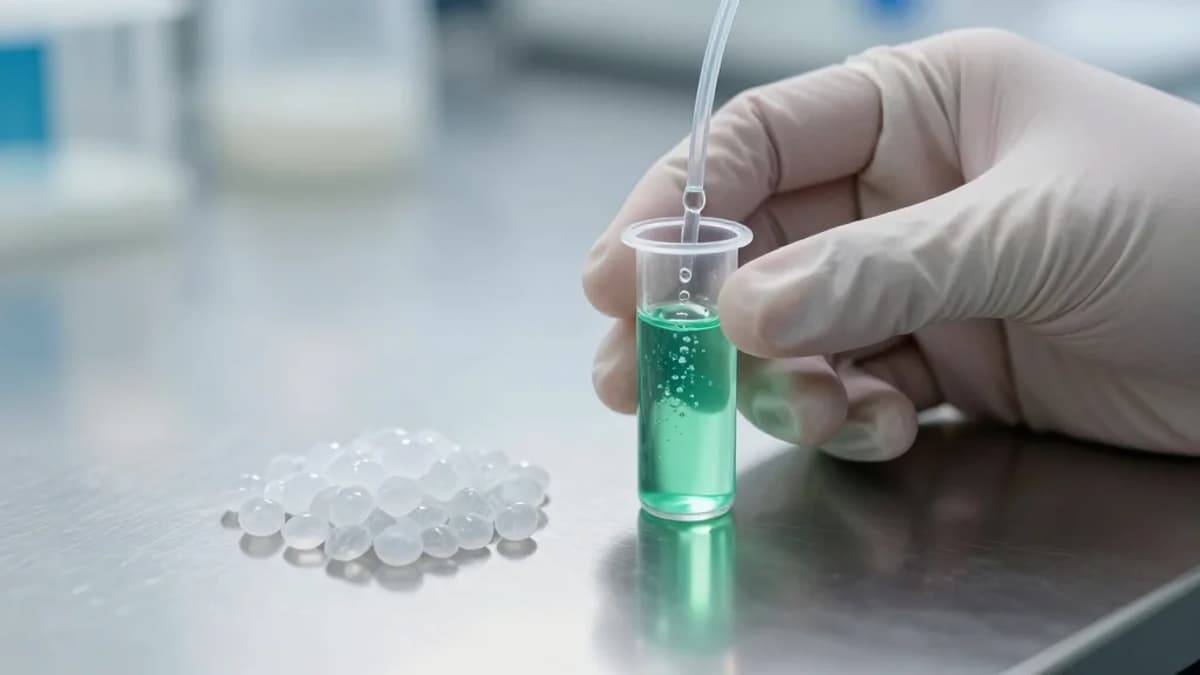
Artificial Metabolism Turns Waste CO₂ Into Useful Chemicals
•December 22, 2025
0
Companies Mentioned

Why It Matters
ReForm provides a scalable, carbon‑negative platform for turning captured CO₂ into marketable chemicals, accelerating the transition to sustainable manufacturing. Its cell‑free design sidesteps biological constraints, opening faster development cycles for synthetic biology solutions.
Key Takeaways
- •Synthetic ReForm pathway converts CO₂‑derived formate to acetyl‑CoA
- •Cell‑free system screened 66 enzymes, 3,000 variants weekly
- •Demonstrated production of malate, a valuable industrial chemical
- •Pathway accepts formate, formaldehyde, methanol as carbon sources
- •Enables scalable carbon‑negative manufacturing without living cells
Pulse Analysis
The emergence of ReForm marks a paradigm shift in carbon capture utilization. Traditional bioprocesses rely on living microbes that struggle with formate metabolism, limiting throughput and scalability. By extracting the enzymatic machinery into a cell‑free environment, researchers can rapidly iterate enzyme designs, test thousands of variants per week, and fine‑tune reaction conditions without the metabolic burden of a host organism. This accelerates the path from laboratory proof‑of‑concept to industrial deployment, positioning synthetic biology as a competitive alternative to petrochemical routes.
Beyond the technical novelty, the ability to convert CO₂‑derived formate into acetyl‑CoA—a universal metabolic hub—unlocks a versatile platform for producing a spectrum of chemicals. The study’s demonstration of malate synthesis showcases immediate commercial relevance, given malate’s role in food additives, cosmetics, and biodegradable plastics. Moreover, the pathway’s compatibility with formaldehyde and methanol expands feedstock flexibility, allowing integration with existing electrochemical CO₂ reduction technologies and renewable methanol production pipelines.
Strategically, ReForm aligns with global carbon‑neutrality goals and offers a blueprint for hybrid manufacturing that blends electrochemistry with synthetic biology. Companies seeking to decarbonize their supply chains can leverage this cell‑free system to develop carbon‑negative products without the regulatory and safety complexities of genetically modified organisms. As the technology matures, it could drive a new class of low‑carbon chemicals, reduce reliance on fossil feedstocks, and catalyze investment in sustainable biomanufacturing infrastructure.
Artificial metabolism turns waste CO₂ into useful chemicals
0
Comments
Want to join the conversation?
Loading comments...