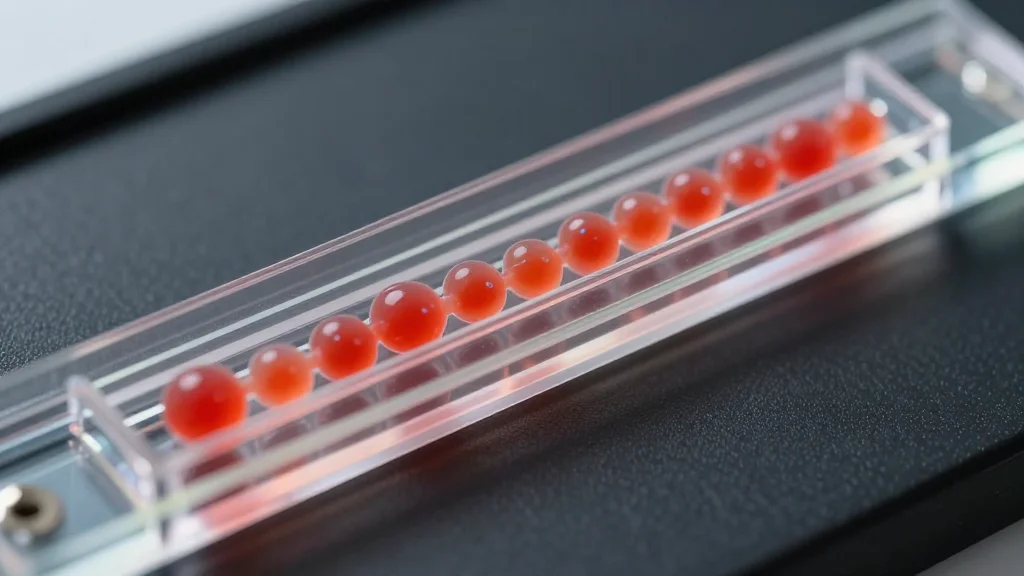
Bead-Free CAR T Cells Via Two-Stage Microfluidics
Why It Matters
Eliminating bead‑based steps cuts production expenses and eases regulatory compliance, accelerating broader access to CAR‑T therapies. The method also supports decentralized, automated manufacturing, reshaping the cell‑therapy ecosystem.
Key Takeaways
- •Bead‑free microfluidics replaces magnetic bead separation
- •Two‑stage device yields higher activated T‑cell purity
- •Process compatible with closed‑system GMP manufacturing
- •Reduces cost and contamination risk in CAR‑T production
- •Enables scalable, automated cell therapy manufacturing
Pulse Analysis
The rapid expansion of CAR‑T therapies has been hampered by labor‑intensive, bead‑based cell enrichment that inflates costs and introduces foreign materials. Traditional magnetic separation requires open handling, extensive washing steps, and stringent sterility controls, creating bottlenecks in both speed and scalability. By leveraging inertial microfluidics—where fluid dynamics sort cells based on intrinsic physical traits—researchers have sidestepped these constraints, offering a label‑free, high‑throughput alternative that aligns with modern bioprocessing demands.
In the two‑stage device, the first microchannel exploits lift forces to divert larger, activated T‑cells away from smaller resting cells, while a downstream Dean‑flow stage refines the selection to achieve superior purity and viability. Operating at high flow rates with minimal shear stress preserves the cells' functional phenotype, as demonstrated by increased CD69 expression and unchanged CAR transduction efficiency. The closed‑system architecture meets GMP standards, reducing contamination risk and simplifying regulatory filings, while the bead‑free workflow trims material costs and shortens manufacturing timelines.
Beyond oncology, this microfluidic platform opens avenues for broader immunotherapy applications, from infectious disease vaccines to autoimmune cell therapies. Its scalability and compatibility with automation position it as a cornerstone for decentralized manufacturing hubs, potentially lowering the price barrier for personalized treatments. As the cell‑therapy market seeks modular, cost‑effective solutions, inertial microfluidics is poised to become a standard tool in the next generation of precision medicine pipelines.
Bead-Free CAR T Cells Via Two-Stage Microfluidics
Comments
Want to join the conversation?
Loading comments...