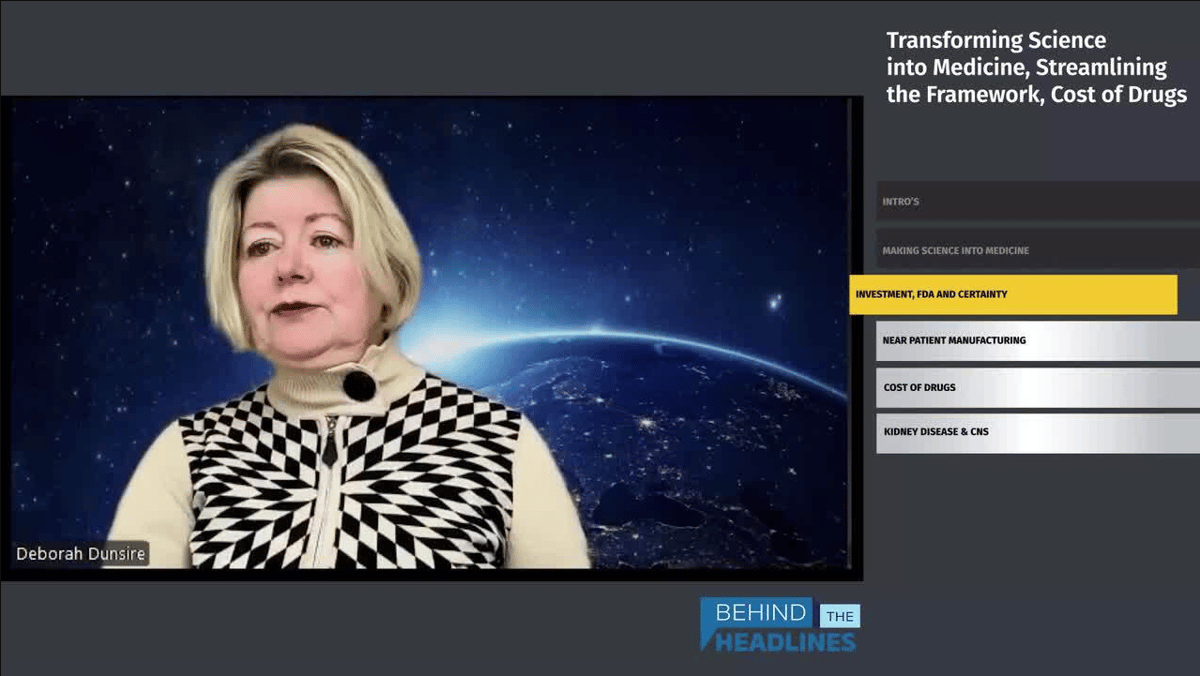
Behind the Headlines Episode 31: Optimism, Opportunity, Optimization of COGs & Organizational Streamlining
•January 7, 2026
0
Why It Matters
The insights signal accelerated drug‑development pipelines and shifting capital toward high‑impact therapeutic areas, reshaping industry growth and regulatory dynamics.
Key Takeaways
- •Dunsire calls now a “golden era” for biology
- •Targeted therapies like GLP‑1s reshape treatment paradigms
- •AI and quantum computing poised to accelerate drug discovery
- •Trust rebuilding requires transparent, fact‑based communication
- •Investment focus should shift to neuroscience and kidney disease
Pulse Analysis
The pharmaceutical landscape is entering a transformative phase, propelled by precision medicines that move beyond one‑size‑fits‑all approaches. GLP‑1 agonists have demonstrated how metabolic and cardiovascular indications can be tackled simultaneously, setting a template for future biologics. Meanwhile, artificial intelligence and quantum computing promise to compress the traditionally lengthy discovery cycle, enabling rapid target validation and in‑silico screening. Companies that integrate these technologies early are likely to capture market share and attract premium valuation multiples.
Public perception remains a critical hurdle; recent controversies have amplified skepticism toward novel modalities like mRNA vaccines and CAR‑T cell therapies. Dunsire’s call for transparent, evidence‑driven communication aligns with a broader industry shift toward patient‑centric messaging and real‑world data disclosure. Regulators, particularly the FDA, are also responding with streamlined pathways and adaptive trial designs, which could reduce time‑to‑market for breakthrough treatments while maintaining safety standards.
Strategic capital allocation will define the next growth wave. Dunsire highlights neuroscience and chronic kidney disease as under‑served domains with sizable unmet needs, suggesting that investors should prioritize pipelines addressing these areas. Coupled with a robust STEM talent pipeline, the sector is positioned to sustain innovation momentum. Firms that nurture early‑career scientists and foster cross‑disciplinary collaboration will likely secure the human capital necessary to translate cutting‑edge science into market‑ready medicines.
Behind the Headlines Episode 31: Optimism, Opportunity, Optimization of COGs & Organizational Streamlining
0
Comments
Want to join the conversation?
Loading comments...