Bioinspired Dual‐Pathogen Defense Through Electrostatic‐Capturing and Light‐Burst Sterilization for Smart Screen Windows
•February 5, 2026
0
Companies Mentioned

Why It Matters
It provides a power‑free, high‑efficiency defense against airborne pathogens, advancing biosafe architecture and reducing reliance on chemical disinfectants.
Key Takeaways
- •Ambient light triggers antimicrobial action without external power
- •Combines electrostatic capture with photosensitized sterilization
- •Achieves >99.9% bacterial and viral reduction
- •Maintains filtration efficiency over 99% under aerosol stress
- •Enables smart windows for continuous indoor biosafety
Pulse Analysis
Indoor biosafety has become a strategic priority as workplaces, schools, and hospitals seek resilient defenses against airborne disease. Conventional antimicrobial coatings, such as standalone quaternary ammonium salts, rely on direct contact and often struggle with biofilm penetration or require periodic re‑application. By mimicking nature’s trap‑and‑kill strategy, the new coating fuses electrostatic capture with a light‑activated kill switch, delivering a self‑sustaining barrier that operates under normal indoor illumination without additional energy inputs.
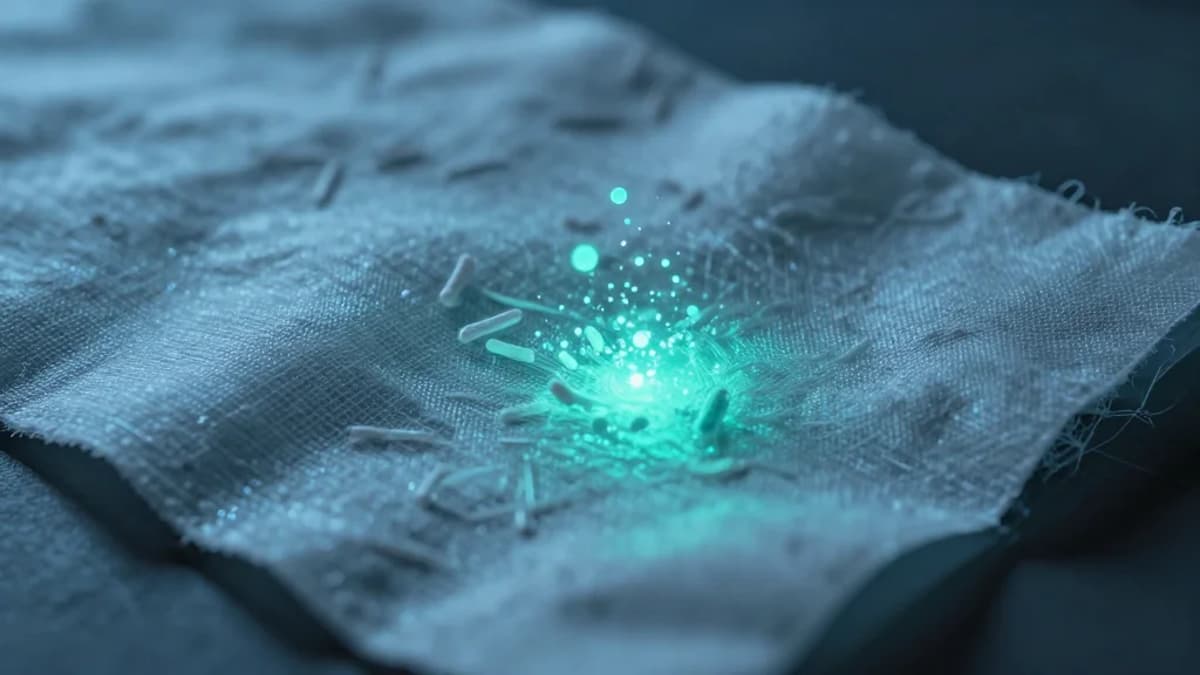
The engineering feat lies in molecularly bonding QAS, which provides a permanent positive charge to attract negatively charged microbes, with AIE photosensitizers that emit reactive oxygen species when exposed to ambient light. When pathogens land on the nonwoven fabric, they are first immobilized, then rapidly sterilized as the photosensitizer generates singlet oxygen and other ROS. Laboratory results show 99.98% bacterial kill rates for Staphylococcus aureus and Escherichia coli, and 99.93% inactivation of H1N1 influenza virus, while airborne tests demonstrate over 99% interception efficiency even under accelerated aerosol diffusion.
Beyond laboratory metrics, the coating’s integration into smart window panels opens commercial pathways for continuous, passive air sanitation in built environments. Building managers can retrofit existing glazing with these active filters, coupling them with HVAC controls for real‑time monitoring. The technology also aligns with sustainability goals, reducing chemical disinfectant use and lowering energy consumption compared to UV‑based systems. As regulatory standards tighten around indoor air quality, such dual‑pathogen defenses are poised to become a cornerstone of next‑generation, health‑centric architecture.
Bioinspired Dual‐Pathogen Defense Through Electrostatic‐Capturing and Light‐Burst Sterilization for Smart Screen Windows
0
Comments
Want to join the conversation?
Loading comments...