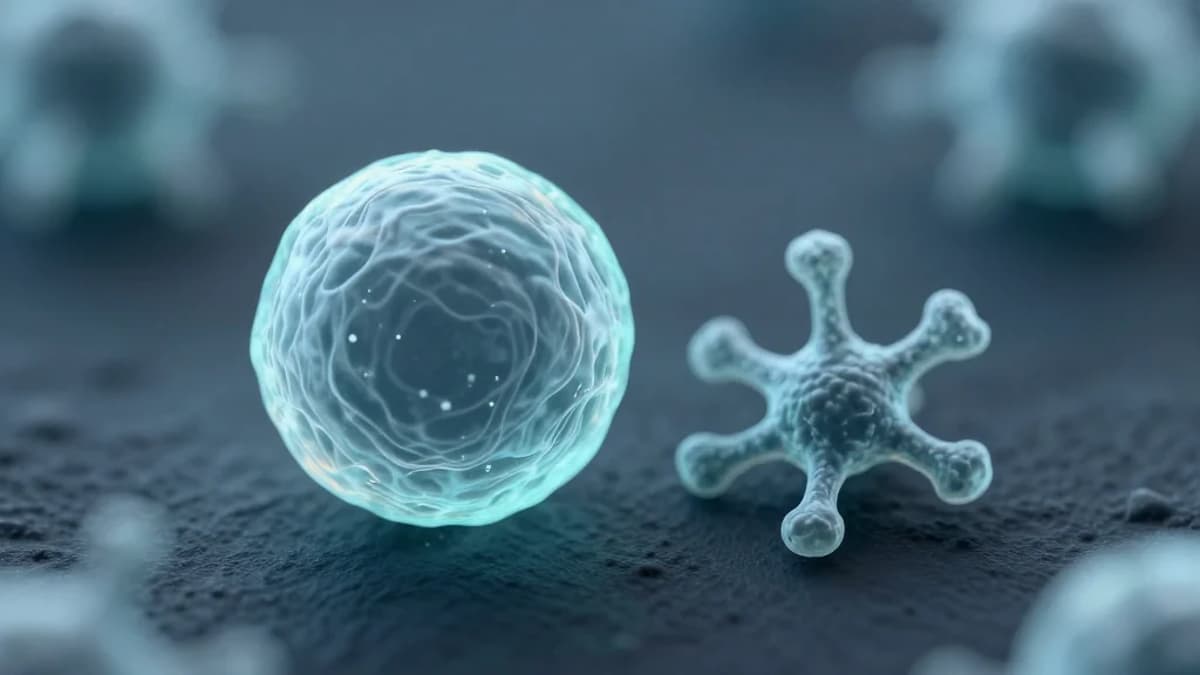
Biomimetic Vesicles Engineered From Modified Tumour Cells Act as Personalized Vaccines for Post-Surgical Cancer Immunotherapy
•January 29, 2026
0
Why It Matters
The approach overcomes low response rates of conventional dendritic‑cell vaccines by delivering patient‑specific neoantigens rapidly, offering a scalable strategy for postoperative immunotherapy.
Key Takeaways
- •STX11 overexpression gives tumor cells DC-like antigen presentation
- •RP@SMs vesicles activate CD8+ T cells directly and indirectly
- •DPT replaces plasmid, cutting vaccine preparation time
- •Anti‑PD‑L1 plus RP@SMs achieves 100% mouse survival
- •Allogeneic vesicles fail, confirming strict antigen specificity
Pulse Analysis
Post‑operative recurrence remains a leading cause of mortality in solid‑tumor patients, largely because residual disease evades immune surveillance. Conventional dendritic‑cell (DC) vaccines struggle with limited cell survival, poor lymph‑node trafficking, and the need to identify patient‑specific neoantigens. By exploiting STX11—a protein naturally abundant in immune cells but scarce in tumors—researchers reprogrammed autologous tumor cells to express high levels of MHC I, CD80, and CD86, effectively endowing them with DC‑like functions. This biomimetic strategy preserves the full repertoire of tumor‑derived antigens, eliminating the bottleneck of antigen selection and enabling rapid, personalized vaccine generation.
The engineered vesicles, RP@SMs, combine STX11‑reprogrammed membranes with PLGA nanoparticles loaded with the TLR7 agonist R837. Their dual‑mode activation—direct presentation of peptide‑MHC complexes to CD8⁺ T cells and indirect cross‑priming via host DCs—produces robust cytotoxic responses and durable memory formation. Incorporating deoxypodophyllotoxin (DPT) as a small‑molecule STX11 inducer shortens manufacturing timelines, addressing a critical clinical hurdle. Preclinical models of triple‑negative breast cancer and melanoma showed up to 76% tumor inhibition, complete suppression of lung metastases, and 100% survival when RP@SMs were paired with anti‑PD‑L1 blockade, underscoring the platform’s synergistic potential with checkpoint inhibitors.
Translating this technology to the clinic will require scalable GMP‑compatible vesicle production, rigorous quality control of autologous membrane content, and optimization of the peri‑operative dosing window. Moreover, human tumors exhibit greater heterogeneity, which may affect STX11 responsiveness and vesicle immunogenicity. Nonetheless, the ability to generate a patient‑specific, antigen‑rich nanovaccine within days positions artificial DC‑like vesicles as a compelling addition to the postoperative immunotherapy arsenal, promising to improve outcomes for patients facing high‑risk metastatic disease.
Biomimetic vesicles engineered from modified tumour cells act as personalized vaccines for post-surgical cancer immunotherapy
0
Comments
Want to join the conversation?
Loading comments...