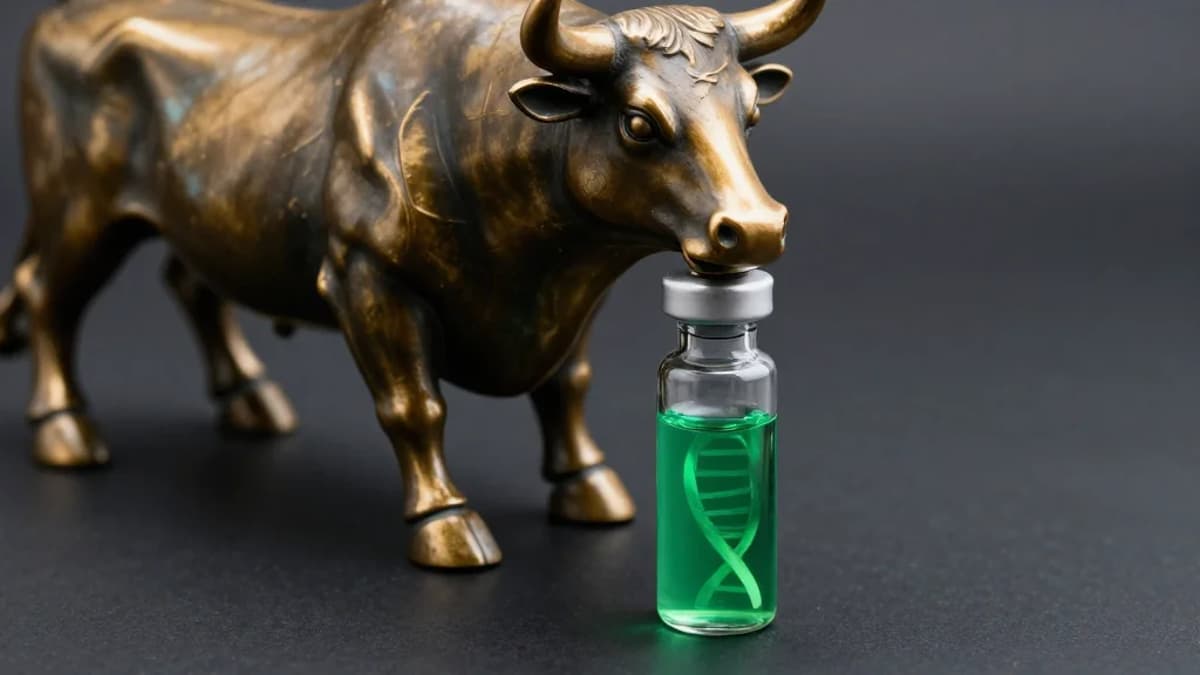
Biotech’s Bull Is Back — and Investors Think It Can Stick
•January 21, 2026
0
Why It Matters
The shift signals renewed funding for innovative therapies and could accelerate drug development pipelines, reshaping the sector’s growth trajectory.
Key Takeaways
- •Interest rates falling improves biotech financing conditions
- •Policy clarity reduces regulatory uncertainty for drug approvals
- •Late‑stage pipelines attract large capital inflows
- •Upcoming product launches drive revenue growth expectations
- •M&A activity expected to accelerate market consolidation
Pulse Analysis
The biotech resurgence is rooted in macroeconomic easing. As central banks trim rates, the cost of capital drops, making equity and debt financing more attractive for high‑risk, high‑reward ventures. This environment reduces the discount rate applied to future cash flows, lifting valuations and encouraging investors to re‑enter a sector that was previously penalized by tight monetary policy. Coupled with a clearer regulatory landscape—thanks to recent policy adjustments—companies can plan long‑term R&D strategies with greater confidence.
Beyond macro factors, the pipeline dynamics are shifting dramatically. Late‑stage candidates, many targeting rare diseases and oncology, are nearing pivotal trial readouts and commercial launches. These assets promise near‑term revenue streams, prompting both venture capital and public market participants to allocate sizable funds. The influx of capital not only fuels continued research but also supports infrastructure expansion, such as manufacturing scale‑up and global market entry, which are critical for sustaining growth beyond initial approvals.
Mergers and acquisitions are poised to become a catalyst for consolidation and value creation. With cash becoming cheaper and strategic fit clearer, larger biopharma firms are likely to acquire promising mid‑cap innovators to broaden their portfolios and mitigate pipeline risk. This wave of M&A can accelerate time‑to‑market for emerging therapies, enhance bargaining power with payers, and generate synergies that improve operational efficiency. Overall, the convergence of favorable financing, robust pipelines, and strategic consolidation suggests that the biotech bull may not be a fleeting rally but a durable market transformation.
Biotech’s bull is back — and investors think it can stick
0
Comments
Want to join the conversation?
Loading comments...