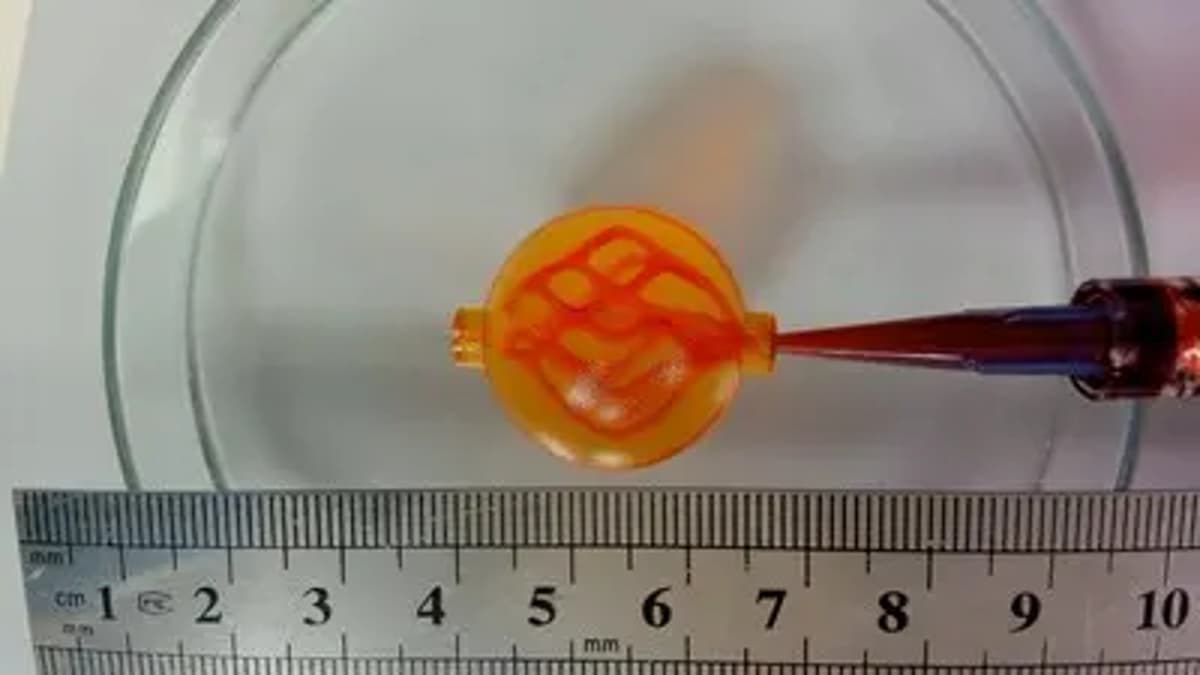
CollPlant Targets Formulation Bottleneck with New DLP Bioprinting Kit
•March 2, 2026
0
Why It Matters
By removing the formulation bottleneck, BioFlex accelerates prototype cycles and improves data consistency, which is critical for drug discovery and regulatory compliance. The animal‑free, high‑resolution bioink also lowers variability, enhancing the commercial viability of bioprinted therapeutics.
Key Takeaways
- •CollPlant launches BioFlex, a ready‑to‑print DLP bioink kit.
- •Kit combines recombinant human collagen with biodegradable polymer.
- •Simplifies formulation, reducing screening time for researchers.
- •Improves mechanical strength and reproducibility of printed tissues.
- •Provides animal‑free alternative, aiding regulatory compliance.
Pulse Analysis
The bioprinting sector has long wrestled with the tedious task of bioink formulation. Researchers must balance viscosity, cross‑linking kinetics, and cell compatibility, often running dozens of trial mixes before achieving a printable material. This iterative process not only consumes reagents but also introduces variability that hampers reproducibility across labs. As DLP printers gain traction for their high‑resolution capabilities, the demand for plug‑and‑play bioink solutions has intensified, prompting companies to bundle standardized components that eliminate the trial‑and‑error phase.
CollPlant’s BioFlex kit tackles this bottleneck by pairing recombinant human collagen with a biodegradable polymer called Collink.3D 50 and a suite of proprietary photo‑active agents tuned for DLP exposure. The recombinant collagen eliminates batch‑to‑batch variation inherent in animal‑derived sources, while the polymer provides tunable stiffness and rapid degradation after printing. Together they deliver tensile strength comparable to native tissue, reduced brittleness, and consistent layer adhesion. Because the formulation is pre‑validated, users can follow a single protocol to achieve high‑resolution constructs without extensive material screening, accelerating prototype cycles.
The availability of an off‑the‑shelf DLP bioink has immediate ramifications for drug discovery and regenerative‑medicine pipelines. Academic labs can now generate tissue models with human‑like mechanics faster, shortening the validation window for toxicity screens. Industrial R&D teams gain a reproducible platform that aligns with Good Manufacturing Practice requirements, easing the path toward regulatory approval for cell‑based therapies. As competitors like CARIMATEC introduce similar pre‑mixed solutions, the market is poised for consolidation around standardized, animal‑free bioinks, driving down costs and expanding the commercial viability of bioprinted organs.
CollPlant targets formulation bottleneck with new DLP bioprinting kit
0
Comments
Want to join the conversation?
Loading comments...