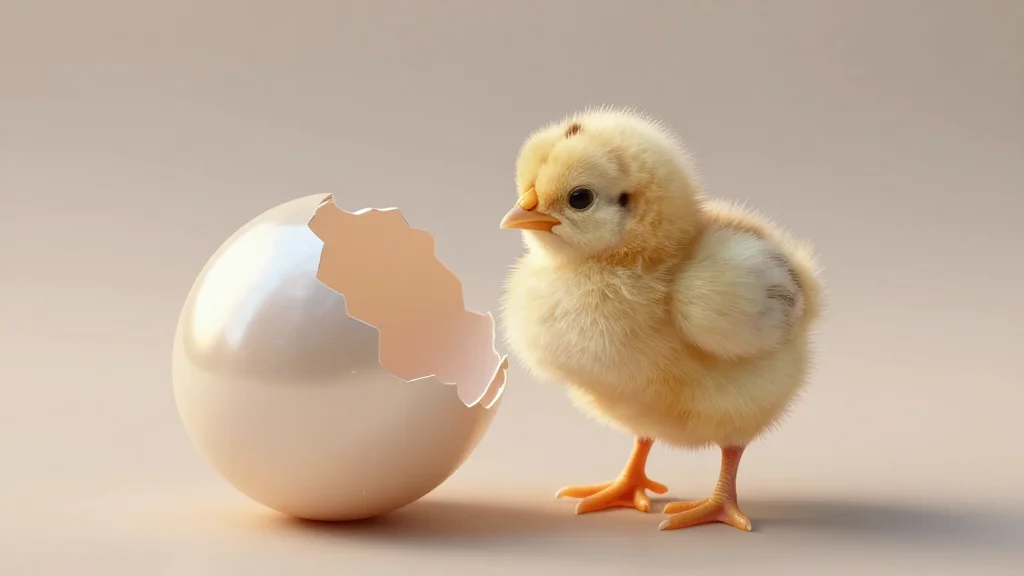
Colossal Biosciences Hatches Live Chicks From Fully Artificial Egg, Paving Way for Moa De‑Extinction

Companies Mentioned
Why It Matters
The artificial egg represents a convergence of materials science, genetics, and reproductive biology, delivering a tool that could accelerate de‑extinction timelines and reduce reliance on surrogate species. By solving the oxygen‑transfer problem that has limited previous shell‑less culture attempts, Colossal creates a scalable platform that could be deployed for endangered‑species recovery programs worldwide. Moreover, the technology hints at broader applications in poultry farming, where more efficient incubation could improve animal welfare and reduce energy consumption. If the platform proves adaptable to larger or more complex avian genomes, it could redefine how scientists approach the restoration of extinct ecosystems. The ability to observe embryonic development in real time also offers unprecedented insight into gene‑editing outcomes, potentially shortening the feedback loop between design and phenotype verification. In a sector where tangible milestones are scarce, this breakthrough may catalyze new investment flows into synthetic biology and biodiversity‑focused biotech ventures.
Key Takeaways
- •Colossal Biosciences hatched live chicks from a fully synthetic egg, the first complete avian incubation without supplemental oxygen.
- •The artificial egg uses a bioengineered silicone membrane lattice that matches natural eggshell oxygen transfer at ambient air.
- •Platform is compatible with standard commercial incubators and can be 3D‑printed or injection‑molded for mass production.
- •Technology underpins the South Island Giant Moa de‑extinction program and is size‑agnostic for other bird species.
- •CEO Ben Lamm and co‑founder George Church highlighted the breakthrough as a scalable solution to a long‑standing biology‑engineering challenge.
Pulse Analysis
Colossal’s artificial egg is more than a laboratory curiosity; it is a strategic asset that could shift the economics of de‑extinction. Historically, the biggest hurdle has been the lack of a surrogate host capable of nurturing edited embryos to term. By engineering a shell that replicates the physical and gas‑exchange properties of a natural egg, Colossal sidesteps the need for living surrogates, turning a biological dependency into a manufacturable component. This shift mirrors the broader trend in biotech where hardware solutions—think CRISPR delivery vectors or bioreactor designs—are becoming as valuable as the genetic edits themselves.
From an investment perspective, the announcement may re‑price risk for the de‑extinction niche. Venture capital has been cautious, often citing the speculative nature of resurrecting species that have been extinct for centuries. A demonstrable, scalable incubation platform reduces technical uncertainty, potentially unlocking a new wave of capital aimed at biodiversity restoration. Moreover, the technology’s applicability to commercial poultry could attract strategic partners from the agritech sector, creating a dual‑track revenue model that mitigates the long timelines typical of de‑extinction projects.
Regulatory and ethical considerations will still loom large. While the artificial egg removes one biological barrier, the release of resurrected species into the wild raises ecological and biosecurity questions that will require robust governance frameworks. Nonetheless, the ability to produce viable embryos in a controlled, observable environment provides regulators with a clearer audit trail, which could ease some concerns. In sum, Colossal’s breakthrough not only advances a specific scientific goal but also reshapes the business case for synthetic‑biology‑driven conservation, positioning the company at the intersection of cutting‑edge research and market‑ready technology.
Colossal Biosciences Hatches Live Chicks from Fully Artificial Egg, Paving Way for Moa De‑Extinction
Comments
Want to join the conversation?
Loading comments...