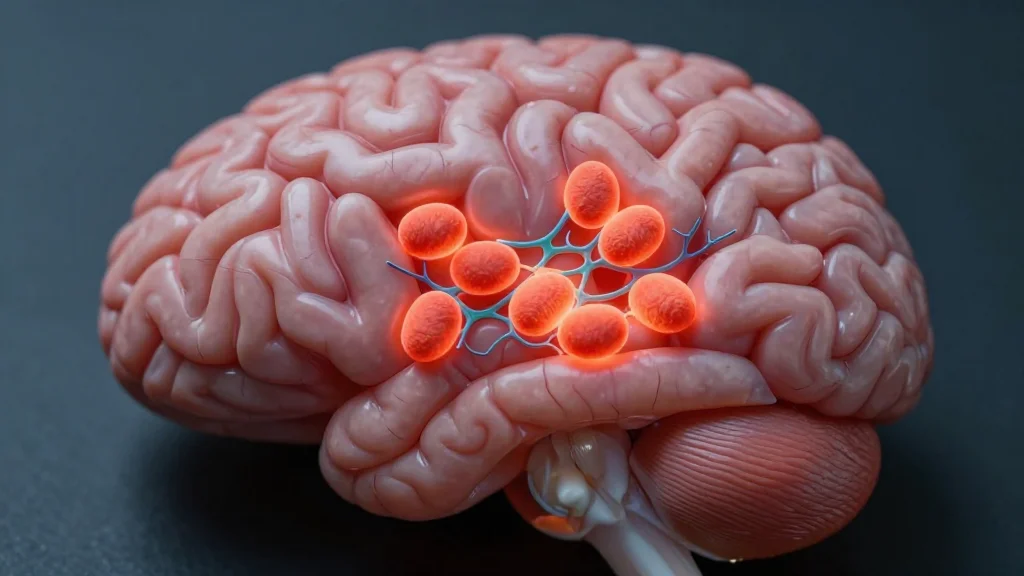
Convergent Mitochondrial Impairment and Apoptosis Driven by Simultaneous Down-Regulation of Multiple Genes at 11p11.2 in Alzheimer’s Disease
Why It Matters
The study links a common genetic risk region to core cellular failures that drive neurodegeneration, providing a mechanistic bridge between GWAS signals and disease pathology. Multi‑gene targeting may prove more effective than single‑gene approaches for modifying Alzheimer’s progression.
Key Takeaways
- •Multiple 11p11.2 genes are co‑down‑regulated in AD brains.
- •Combined loss impairs mitochondrial complex I activity and raises ROS.
- •Synergistic gene suppression triggers caspase‑7 activation and neuronal apoptosis.
- •Restoring single genes partially rescues mitochondrial function; full rescue needs all.
- •Locus offers a novel multi‑target therapeutic avenue for AD.
Pulse Analysis
Alzheimer’s disease genetics has long been dominated by single‑gene hits such as APOE, yet recent genome‑wide association studies repeatedly flag the 11p11.2 region as a robust risk locus. While dozens of variants cluster there, functional annotation has lagged, leaving a gap between statistical association and biological mechanism. By leveraging single‑cell RNA‑seq, spatial transcriptomics, and CRISPR‑based gene perturbations, the new study maps a coordinated down‑regulation of a gene cluster that includes mitochondrial regulators, lipid‑processing enzymes, and apoptosis modulators, providing the first mechanistic read‑out of this hotspot.
The authors demonstrate that the collective loss of these genes compromises mitochondrial complex I activity, leading to a surge in reactive oxygen species and a downstream activation of caspase‑7, a key executor of neuronal apoptosis. Importantly, rescuing any single gene only modestly improves mitochondrial output, whereas simultaneous re‑expression of the entire set restores respiration to near‑normal levels and markedly reduces cell death. This synergy underscores that the pathogenic impact of 11p11.2 stems from network‑level disruption rather than isolated gene defects, reshaping how researchers interpret polygenic risk in neurodegeneration.
Therapeutically, the work opens a pathway for multi‑target drug design, such as small‑molecule cocktails or gene‑therapy vectors that can modulate several nodes of the 11p11.2 network concurrently. Beyond Alzheimer’s, the approach illustrates a blueprint for translating other complex GWAS loci into actionable biology. Future studies will need to validate these findings in vivo and explore whether early intervention on this gene network can halt or reverse cognitive decline, potentially redefining precision medicine strategies for dementia.
Convergent mitochondrial impairment and apoptosis driven by simultaneous down-regulation of multiple genes at 11p11.2 in Alzheimer’s disease
Comments
Want to join the conversation?
Loading comments...