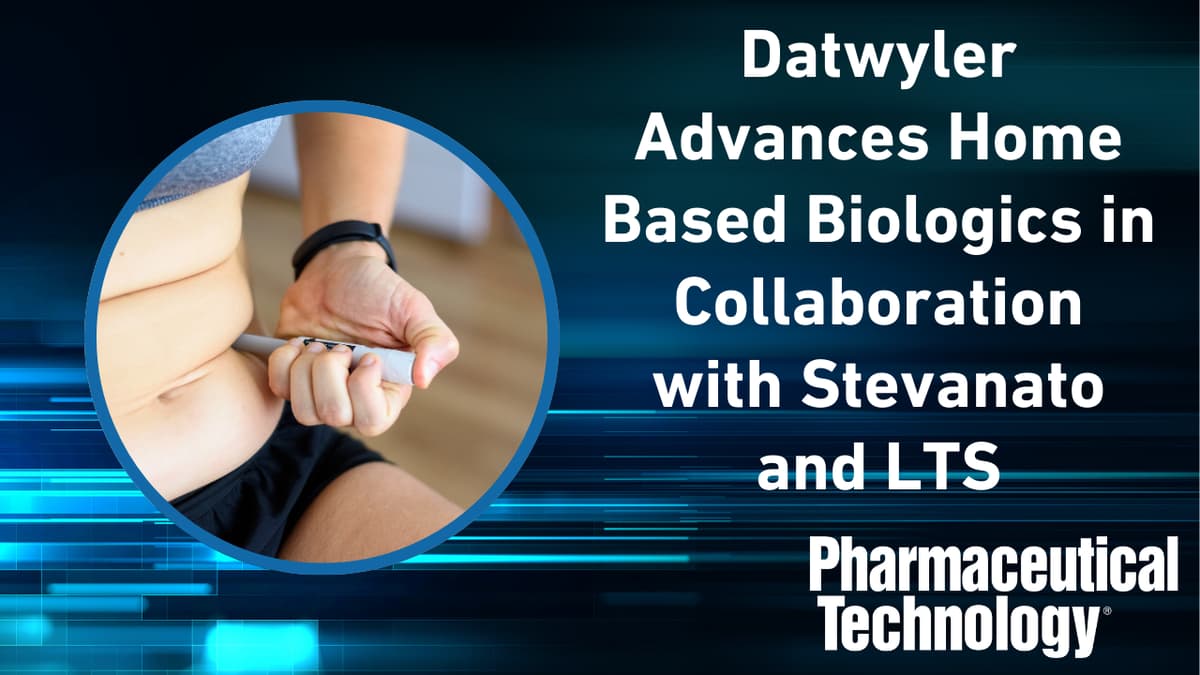
Datwyler Collabs with Stevanato and LTS to Advance Home-Based Biologics
•January 20, 2026
0
Why It Matters
The collaboration cuts time‑to‑market and de‑risks regulatory approval for high‑dose biologics, accelerating patient‑centric home therapies. It also positions the partners to capture expanding demand for large‑volume subcutaneous delivery as biologics dominate drug pipelines.
Key Takeaways
- •Collaboration unites Datwyler, Stevanato, LTS for large-volume delivery
- •Pre‑verified cartridges and NeoFlex plungers target 10‑20 mL doses
- •Wearable Sorrel platform enables discreet on‑body self‑administration
- •Standardized components cut development time and regulatory risk
- •Patient preference for home therapy drives market demand
Pulse Analysis
The pharmaceutical landscape is rapidly pivoting from small‑molecule pills to complex biologics, many of which require higher subcutaneous volumes than traditional 2 mL syringes can provide. Delivering 10‑20 mL doses safely demands precise control of injection kinetics, tissue tolerability, and robust container‑closure systems—challenges that have historically slowed development and increased costs for manufacturers seeking to bring high‑dose monoclonal antibodies and oncology therapies to market.
Datwyler, Stevanato Group, and LTS Device Technologies address these hurdles with a pre‑verified, end‑to‑end platform. Stevanato’s EZ‑fill® cartridges arrive pre‑washed, siliconized, and sterilized, eliminating extensive validation work. Datwyler’s NeoFlex™ spray‑coated plungers ensure smooth, low‑force operation essential for large‑volume injections, while LTS’s Sorrel wearable injector provides a discreet, on‑body delivery experience. By integrating these components into a single system, the partnership reduces engineering cycles, aligns with regulatory expectations, and offers pharma companies a turnkey solution that can be rapidly adapted to diverse biologic programs.
Patient expectations are reshaping the market: a recent Mayo Clinic study found 73 % of patients prefer home‑based self‑administration after prolonged treatment. This preference fuels demand for reliable, user‑friendly devices that maintain therapeutic efficacy outside clinical settings. The Datwyler‑Stevanato‑LTS platform not only meets this demand but also sets a new benchmark for scalability, allowing manufacturers to accelerate commercialization of large‑volume biologics. As decentralized care models expand, the collaboration positions its partners at the forefront of a lucrative segment poised to dominate future drug delivery innovation.
Datwyler Collabs with Stevanato and LTS to Advance Home-based Biologics
0
Comments
Want to join the conversation?
Loading comments...