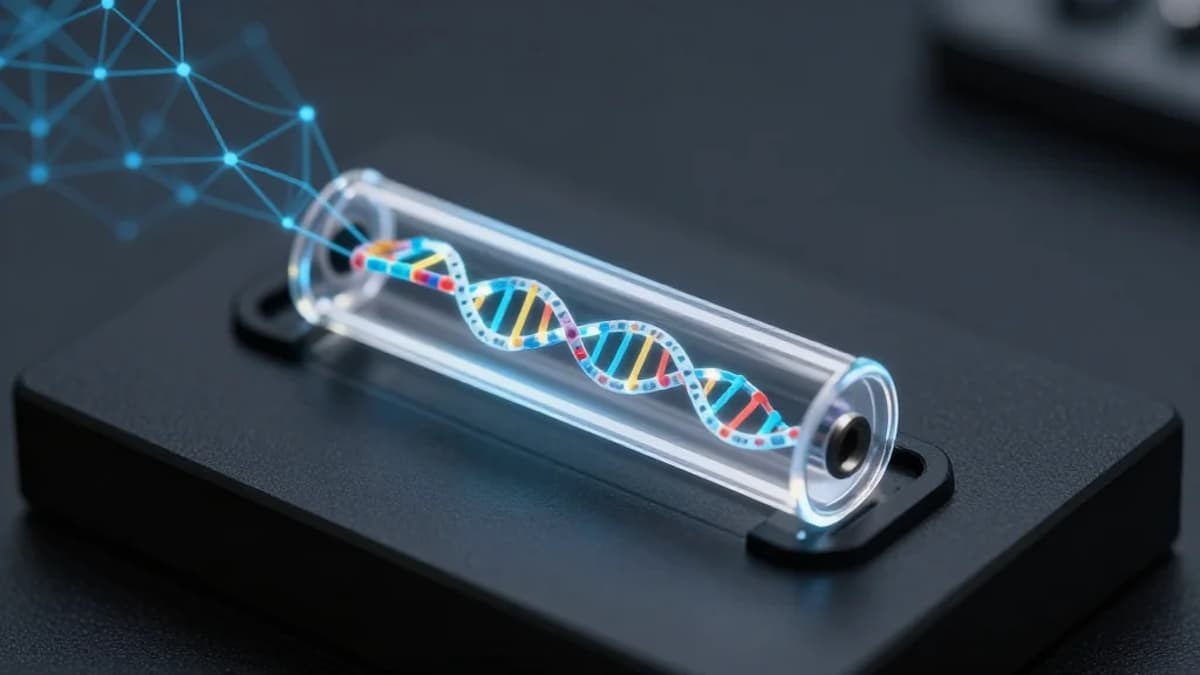
DeepChopper Model Improves RNA Sequencing Research by Mitigating Chimera Artifacts
•February 9, 2026
0
Why It Matters
By eliminating technical artifacts, DeepChopper enhances the reliability of RNA‑seq data, accelerating cancer genomics research and downstream therapeutic discovery. Its AI‑centric approach could set new standards for bioinformatics pipelines across the biotech industry.
Key Takeaways
- •DeepChopper reduces chimera artifacts in nanopore RNA sequencing
- •Improves detection of true gene‑fusion events
- •Validated on prostate‑cancer cell line transcriptomes
- •Operates at single‑nucleotide resolution across long reads
- •AI model outperforms traditional rule‑based chimera filters
Pulse Analysis
Long‑read RNA sequencing, especially nanopore direct RNA‑seq, has opened a window onto full‑length transcripts, complex splicing patterns, and novel gene‑fusion events that short‑read technologies often miss. Yet the technology’s susceptibility to chimera artifacts—erroneous concatenations of unrelated RNA fragments—has hampered its adoption in high‑stakes cancer research, where distinguishing genuine fusions from technical noise is critical for biomarker identification and drug target validation. Addressing this gap, DeepChopper leverages recent advances in large‑language models to parse genomic sequences with single‑nucleotide precision, flagging and excising artificial junctions before downstream quantification.
DeepChopper’s architecture mirrors transformer‑based language models but is trained on massive genomic corpora, enabling it to recognize subtle sequence motifs and adapter signatures that signal chimeric formation. Unlike conventional rule‑based filters that rely on fixed heuristics, the AI model adapts to diverse read lengths and sequencing chemistries, delivering higher sensitivity without sacrificing specificity. In benchmark tests on prostate‑cancer cell lines, the system reduced chimera‑induced false positives by over 40%, sharpening the signal for authentic gene‑fusion and alternative‑splicing events and improving overall transcript annotation fidelity.
The broader implication for the biotech sector is profound. Cleaner RNA‑seq datasets accelerate the pipeline from discovery to clinical validation, reducing costly follow‑up experiments and enhancing confidence in computational predictions. As AI models like DeepChopper mature, they are poised to become integral components of bioinformatics workflows, offering scalable, reproducible solutions that keep pace with the rapid evolution of sequencing technologies. Companies investing in AI‑enhanced genomics stand to gain competitive advantage through faster insight generation and more reliable therapeutic target identification.
DeepChopper model improves RNA sequencing research by mitigating chimera artifacts
0
Comments
Want to join the conversation?
Loading comments...