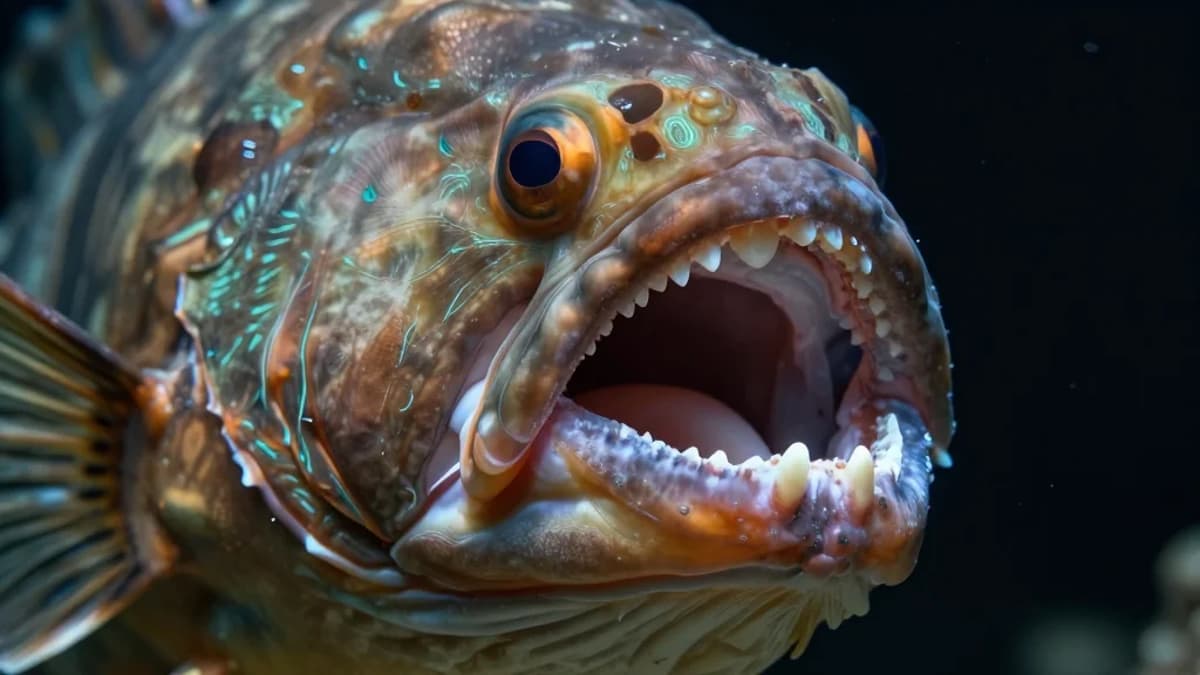
Dentin Inside Wolffish Teeth Is a Rare Material: When Compressed Along Its Length—It Also Shrinks in Width
•January 6, 2026
0
Why It Matters
The discovery reveals a natural strategy for extreme load resistance, informing bio‑inspired design of stronger, damage‑tolerant engineering materials.
Key Takeaways
- •Wolffish teeth contain auxetic osteodentin
- •Negative Poisson’s ratio measured between –1 and –2
- •Dense vertical canals drive lateral contraction
- •First vertebrate mineralized tissue showing auxeticity
- •Blueprint for tougher synthetic materials
Pulse Analysis
The Atlantic wolffish’s ability to crush hard‑shelled prey has long fascinated biologists, but the underlying material science is now coming into focus. In a recent Acta Biomaterialia paper, scientists uncovered osteodentin—a mineralized tissue that exhibits auxetic behavior, meaning it shrinks laterally when compressed. This negative Poisson’s ratio, recorded between –1 and –2, is exceptionally rare in nature and has only been documented in a handful of invertebrate structures such as limpet teeth and nacre. By highlighting a vertebrate example, the study expands the catalog of natural auxetics and underscores the evolutionary ingenuity of marine predators.
Advanced phase‑contrast X‑ray tomography paired with digital volume correlation allowed the team to visualize three‑dimensional deformation of intact teeth under load. The imaging revealed a tightly packed lattice of 10‑20 µm vertical canals that curve outward near the surface, creating a micro‑architecture where mineralized columns bend inward under pressure. This structural arrangement distributes stress uniformly, preventing crack propagation and enhancing toughness despite the tissue’s bone‑like stiffness. The uniform contraction across all three axes distinguishes osteodentin from other hard tissues that typically expand laterally under compression.
Beyond expanding biological knowledge, the wolffish discovery offers a compelling template for engineering. Auxetic materials are prized for their energy‑absorbing and fracture‑resistant properties, yet manufacturing them at scale remains challenging. Replicating the canal‑network geometry of osteodentin could inspire next‑generation composites for aerospace, protective gear, and biomedical implants. Moreover, the study prompts broader surveys of fish dentition to assess whether auxeticity is a common adaptation among species facing extreme feeding forces, potentially unlocking a new class of bio‑derived design principles.
Dentin inside wolffish teeth is a rare material: When compressed along its length—it also shrinks in width
0
Comments
Want to join the conversation?
Loading comments...