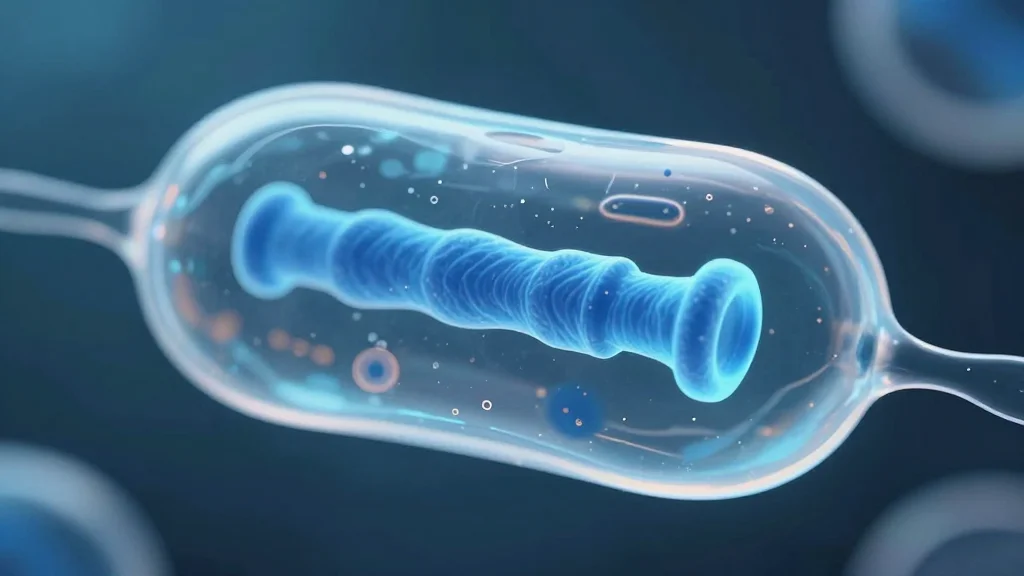
Designing Better Membrane Proteins by Embracing Imperfection
Why It Matters
By shifting design focus from static stability to controlled folding pathways, the approach accelerates creation of functional membrane proteins, a long‑standing bottleneck in drug discovery and synthetic biology.
Key Takeaways
- •Negative design introduces destabilizing mutations to improve membrane insertion.
- •AI language model ESM3 outperforms physics methods in mutation selection.
- •Cell‑free synthesis with vesicles shows reduced aggregation for imperfect designs.
- •Approach enables reliable design of transmembrane β‑barrel nanopores.
- •Could accelerate biotech applications like biosensing and sequencing.
Pulse Analysis
Membrane proteins, especially transmembrane β‑barrels, have long resisted de novo design because they must navigate a delicate insertion process into lipid bilayers. Traditional computational pipelines prioritize the thermodynamic stability of the final folded state, assuming that a more stable protein will be more functional. Recent work from VIB‑VUB overturns that assumption, showing that excessive stability can trap nascent chains in non‑productive conformations, leading to aggregation before membrane contact. By embracing controlled instability, designers can steer the folding trajectory toward the membrane‑embedded state, a nuance that mirrors natural evolutionary pressures.
The research leverages a cell‑free expression system paired with synthetic vesicles, allowing rapid testing of hundreds of variants. Crucially, the team employed the ESM3 protein language model, trained on massive evolutionary datasets, to predict destabilizing mutations that paradoxically enhance folding efficiency. Unlike physics‑based energy functions that flag these changes as deleterious, the AI model recognized patterns associated with successful membrane insertion. This synergy of experimental throughput and deep‑learning insight demonstrates a new workflow where negative design is systematically identified and validated.
The implications extend beyond academic curiosity. Reliable design of β‑barrel nanopores could transform biosensing platforms, enabling single‑molecule detection and next‑generation sequencing technologies that rely on precise pore geometry. Moreover, the principle of negative design may be transferable to other challenging protein classes, shortening development cycles for therapeutic targets and synthetic enzymes. As the biotech industry seeks faster, more predictable protein engineering tools, embracing imperfection may become a cornerstone of future design strategies.
Designing better membrane proteins by embracing imperfection
Comments
Want to join the conversation?
Loading comments...