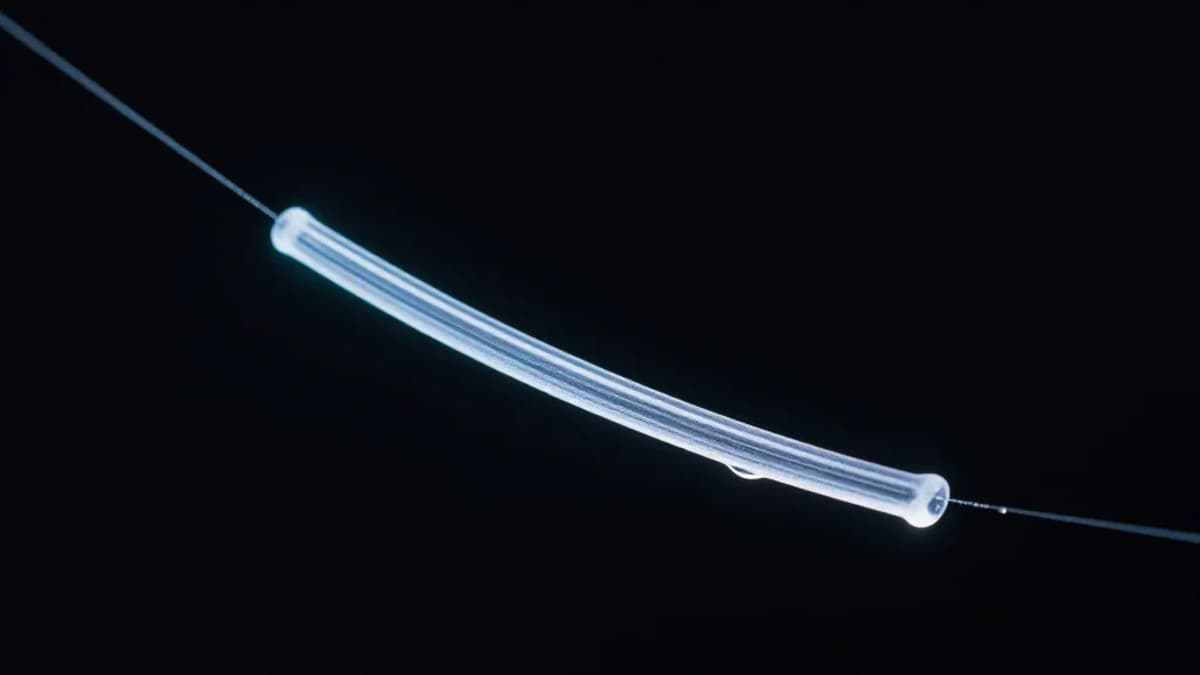
Engineered Β‐Crystal Domains Enable Strong Humidity‐Responsive Actuation in Recombinant Spider Silk
•January 27, 2026
0
Companies Mentioned

Why It Matters
The breakthrough provides a scalable protein‑based actuator that combines muscle‑level strength with humidity tolerance, addressing a key limitation of current soft‑robotics materials.
Key Takeaways
- •Disulfide bonds lock β‑sheet domains
- •Actuators contract rapidly at 90% humidity
- •Recovery stress reaches 45 MPa, threefold muscle
- •Work density 122 kJ m⁻³ exceeds synthetic fibers
- •Design scalable for soft robotics and textiles
Pulse Analysis
Humidity‑responsive actuation has long been dominated by synthetic polymers that sacrifice strength for environmental tolerance. Conventional soft‑robotic muscles often buckle or lose force when exposed to moisture, limiting their use in biomedical or wearable contexts where humidity fluctuates. Nature’s spider silk demonstrates exceptional water‑driven motion, yet reproducing its performance in recombinant systems has been hampered by β‑sheet disruption and insufficient crystalline reinforcement. The new study leverages a bio‑inspired molecular lock—terminal cysteine residues that form covalent disulfide bridges—preserving the silk’s ordered structure even at near‑saturation humidity.
The engineering workflow combines shear‑aligned wet spinning with oxidative folding, enabling site‑specific disulfide crosslinks that act as edge reinforcements for β‑crystals. Molecular dynamics simulations and spectroscopic data confirm that these disulfide‑guided domains resist hydration‑induced unraveling, translating into measurable actuation metrics: a 45 MPa recovery stress and 122 kJ m⁻³ work density, figures that surpass human skeletal muscle by more than three times and outstrip leading synthetic actuators. Rapid, reversible contraction occurs within seconds, positioning the C4S fibers as a high‑performance alternative for applications demanding both strength and humidity resilience.
Beyond the laboratory, the implications are broad. Soft‑robotic grippers, adaptive textiles, and implantable biomedical devices can now exploit a protein‑based actuator that operates reliably under physiological moisture levels. The sequence‑encoded locking strategy is compatible with scalable recombinant production, suggesting a viable commercial pathway. As the market for bio‑derived smart materials expands, this technology could redefine design standards for moisture‑tolerant actuation, driving innovation across robotics, wearable tech, and therapeutic engineering.
Engineered β‐Crystal Domains Enable Strong Humidity‐Responsive Actuation in Recombinant Spider Silk
0
Comments
Want to join the conversation?
Loading comments...