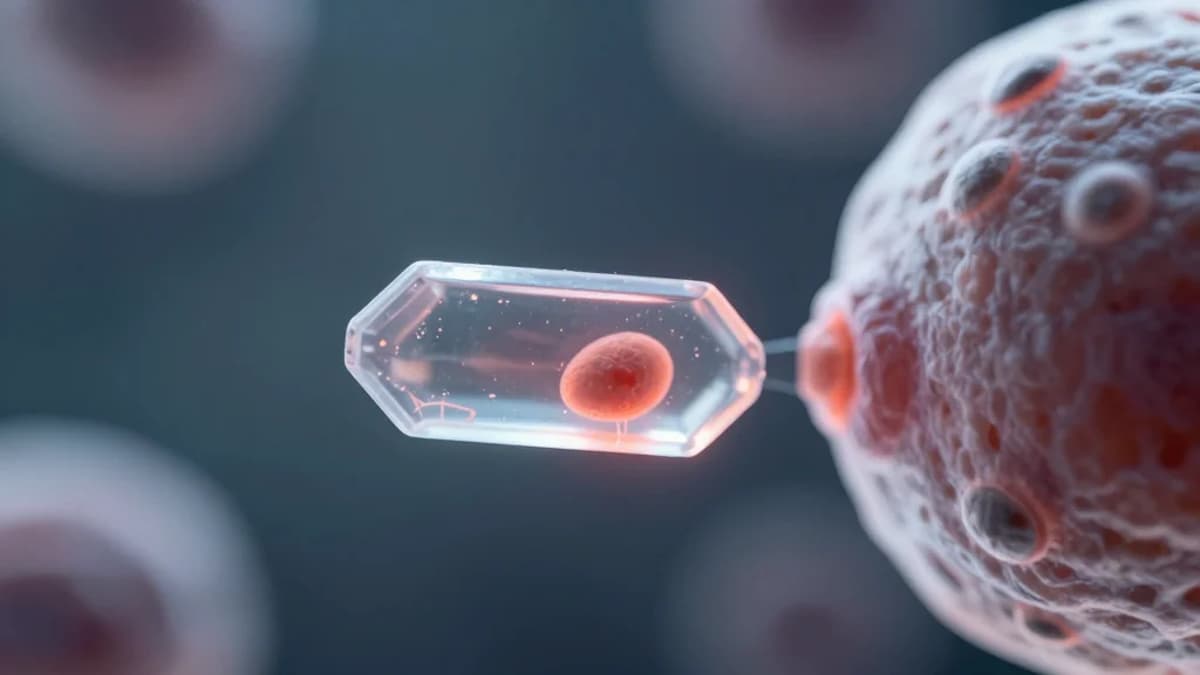
Enzyme‐Activated Programmable Theranostic Platform for Spatiotemporal Imaging of Intracellular MicroRNA and On‐Demand Manipulation‐Mediated Therapy
•January 25, 2026
0
Companies Mentioned

Why It Matters
Integrating real‑time molecular imaging with targeted gene regulation enables personalized oncology and reduces reliance on separate diagnostic and therapeutic agents. The approach showcases a scalable, enzyme‑activated nanomedicine strategy for cancers driven by dysregulated miRNAs.
Key Takeaways
- •Ce-MOF/DNA platform activated by APE1 and miRNA‑21
- •Hybridization chain reaction generates real‑time FRET imaging
- •System upregulates PTEN tumor suppressor gene
- •Inhibits oncogenic miRNA‑21, reducing tumor proliferation
- •Provides combined diagnostic and therapeutic (theranostic) capability
Pulse Analysis
MicroRNAs have emerged as powerful biomarkers for cancer, yet conventional detection methods often lack the spatial and temporal resolution needed to guide treatment decisions. The Ce‑MOF/DNA platform addresses this gap by leveraging the elevated activity of apurinic/apyrimidinic endonuclease 1 (APE1) and the oncogenic miRNA‑21 found in many tumors. Upon entry into cancer cells, these endogenous cues initiate a hybridization chain reaction that assembles fluorescent hairpins, producing a robust Cy3‑Cy5 FRET signal. This enables clinicians to visualize miRNA dynamics in real time, offering a more accurate readout of disease state than static assays.
Beyond imaging, the system delivers a therapeutic payload that simultaneously upregulates PTEN, a critical tumor suppressor, and silences miRNA‑21, which drives proliferation and metastasis. By coupling diagnosis with gene‑level intervention, the platform reduces the latency between detection and treatment, potentially improving patient outcomes. Its modular design also allows substitution of DNA strands to target alternative biomarkers, making it adaptable to a wide range of malignancies and even non‑cancerous diseases where enzyme activity is dysregulated.
The commercial implications are significant. A single nanoplatform that merges diagnostics and therapy could streamline drug development pipelines, lower manufacturing costs, and simplify regulatory pathways compared with separate companion diagnostics and therapeutics. Investors are likely to view this technology as a next‑generation theranostic solution, aligning with the growing demand for precision medicine tools. Future research will focus on scaling production, validating safety in vivo, and expanding the platform to multiplexed detection of multiple miRNAs, positioning it at the forefront of personalized oncology innovation.
Enzyme‐Activated Programmable Theranostic Platform for Spatiotemporal Imaging of Intracellular MicroRNA and On‐Demand Manipulation‐Mediated Therapy
0
Comments
Want to join the conversation?
Loading comments...