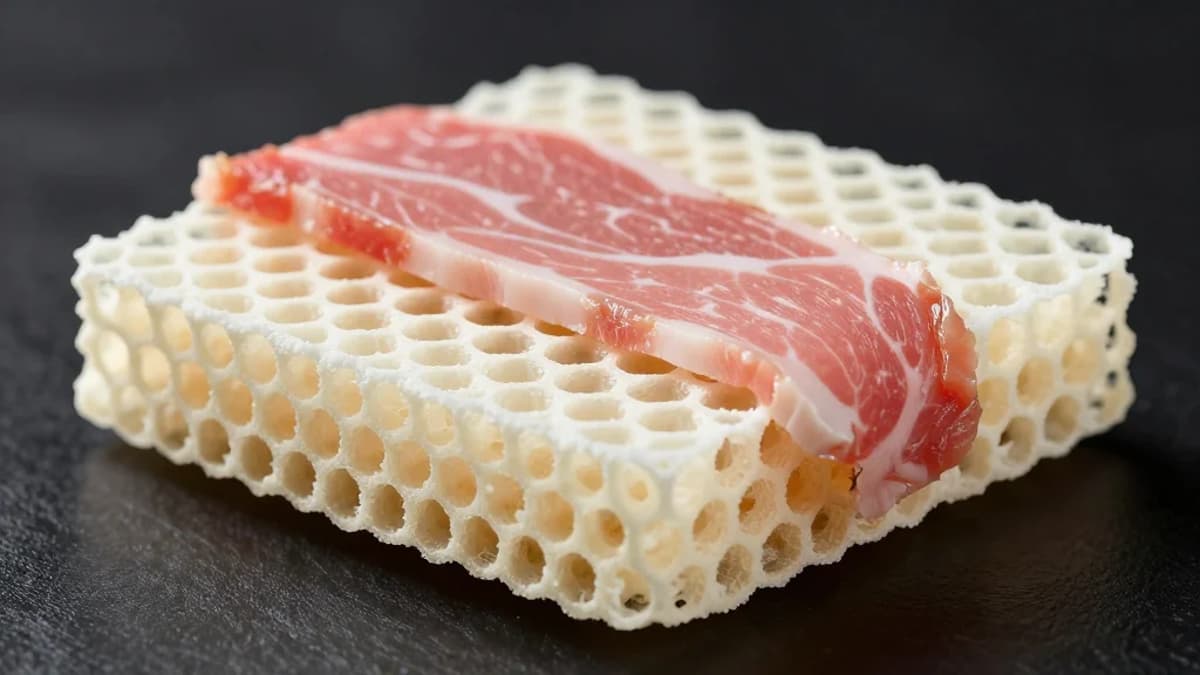
From Pint to Plate, Scientists Brew up a New Way to Grow Meat
•January 6, 2026
0
Why It Matters
Repurposing brewing waste addresses a key cost and sustainability hurdle for the cultivated‑meat industry, accelerating its path to market. It also creates a circular economy link between the beverage and food sectors.
Key Takeaways
- •Brewing waste turned into edible cellulose scaffolds.
- •Scaffold mimics meat texture better than standard cellulose.
- •Animal cells successfully attached to yeast‑derived scaffold.
- •Approach could cut cultivated meat production costs.
- •Large brewery waste streams offer scalable raw material.
Pulse Analysis
Cultivated meat has long promised a greener protein source, but scaling the technology hinges on affordable, edible scaffolds that replicate the complex structure of animal tissue. Traditional scaffolds often rely on expensive biopolymers or non‑edible matrices, inflating production costs and limiting consumer acceptance. By tapping into the abundant by‑product of beer fermentation—spent yeast—researchers have identified a low‑cost feedstock for bacterial cellulose, a naturally strong and biocompatible material already used in food and medical applications.
The UCL team cultured Komagataeibacter xylinus on yeast‑derived substrates, producing a cellulose network that was tested on a specialized chewing machine. Results showed lower hardness and chewiness than standard cellulose, aligning more closely with the mouthfeel of real meat. Crucially, fibroblast cells adhered and proliferated on the scaffold, demonstrating that the material can support the cellular architecture required for meat growth. These findings suggest that brewery waste not only supplies the raw material but also imparts mechanical properties that enhance the sensory profile of cultivated meat.
If the approach can be scaled, it could transform both the brewing and alternative‑protein industries. Breweries generate millions of tonnes of spent yeast annually, representing a virtually untapped resource for sustainable food production. Integrating this waste stream could slash scaffold costs, reduce the carbon footprint of cultivated meat, and create new revenue streams for brewers. Future work will expand to include fat and muscle cells and test diverse beer by‑products, paving the way for commercially viable, circular‑economy meat alternatives.
From pint to plate, scientists brew up a new way to grow meat
0
Comments
Want to join the conversation?
Loading comments...