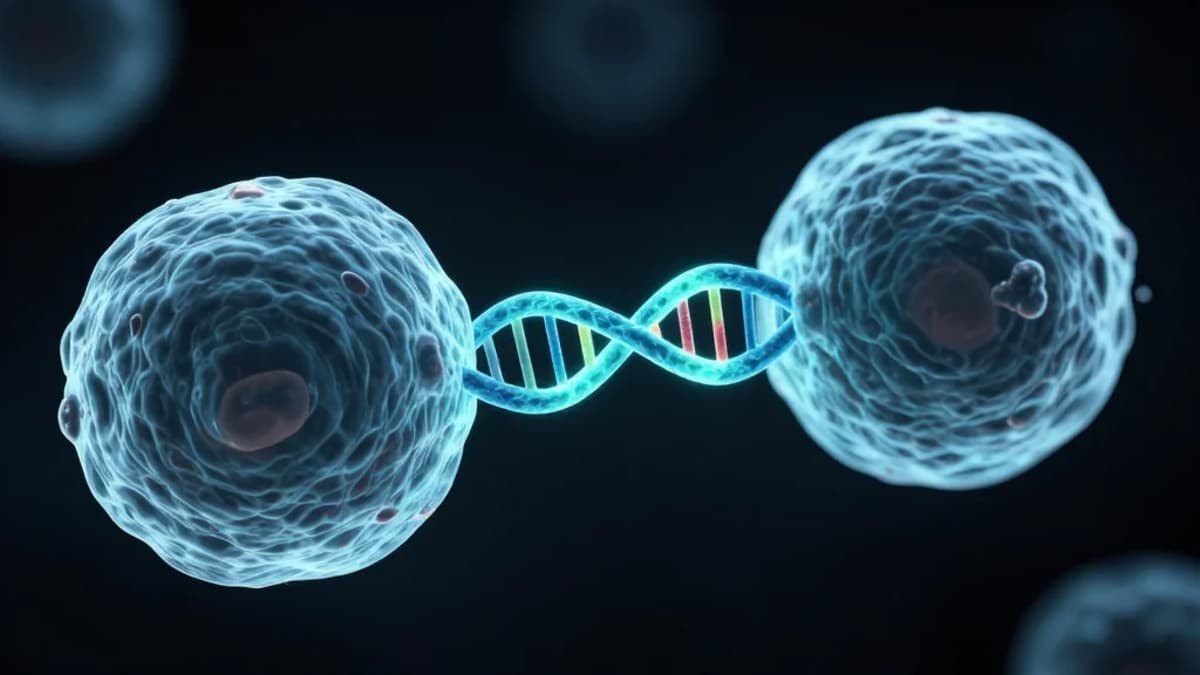
Functional Nucleic Acids for Cell–Cell Interactions
•January 27, 2026
0
Companies Mentioned

Why It Matters
FNAs provide a highly tunable platform to precisely control intercellular signaling, accelerating advances in tissue engineering and targeted therapies.
Key Takeaways
- •FNAs offer programmable DNA hybridization for cell signaling
- •Stimuli‑responsive FNAs monitor intercellular mechanical forces
- •DNA scaffolds reconstruct in‑vitro 3D tissue architectures
- •FNA‑based immunotherapy enhances targeted immune cell activation
- •Current hurdles include delivery efficiency and in‑vivo stability
Pulse Analysis
Cell‑cell communication underpins tissue homeostasis, immune responses, and developmental processes, yet traditional tools struggle to achieve the spatial and temporal precision required for therapeutic manipulation. Functional nucleic acids—synthetic DNA or RNA constructs—have risen as versatile agents because their sequences can be engineered to bind specific proteins, nucleic acids, or small molecules, and to undergo conformational changes in response to environmental cues. This intrinsic programmability positions FNAs as a bridge between molecular diagnostics and active intervention, enabling researchers to probe and steer intercellular pathways with unprecedented fidelity.
Recent advances categorize FNA strategies into four main pillars. Hybridization‑based circuits exploit strand displacement to trigger downstream signaling cascades upon encountering target cells. Molecular‑recognition motifs, such as aptamers, confer selective binding to surface receptors, facilitating targeted delivery or blockade. Scaffolded architectures—DNA origami or hydrogel matrices—provide three‑dimensional platforms that mimic extracellular matrices, supporting the assembly of multicellular constructs and enabling precise force measurements. Finally, stimulus‑responsive designs integrate pH, enzyme, or redox sensors, allowing FNAs to activate only under disease‑specific conditions, thereby reducing off‑target effects.
The translational impact of FNAs is already evident in immunotherapy, where DNA‑encoded bispecific adapters link T cells to tumor antigens, and in tissue engineering, where programmable scaffolds guide stem‑cell differentiation into organoid structures. However, challenges remain: efficient intracellular delivery, avoidance of nuclease degradation, and scalable manufacturing are critical barriers to clinical adoption. Ongoing research into chemically modified backbones, nanoparticle carriers, and in‑situ synthesis aims to overcome these hurdles. As the field matures, FNAs are poised to become cornerstone technologies for precision medicine, offering a modular, low‑immunogenic toolkit to rewrite cellular communication networks.
Functional Nucleic Acids for Cell–Cell Interactions
0
Comments
Want to join the conversation?
Loading comments...