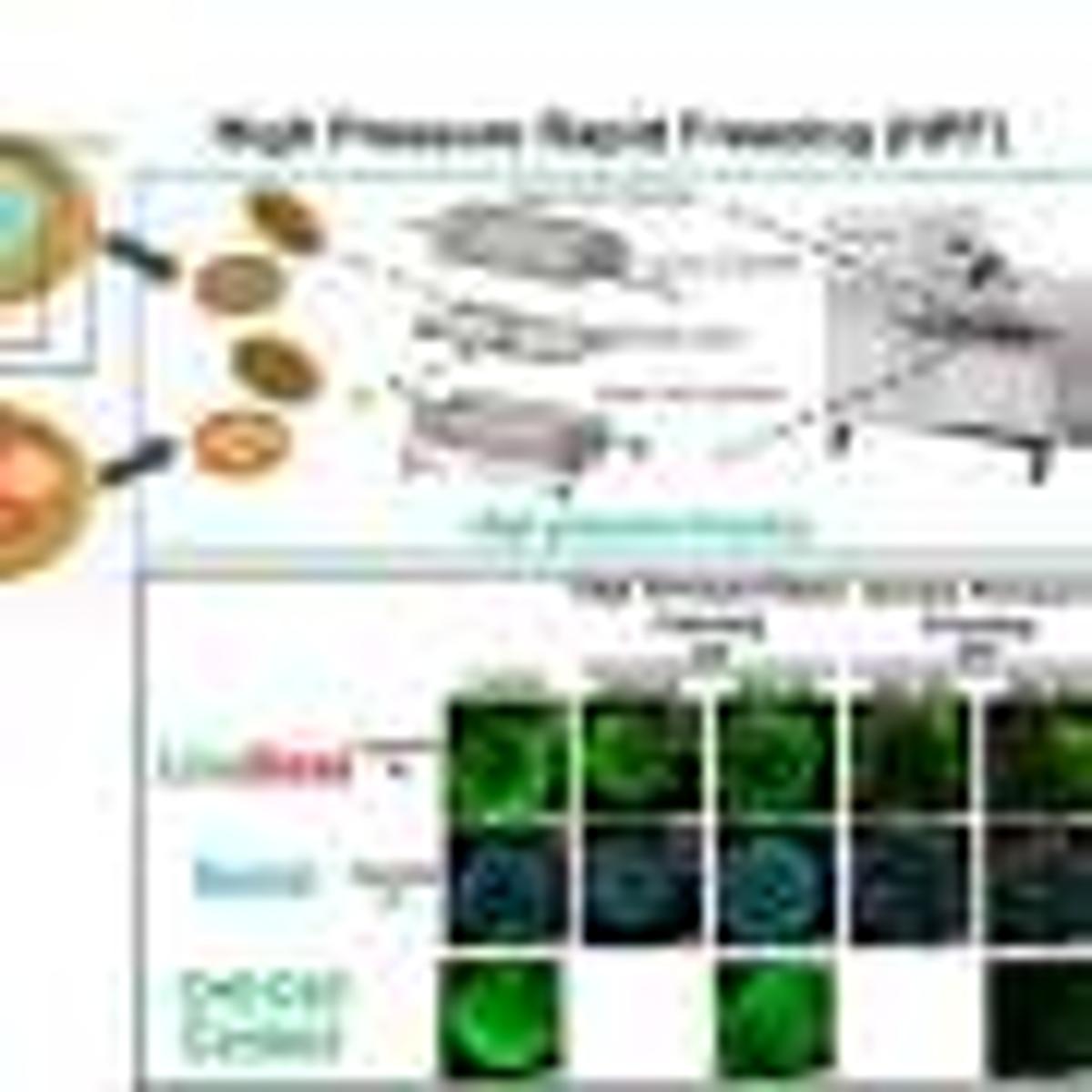
High-Pressure Freezing Boosts Cell Survival with Less Cryoprotectant, Study Shows
Why It Matters
HPF reduces CPA toxicity while improving post‑thaw cell function, addressing a major bottleneck in cell therapy manufacturing and drug‑screening consistency. This breakthrough could lower costs and accelerate timelines for regenerative‑medicine products.
Key Takeaways
- •High-pressure freezing cuts CPA use to 20‑30%.
- •Cell viability improves versus conventional vitrification.
- •Method works for spheroids and monolayer cultures.
- •Reduces ice crystals, yielding fracture‑free, transparent samples.
- •Accelerates regenerative‑medicine pipelines, cutting culture time.
Pulse Analysis
Cryopreservation is a cornerstone of biomanufacturing, yet traditional slow‑freezing and standard vitrification rely on high concentrations of cryoprotective agents (CPAs) that can damage delicate cells. The trade‑off between CPA toxicity and ice‑crystal inhibition has limited the reliability of cell banks used for drug discovery and cell‑based therapies. The University of Tokyo’s recent high‑pressure freezing (HPF) study offers a compelling alternative by applying roughly 2,000 times atmospheric pressure to achieve ultra‑rapid cooling. This pressure‑driven vitrification compresses the window for ice nucleation, fundamentally reshaping the preservation landscape.
By lowering CPA load to 20‑30 % of the sample volume, HPF markedly improves post‑thaw viability and metabolic activity, as demonstrated in both monolayer cultures and three‑dimensional spheroids. The high‑density amorphous ice formed under pressure acts like an intrinsic CPA, suppressing crystal growth without the need for toxic additives. Moreover, the resulting specimens are transparent and fracture‑free, indicating uniform cooling and reduced mechanical stress. These attributes address scalability concerns, making it feasible to preserve larger tissue constructs and to standardize batches for clinical‑grade manufacturing.
Looking ahead, coupling HPF with emerging warming techniques such as joule heating or nanoparticle‑mediated nanowarming could eliminate recrystallization during thaw, a lingering risk identified by the researchers. Such integrated workflows promise faster turnaround times, lower production costs, and tighter quality control for regenerative‑medicine pipelines. As regulatory bodies increasingly scrutinize cell‑therapy consistency, technologies that minimize CPA exposure while guaranteeing high survival rates are likely to attract investment. HPF therefore stands poised to become a critical enabler for next‑generation cell therapies and high‑throughput drug screening platforms.
High-pressure freezing boosts cell survival with less cryoprotectant, study shows
Comments
Want to join the conversation?
Loading comments...