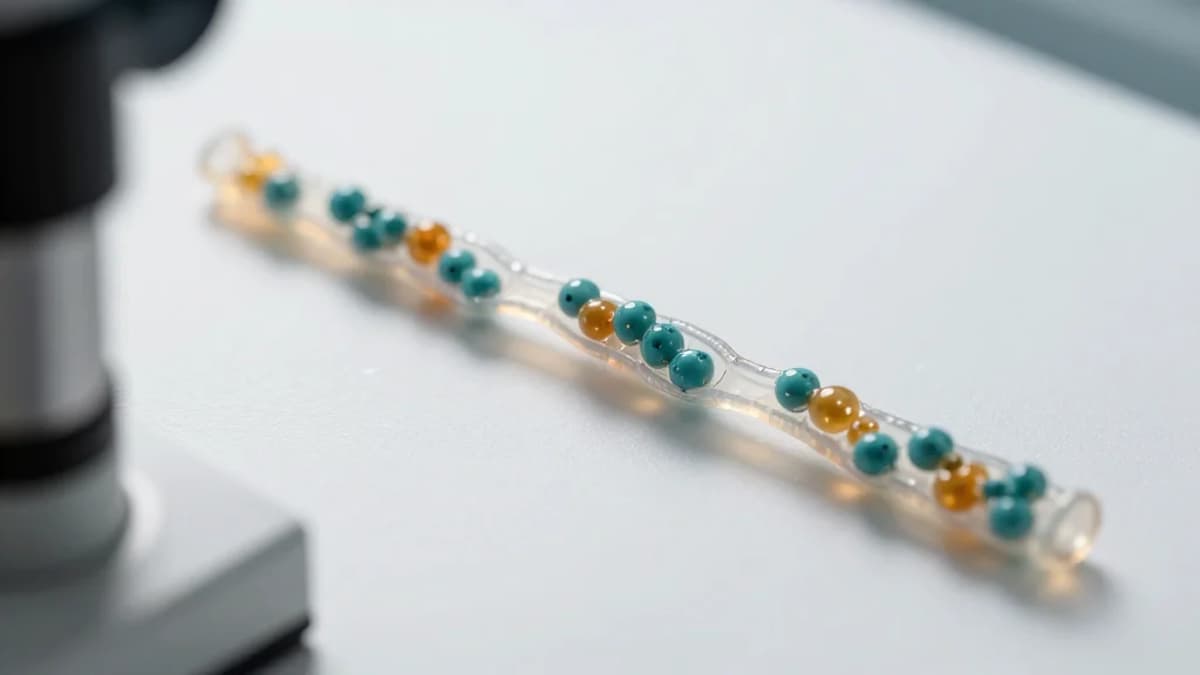
High-Speed AFM Imaging Reveals How Brain Enzyme Forms a Dodecameric Ring Structure
•January 12, 2026
0
Why It Matters
The discovery explains how CaMKII’s subunit architecture stabilizes synaptic plasticity, offering a molecular target for memory‑related disorders. It also demonstrates HS‑AFM’s power to visualize dynamic protein assemblies in neurons.
Key Takeaways
- •CaMKII forms α/β heterododecamer in 3:1 ratio
- •β subunits cluster adjacent with 83% probability
- •Calcium/calmodulin activation stabilizes β‑β kinase complexes
- •Stabilized complexes lower activity but keep interaction surface
- •Findings link subunit arrangement to memory persistence
Pulse Analysis
CaMKII has long been recognized as a pivotal molecular switch in synaptic plasticity, yet the precise arrangement of its α and β subunits remained speculative. Traditional structural methods offered static snapshots, leaving a gap in understanding how dynamic subunit interactions translate into functional memory processes. High‑speed atomic force microscopy (HS‑AFM) now bridges this gap, delivering nanometer‑scale movies that reveal the enzyme’s real‑time reconfiguration, a breakthrough that underscores the technique’s emerging role in neurobiology research.
The HS‑AFM study uncovered a consistent 3:1 α‑to‑β composition within the dodecameric CaMKII ring, mirroring the natural distribution in the mammalian forebrain. Notably, β subunits displayed a strong propensity to sit next to each other, forming clusters with an 83% adjacency probability. When calcium‑calmodulin binds, these β‑β interfaces lock into stable kinase domain complexes that endure beyond the transient calcium surge. This stabilization reduces overall catalytic turnover but maintains an exposed surface for downstream protein interactions, effectively prolonging the memory‑encoding signal while preventing runaway activation.
Beyond basic neuroscience, these insights have translational relevance. Aberrant CaMKII subunit balance is implicated in neurodegenerative and psychiatric conditions, suggesting that modulating β‑mediated clustering could become a therapeutic strategy. Moreover, the ability to visualize protein dynamics in situ opens avenues for screening compounds that influence enzyme architecture directly. Future HS‑AFM work aims to map CaMKII’s interactions with actin filaments and NMDA receptors, linking structural dynamics to morphological changes at synapses. As the field moves toward precision neuropharmacology, understanding and targeting such molecular assemblies will be essential for next‑generation cognitive therapeutics.
High-speed AFM imaging reveals how brain enzyme forms a dodecameric ring structure
0
Comments
Want to join the conversation?
Loading comments...