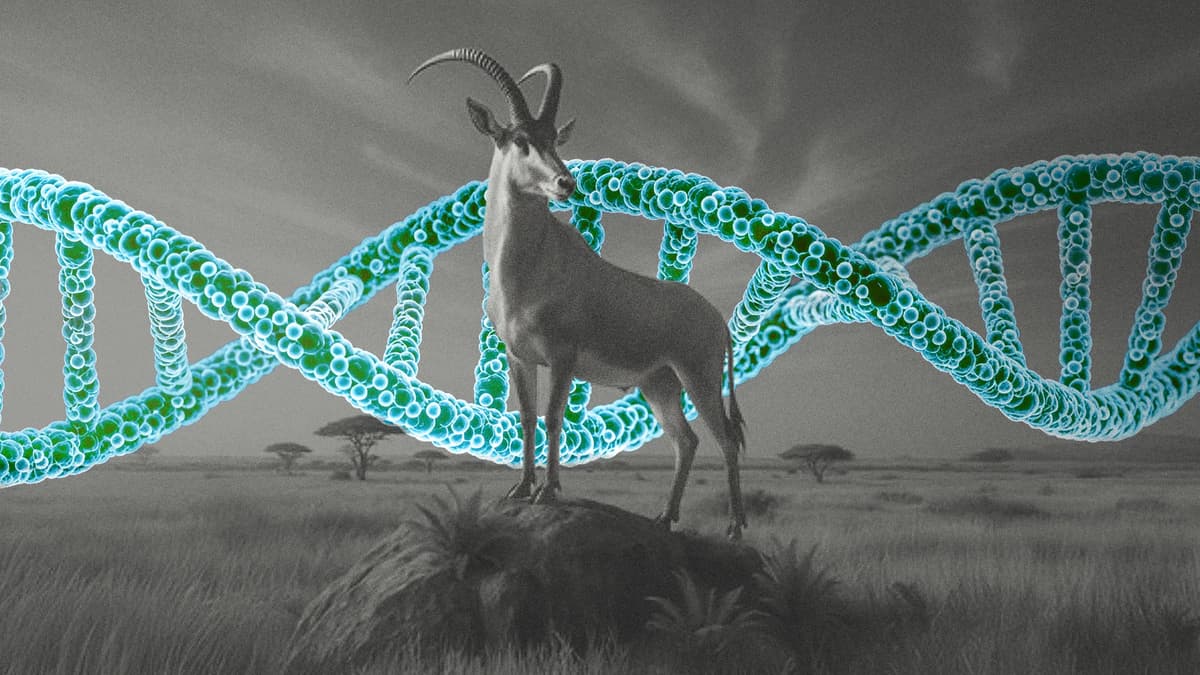
How One Startup Turned Extinction Into a Multi-Billion-Dollar Science Movement
Companies Mentioned
Why It Matters
Colossal’s expanding de‑extinction pipeline and Astromech’s billion‑dollar valuation signal strong market confidence in biotech‑AI hybrids, potentially reshaping conservation and drug discovery landscapes.
Key Takeaways
- •Colossal Biosciences targets de‑extinction of Blue Buck, expanding species list.
- •De‑extinction projects now span all continents, showing global ambition.
- •Astromech, Colossal’s AI biology spin‑off, hit unicorn status in nine months.
- •Astromech valued at >$2 billion, signaling strong investor confidence in bio‑AI.
- •Ben Lamm’s ventures illustrate convergence of biotech, AI, and venture capital.
Pulse Analysis
The de‑extinction sector, once a fringe curiosity, is gaining legitimacy as firms like Colossal Biosciences demonstrate tangible progress. Reviving the Blue Buck—a species extinct since the early 1700s—requires sophisticated genome editing, surrogate species breeding, and ecological risk assessments. Success would not only prove the technical feasibility of resurrecting lost megafauna but also open pathways for restoring ecological functions lost with those species, attracting conservation funding and public interest.
Astromech, the AI‑focused offshoot of Colossal, epitomizes the next wave of biotech innovation. By leveraging large‑scale genomic datasets and machine‑learning models, the platform predicts evolutionary trajectories, disease susceptibility, and systemic vulnerabilities before they manifest. This proactive approach could accelerate drug target identification, improve livestock breeding, and inform precision medicine. The rapid ascent to a $2 billion valuation reflects investor appetite for AI‑enhanced biology, positioning Astromech as a potential backbone for future biotech pipelines.
The combined narrative of de‑extinction breakthroughs and AI‑driven biology raises broader strategic questions for the industry. Regulatory frameworks will need to adapt to organisms engineered from extinct DNA, while ethical debates about ecological impact intensify. Meanwhile, capital markets are likely to reward firms that can integrate cutting‑edge AI with tangible biological outcomes. As venture capital continues to flow into this hybrid space, companies that balance scientific rigor with scalable technology stand to shape the next frontier of life sciences.
How One Startup Turned Extinction Into a Multi-Billion-Dollar Science Movement
Comments
Want to join the conversation?
Loading comments...