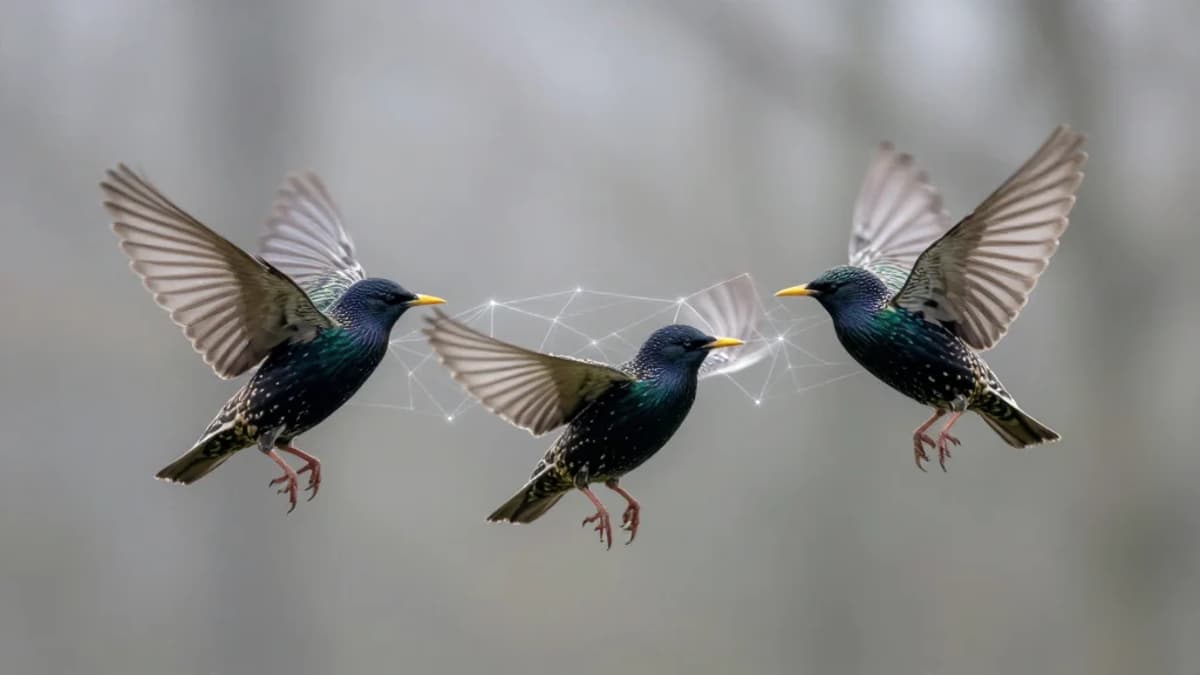
Iain Couzin Honored with the Hector Science Award
•February 3, 2026
0
Companies Mentioned

Why It Matters
The accolade validates a research paradigm that bridges biology, engineering, and data science, accelerating translational applications from bio‑inspired robotics to crowd‑management technologies.
Key Takeaways
- •Couzin receives 200,000‑euro Hector Science Award.
- •Research decodes neural mechanisms behind animal group coordination.
- •Findings inspire swarm robotics and collective AI designs.
- •Award highlights University of Konstanz’s strategic focus on collective behavior.
- •Hector Fellow Academy fosters interdisciplinary collaborations for emerging scientists.
Pulse Analysis
The Hector Science Award’s recognition of Iain Couzin signals a watershed moment for quantitative behavioural biology, a field that blends high‑resolution empirical data with rigorous theoretical models. By situating his research at the nexus of the University of Konstanz, the Max Planck Institute, and the Centre for the Advanced Study of Collective Behaviour, Couzin has cultivated a collaborative ecosystem that attracts physicists, computer scientists, and ecologists alike. This interdisciplinary hub not only fuels groundbreaking discoveries but also positions Germany as a global leader in collective‑systems research, attracting talent and investment under the Excellence Strategy.
Couzin’s methodological arsenal—massive multi‑agent tracking, virtual‑reality arenas for animals, and AI‑enhanced analytics—has set new standards for dissecting how individual interactions scale into emergent group phenomena. By revealing the pivotal role of neural synchronization and information flow, his work challenges purely mechanical models and offers a biologically grounded blueprint for engineering swarms of autonomous drones, self‑organizing sensor networks, and crowd‑control algorithms. Industry partners are already translating these insights into more resilient, adaptable robotic fleets that mimic the efficiency of fish schools or bird flocks.
Beyond technology, the award amplifies the societal relevance of collective‑behaviour science. Policymakers are leveraging Couzin’s findings to improve evacuation planning, manage wildlife migrations, and anticipate the spread of information—or misinformation—through human networks. The Hector Fellow Academy’s emphasis on early‑career mentorship ensures that the next generation of scientists will continue to fuse biology with computational innovation, sustaining a pipeline of solutions for ecological, medical, and engineering challenges. In this way, the award not only celebrates past achievements but also catalyzes future interdisciplinary breakthroughs.
Iain Couzin Honored with the Hector Science Award
0
Comments
Want to join the conversation?
Loading comments...