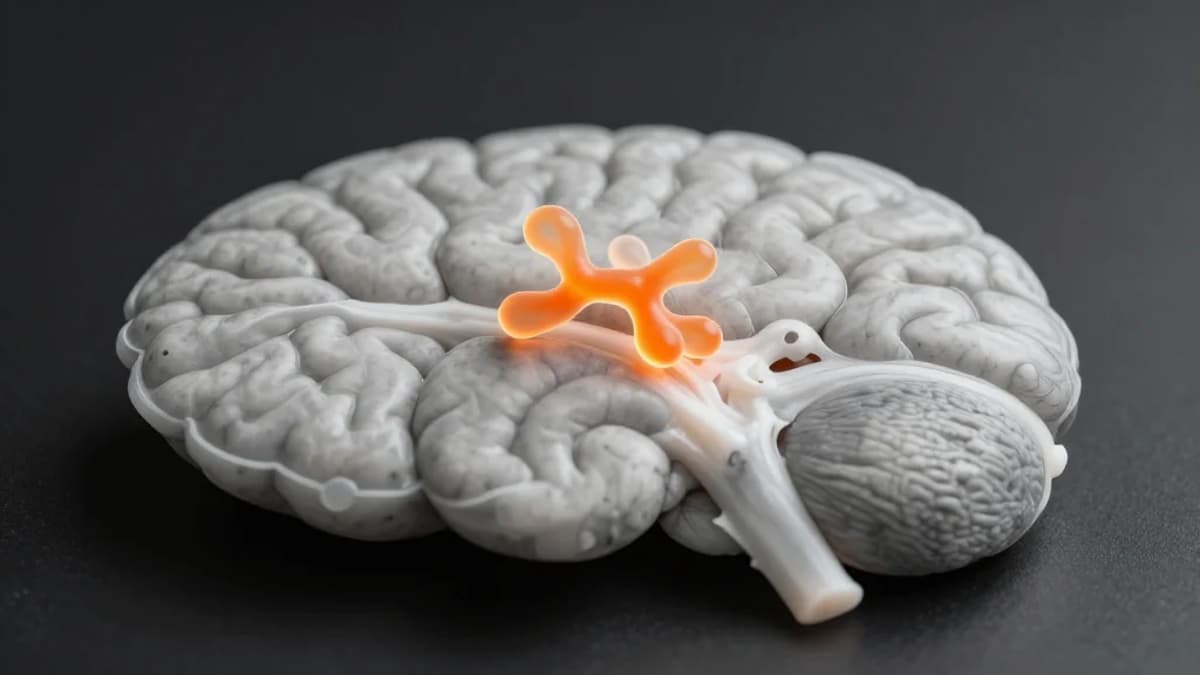
Increased O-GlcNAc Transferase Expression as an Approach to Improving Function in the Aging Brain
•February 16, 2026
0

Why It Matters
Targeting OGT transcription offers a novel route to mitigate age‑related neurodegeneration, potentially expanding the pipeline of disease‑modifying therapies. Successful modulation could shift treatment paradigms from symptom management to underlying molecular restoration.
Key Takeaways
- •OGT adds O-GlcNAc to thousands of proteins.
- •Reduced OGT linked to Alzheimer’s, Parkinson’s, ALS.
- •Antisense oligos can boost OGT splicing and expression.
- •Enhancing OGT may restore proteostasis in aging brain.
Pulse Analysis
The aging brain undergoes widespread epigenetic drift, leading to altered expression of thousands of genes. Among the most influential regulators is O‑GlcNAc Transferase, an enzyme that modifies over 8,000 proteins through O‑GlcNAcylation, a post‑translational mark essential for protein stability, signaling, and stress response. Declining OGT activity diminishes this protective modification, correlating with the accumulation of misfolded proteins that characterize Alzheimer’s, Parkinson’s, and amyotrophic lateral sclerosis. Understanding OGT’s central role reframes age‑related neurodegeneration as a proteostatic failure rather than isolated disease pathways.
Current therapeutic strategies largely focus on inhibiting O‑GlcNAcase, the enzyme that removes O‑GlcNAc groups, to indirectly raise O‑GlcNAc levels. While this approach shows promise, it does not address the upstream bottleneck of OGT production. Recent discoveries reveal that intron detention and decoy‑exon‑mediated splicing repression limit OGT pre‑mRNA maturation, creating a transcriptional choke point. By deploying antisense oligonucleotides or selective degraders of splicing factors, researchers can promote productive splicing, enhance nuclear export of OGT mRNA, and increase enzyme abundance independent of feedback loops. This precision‑medicine tactic offers a more direct and potentially durable restoration of OGT activity.
If successful, OGT‑centric therapies could redefine the market for neurodegenerative disease treatment, shifting focus toward disease‑modifying interventions that target cellular homeostasis. Pharmaceutical firms may invest in antisense platforms and splicing‑modulation technologies, accelerating pipelines beyond symptomatic relief. However, challenges remain, including delivery across the blood‑brain barrier, off‑target effects, and long‑term safety of gene‑expression modulation. Ongoing preclinical studies and early‑phase trials will be critical to validate efficacy and establish regulatory pathways, positioning OGT enhancement as a cornerstone of next‑generation brain‑health therapeutics.
Increased O-GlcNAc Transferase Expression as an Approach to Improving Function in the Aging Brain
0
Comments
Want to join the conversation?
Loading comments...