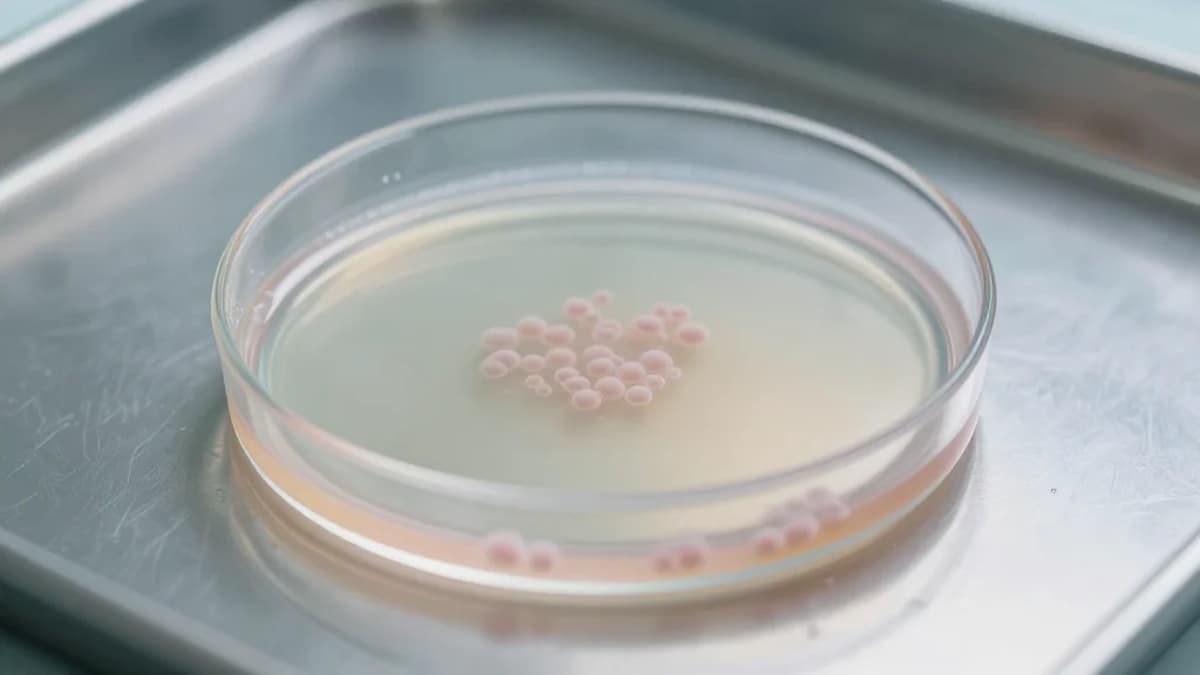
Induced Pluripotent Stem Cells: From Dish to Freezer and Back
•December 18, 2025
0
Why It Matters
In‑place freezing removes a major bottleneck in stem‑cell manufacturing, cutting labor and contamination risks while enabling high‑throughput automation. This could dramatically lower costs and speed up development of patient‑specific therapies and pharmaceutical testing.
Key Takeaways
- •D‑proline enables direct dish cryopreservation of iPS sheets
- •Viability remains high after three months frozen storage
- •Protocol weakens adhesion, reducing freeze‑induced stress
- •Method supports automation, lowering labor costs
- •Preserves pluripotency without animal‑derived cryoprotectants
Pulse Analysis
Induced pluripotent stem cells have become a cornerstone of regenerative research, yet their handling remains technically demanding. Traditional cryopreservation requires detaching cells from culture plates and exposing them to animal‑derived protectants, steps that increase variability and risk of differentiation. The Kobe University team’s discovery that D‑proline, an inexpensive amino acid, can serve as a primary cryoprotectant reshapes this workflow. By pairing D‑proline with a synthetic polymer and a short enzymatic treatment to loosen cell‑cell contacts, the protocol preserves membrane integrity and pluripotency even after three months of frozen storage. This chemistry‑driven solution sidesteps the contamination concerns associated with serum‑based agents while delivering viability rates comparable to gold‑standard methods.
Because the cells remain attached to their plates, the new method integrates seamlessly with robotic liquid‑handling systems and high‑density storage racks. Laboratories can now program batch freezing and thawing cycles without manual scraping, dramatically reducing labor hours and the potential for human error. The cost advantage is twofold: D‑proline is cheap and the elimination of animal‑derived reagents lowers both material expense and regulatory burden. For pharmaceutical companies, faster access to ready‑to‑use iPSC sheets accelerates disease‑model validation and high‑throughput drug screening, shortening timelines from discovery to clinic.
Regulators will scrutinize the synthetic polymer component, but its defined composition simplifies validation compared with undefined serum proteins. Ongoing studies are already exploring D‑proline‑based preservation for three‑dimensional organoid cultures and gene‑edited iPSC lines, suggesting the platform could become a universal standard across cell‑therapy pipelines. Market analysts project that scalable cryopreservation solutions could unlock a multi‑billion‑dollar segment in cell‑banking services, especially as personalized therapies move toward broader clinical adoption. Ultimately, the ability to freeze and thaw iPSC sheets on demand positions the technology as a catalyst for next‑generation regenerative medicine.
Induced pluripotent stem cells: From dish to freezer and back
0
Comments
Want to join the conversation?
Loading comments...