Intelligent Sensors Created for Quality-Assured Cell Production
•February 2, 2026
0
Companies Mentioned

Fraunhofer Institute for Biomedical Engineering
Fraunhofer Institute for Nondestructive Testing

Fraunhofer Beijing Representative Office
Why It Matters
Real‑time, AI‑driven quality control cuts material waste and accelerates regulatory approval for cell‑based therapies, strengthening biotech competitiveness.
Key Takeaways
- •Real-time AI monitors spheroid size, number, quality
- •Sensors track glucose, lactate, O2, pH, temperature
- •Edge AI platform processes data on-site, no cloud needed
- •Enables FDA/EMA PAT compliance for cell therapy production
- •Modular design supports flexible biotech applications
Pulse Analysis
The rise of 3D cell spheroids as predictive models for drug screening has intensified pressure on bioprocess engineers to guarantee batch consistency. Traditional workflows rely on end‑point testing, which often uncovers defects only after costly cultivation cycles are complete. Integrating intelligent sensors directly into bioreactors transforms this paradigm, offering continuous insight into metabolic cues and morphological evolution. By capturing glucose, lactate, dissolved oxygen, pH and temperature alongside high‑resolution imagery, manufacturers gain a holistic view of the microenvironment that drives spheroid formation.
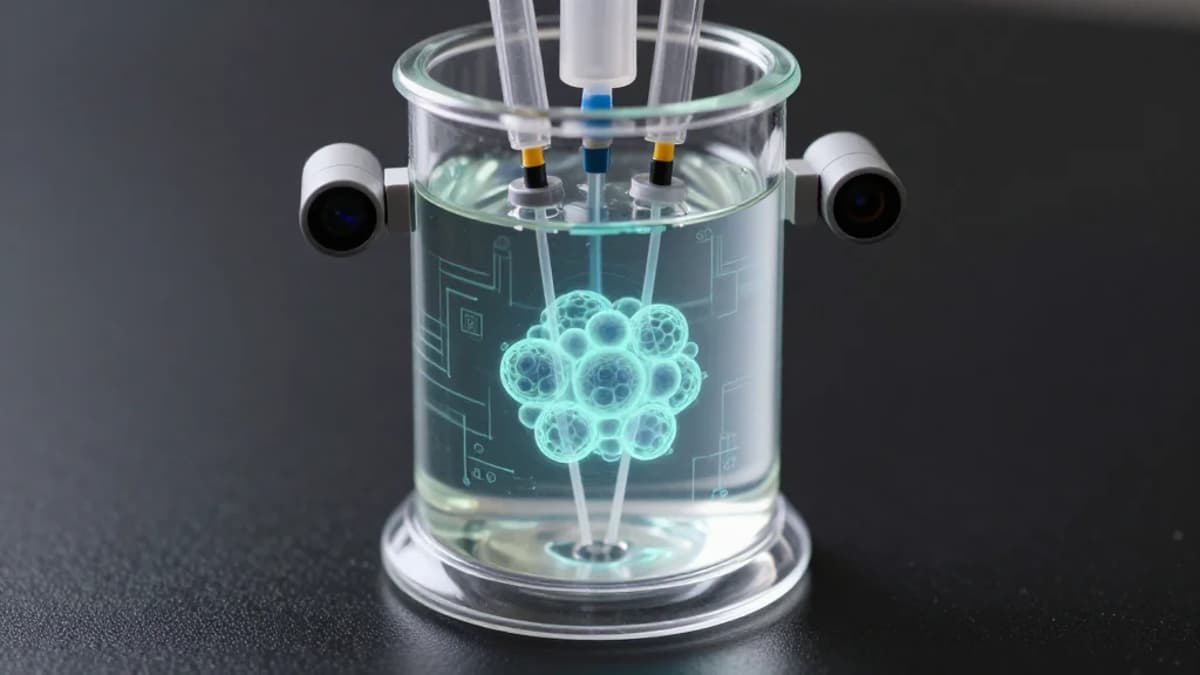
MAUS leverages edge‑AI to fuse multimodal data streams instantly, eliminating latency and the need for external cloud services. The platform’s dual‑camera architecture—one monitoring rotating reactor tubes, the other scanning spheroids in a microfluidic channel—feeds millisecond‑level classifications into a local database. This label‑free approach preserves cell integrity while delivering objective, reproducible metrics that satisfy Process Analytical Technology (PAT) and Continuous Process Verification standards mandated by the FDA and EMA. Moreover, built‑in NFC and Bluetooth modules enable cable‑free sensor interrogation, reinforcing data sovereignty and simplifying integration with existing control systems.
For the biotech sector, such capabilities translate into tangible business benefits. Real‑time quality assurance reduces batch failures, shortens time‑to‑market, and lowers the high cost of stem‑cell media. The modular nature of MAUS means it can be scaled from academic research labs to large‑scale industrial production lines, supporting a wide array of cell‑therapy and tissue‑engineering applications. As regulatory bodies increasingly demand transparent, data‑driven manufacturing, platforms like MAUS position companies to meet compliance while fostering innovation in cell‑based therapeutics.
Intelligent sensors created for quality-assured cell production
0
Comments
Want to join the conversation?
Loading comments...