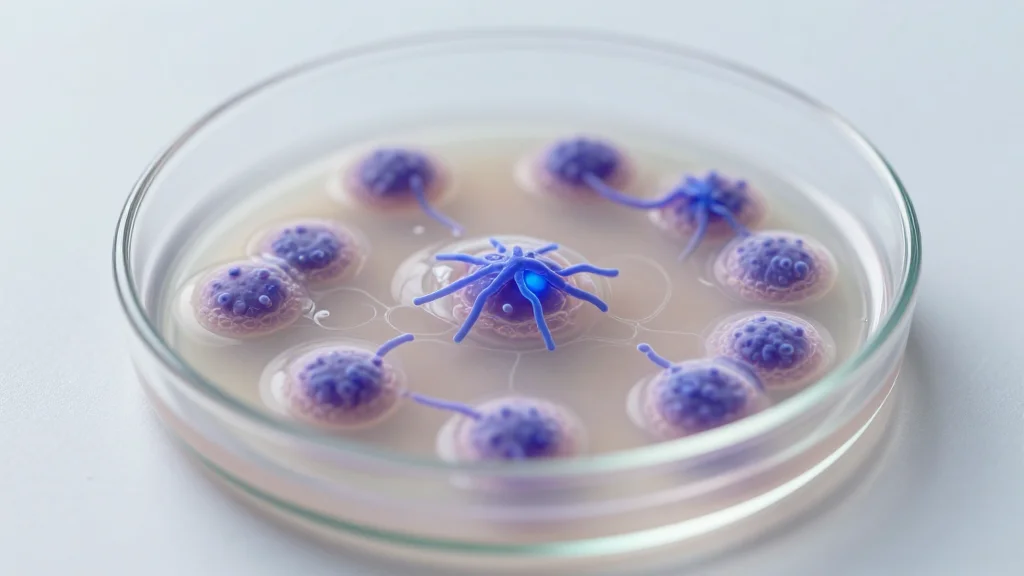
KCNMA1 Balances Calcium–Potassium to Impact Ovarian Cancer
Why It Matters
By linking ion channel activity to EMT plasticity, the research uncovers a druggable target that could improve response rates and extend survival for ovarian cancer patients.
Key Takeaways
- •KCNMA1 regulates calcium‑potassium flux to sustain hybrid EMT state
- •Disrupting KCNMA1 sensitizes ovarian cancer cells to chemotherapy
- •Ion channel activity emerges as a driver of tumor plasticity
- •Potential biomarkers: KCNMA1 expression or electrophysiological readouts
- •Targeted modulators could complement existing ovarian cancer therapies
Pulse Analysis
Ovarian cancer remains a lethal gynecologic malignancy, in large part because tumor cells can fluidly transition between epithelial and mesenchymal phenotypes. This epithelial‑mesenchymal transition (EMT) creates a hybrid state that blends adhesion with motility, fostering metastasis and shielding cells from conventional drugs. While genetic and soluble factors have dominated EMT research, emerging evidence points to bioelectric cues—particularly ion channel dynamics—as critical, yet underexplored, regulators of cellular identity.
The new work spotlights KCNMA1, a calcium‑activated potassium channel, as a master conductor of this bioelectric orchestra. By fine‑tuning calcium influx and potassium efflux, KCNMA1 stabilizes the hybrid E/M transcriptional program, as shown through electrophysiology, live‑cell imaging, and transcriptomic profiling. When researchers pharmacologically or genetically dampened KCNMA1 activity, intracellular calcium spikes shifted, dismantling the hybrid signature and rendering cells markedly more vulnerable to platinum‑based chemotherapy and targeted agents. This mechanistic link reframes ion homeostasis from a passive background process to a decisive driver of therapy resistance.
Looking ahead, KCNMA1 offers a dual opportunity: a therapeutic target and a biomarker. Small‑molecule modulators that precisely adjust its gating could synergize with existing regimens, while quantitative assays of KCNMA1 expression or channel activity may stratify patients likely to benefit from such combos. Moreover, the principle of ion‑channel‑mediated plasticity may extend beyond ovarian cancer to other solid tumors where EMT fuels aggressiveness. Integrating bioelectric modulation into precision oncology could thus open a new frontier in combating tumor heterogeneity and drug resistance.
KCNMA1 Balances Calcium–Potassium to Impact Ovarian Cancer
Comments
Want to join the conversation?
Loading comments...