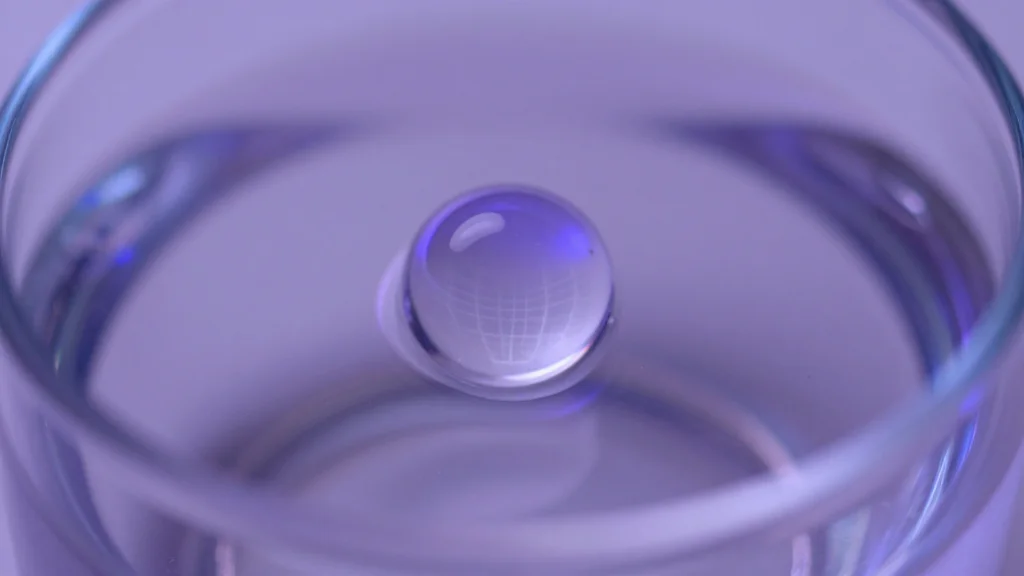
Light Switch for Life: Controlling Molecular Droplets with UV
Why It Matters
The ability to modulate condensate properties with light provides a non‑invasive tool for targeted therapeutics and synthetic biology, while also informing theories of prebiotic compartmentalization.
Key Takeaways
- •UV‑induced thymine dimers act as molecular switches in condensates
- •New microscopy quantifies droplet stiffness, viscosity, and fusion dynamics
- •Light‑controlled condensates enable on‑demand drug release systems
- •Findings suggest UV could have stabilized early protocell structures
- •Approach bridges photochemistry with biomaterial engineering for smart applications
Pulse Analysis
Biomolecular condensates have emerged as central organizers of cellular chemistry, yet their fleeting nature makes them difficult to interrogate or manipulate. The Leiden team’s breakthrough leverages a well‑known UV‑induced DNA lesion—thymine dimerization—as an internal switch, effectively rewiring intermolecular contacts within droplets. This strategy sidesteps the need for invasive chemicals or genetic modifications, offering a rapid, reversible handle that can be applied in living cells or in vitro systems. By integrating photochemistry with condensate physics, the researchers have opened a new experimental axis for probing phase behavior.
The accompanying microscopy platform adds a quantitative layer previously missing from condensate studies. By tracking deformation, fusion events, and recovery after UV pulses, the system extracts stiffness, viscosity, and elasticity metrics at the single‑droplet level. Such mechanical fingerprints are crucial for understanding pathological aggregation seen in Alzheimer’s, Parkinson’s and muscular dystrophies, where aberrant solidification of condensates drives toxicity. The ability to induce, monitor, and reverse these transitions in real time equips biophysicists with a powerful diagnostic and therapeutic testing ground.
Beyond basic science, light‑responsive condensates promise practical applications. Encapsulating therapeutics within UV‑tuned droplets could enable on‑demand release, improving dosage precision and reducing systemic side effects. In materials science, programmable gels that stiffen or liquefy under specific wavelengths could lead to adaptive coatings or self‑healing composites. Intriguingly, the work also revisits the origin‑of‑life debate: early Earth’s harsh UV environment may have acted not merely as a destroyer but as a stabilizer for primitive coacervate‑like compartments, fostering the chemistry that birthed life. As photonic control matures, it is poised to reshape both biomedical engineering and our understanding of life's earliest steps.
Light switch for life: Controlling molecular droplets with UV
Comments
Want to join the conversation?
Loading comments...